

Algae Blooms and Your Tap Water: What Cyanotoxins Mean
Every summer, and especially in the record-hot summer of 2026, harmful algae blooms turn lakes and reservoirs a murky green. Coverage this year has called it one of the worst bloom seasons in recent memory, with state advisories arriving earlier and lasting longer. If your drinking water comes from a surface source, it is a fair question to ask: is my tap water safe during a bloom, and does a filter help? Here is the calm, honest version, without the scare tactics.

What a harmful algae bloom actually is
A harmful algae bloom is an overgrowth of cyanobacteria, often called blue-green algae, in warm, slow-moving, nutrient-rich water. Summer is peak season because heat, sunlight, and runoff-fed nutrients give the bacteria everything they need. The important thing to understand is that this happens in source water, the lakes and reservoirs your utility draws from, not at your tap. Public water systems monitor for blooms and adjust treatment to keep finished water within federal health guidance. That is why most treated tap water stays safe even during a bad bloom year.
Two things can still reach your glass. The first is taste and odor. Blooms release geosmin and MIB, two compounds that make water smell and taste earthy, musty, or like a lake, even at trace levels and even when the water is perfectly safe. The second, less common, is cyanotoxins.
Cyanotoxins, and the dangerous myth about boiling
Some blooms produce cyanotoxins such as microcystin. In 2015, the EPA issued ten-day drinking water health advisory levels for microcystin: 0.3 micrograms per liter for bottle-fed infants and young children, and 1.6 micrograms per liter for older children and adults. Utilities treat and monitor against those levels, and if a bloom overwhelms treatment, they issue a public advisory.
Here is the single most important safety point, because it is widely misunderstood: boiling does not remove cyanotoxins. Unlike bacteria and viruses, cyanotoxins are not destroyed by heat. Worse, boiling can rupture the cyanobacteria cells and release more toxin into the water, and it concentrates whatever toxin is already there as the water evaporates. Health authorities are clear that during a bloom-related Do Not Drink or Do Not Use advisory, you should use an alternate water source, not boil. That is different from a standard boil water notice, which is issued for microbial risks, so always read exactly what your utility says the advisory is for.

Can a filter help with algae-related tap water?
For everyday bloom season, a carbon filter is genuinely useful, as long as you are honest about what it does. Its strongest, cleanest job is taste and odor. Activated carbon adsorbs geosmin and MIB, the compounds behind that musty summer taste, along with chlorine. This is exactly what NSF/ANSI Standard 42 covers.
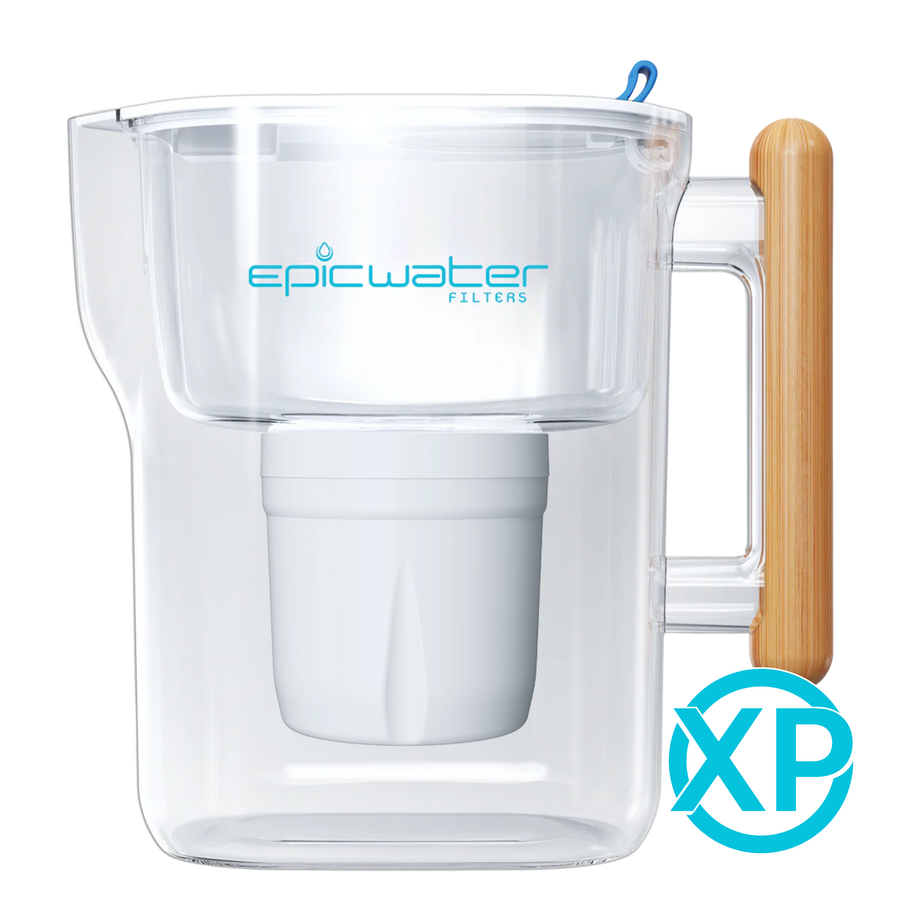
Activated carbon, both powdered and granular, is also a recognized way to adsorb dissolved cyanotoxins such as microcystin and cylindrospermopsin. That is documented by the EPA and by peer-reviewed research, and it is the same adsorption mechanism a carbon block uses. So a carbon filter can act as a sensible second barrier on water your utility has already treated. Epic's Pure XP is a carbon fiber block that is NSF certified to Standard 42 for chlorine taste and odor and to NSF/ANSI/CAN 372 for lead-free materials, and it is independently lab-tested to reduce 99.9% of lead.
Two honest boundaries matter. Epic is not certified to NSF Protocol 477, the specific standard for microcystin reduction, so this is a recognized carbon mechanism rather than a certified toxin-removal claim. And no home filter, pitcher or under-sink, is a substitute for a utility Do Not Drink or Do Not Use advisory. If an advisory is in effect, follow your utility and use provided water until it is lifted.
A calm routine for bloom season
You do not need to panic about a summer bloom. You need a simple order of operations that starts with your utility.
- Follow your utility first. Watch for bloom-related Do Not Drink or Do Not Use notices, and read what each advisory is actually for.
- Never boil to fix a bloom. Boiling does not remove cyanotoxins and can release more, so use an alternate source if you are told to.
- Use carbon for taste and as a second barrier. A carbon block reduces the earthy geosmin and MIB taste and can adsorb dissolved toxins from treated water.
- Replace your filter on schedule so the carbon keeps working, and remember a carbon filter is not a microbiological purifier.
If you want to see which contaminants matter most where you live before you choose a filter, Epic's What's in Your Water tool is a good place to start.
The bottom line
Harmful algae blooms are a real, growing summer problem, and 2026 has been an intense year for them. But for most people on treated municipal water, the everyday effect is an earthy taste, not a health emergency, because utilities treat and monitor the water before it reaches you. The real risks to manage are cyanotoxins, which your utility watches for, and bad advice, especially the myth that boiling helps. Follow your utility on any advisory, never boil to remove toxins, and use a carbon filter for the musty taste and as a sensible second barrier the rest of the season.
Aktie:
Is It Safe to Drink Water Left in a Hot Car?
Are Refrigerator Water Filters Enough? What They Remove, What They Miss