
How to Test Your Tap Water at Home: Free Lookups, Strips, and Labs
August is National Water Quality Month, which makes this a good moment for an honest admission from a filter company: the smartest first move for your water is not buying a filter. It is finding out what is actually in your water. Testing is cheaper than guessing, and what you learn usually changes what you buy, or whether you need to buy anything at all.
The other good news is that real testing is simpler than the test-kit aisle suggests. It comes down to two steps: free lookups you already paid for through your water bill, and certified laboratory testing for the questions that matter most. The strip kits in between are the part we tell people to skip.
Start with the report you already have
Every community water system in the United States must publish a Consumer Confidence Report, usually called a CCR or annual water quality report, by July 1 each year. That means the 2026 reports are out right now. Your CCR lists what your utility detected over the past year: which contaminants were found, at what levels, and how those levels compare to federal limits. You can usually find it on your utility's website, through the EPA's online report search, or tucked into your water bill.
If you want the fast version, Epic's free What's in Your Water tool summarizes reported contaminants by zip code, so you can see in about a minute what your local utility has reported.

One caveat matters more than all the others: the CCR is measured at the treatment plant, not at your faucet. Lead and copper usually enter water after that point, from service lines and household plumbing. A clean report is real data, but it is not the final word on the glass you actually drink. That gap is exactly what home testing exists to close.
Why we steer people away from test strips
Strip kits cost roughly 10 to 30 dollars at any hardware store, and they look reassuringly scientific: dip, wait a minute, compare the colors to a chart. Our honest take is that they are not worth it for drinking water decisions. Reading a color change by eye is a coarse measurement, and the questions people actually buy them for are decided at concentrations a strip cannot resolve.
The numbers make the point. Lead is regulated in parts per billion, and the EPA's health goal is zero because no level is considered safe: far below what a color chart can distinguish. PFAS is stricter still. The federal limit for PFOA and PFOS is 4 parts per trillion, which is laboratory territory: USGS researchers who found PFAS in at least 45% of US tap water samples used instruments, not color charts, and no strip on the market detects PFAS at any concentration. The real risk of a strip kit is a false all-clear that ends your curiosity exactly when it mattered. If you already own one, do not panic over its readings in either direction; just do not let it stand in for a real answer.
When a certified lab is the right call

State-certified laboratories run EPA-approved methods, which is what makes a result reliable enough to act on. Three situations justify the upgrade:
- Lead. The meaningful test is a first-draw sample: water that has sat in your pipes for six hours or more, collected before anyone runs a tap. Many utilities will test this for free or at low cost if you ask.
- PFAS. Only accredited labs can measure parts-per-trillion levels. Mail-in panels typically run about 59 to 295 dollars depending on how many compounds you include.
- Anything you plan to act on. If a result might change your plumbing, your budget, or your baby's formula water, confirm it with a certified method first.
To find a lab, call the EPA's Safe Drinking Water Hotline at 800-426-4791 or check your state's certified laboratory list. Timing note for this month: the EPA is holding public webinars on August 11 and 12, 2026 about its proposed sixth Unregulated Contaminant Monitoring Rule, which would expand national tap water testing to additional unregulated contaminants. The federal testing net is still being widened, which is a reminder that "not yet tested" and "not present" are different things.
Private wells: nobody tests but you
If your water comes from a private well, none of the federal monitoring above applies to you. EPA drinking water rules do not cover private wells, so testing is entirely the owner's responsibility. CDC and EPA guidance is to test at least once a year for coliform bacteria and nitrate, along with pH and total dissolved solids, and to retest promptly after flooding, nearby construction, or any repair work on the well itself. Your county health department is usually the cheapest route to a proper well panel.
Match the filter to the result, not to the ad
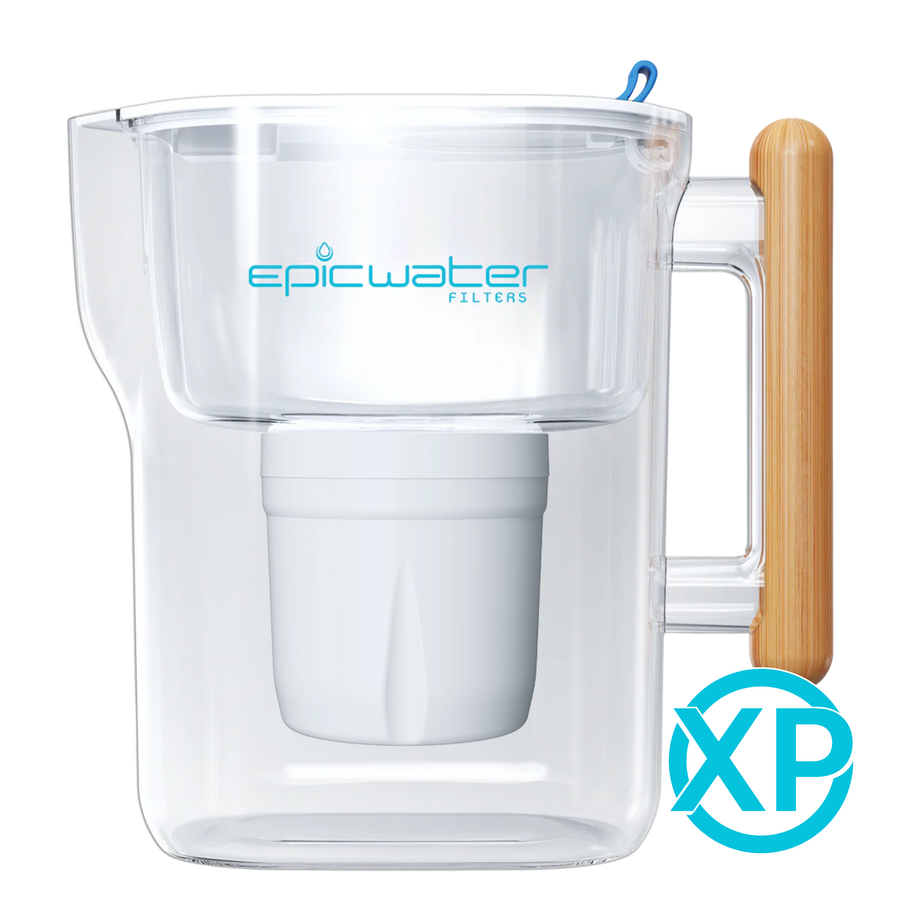
Once results are in hand, read filter claims with the same care you gave the lab report. NSF certification, independent lab testing, and marketing copy are three different things, and a trustworthy brand will tell you which is which. Our own Pure XP filter is NSF certified to Standard 42 for chlorine taste and odor and to NSF/ANSI/CAN 372 for lead-free materials. Its 99.9% lead reduction and its PFOA and PFOS reduction were verified by independent laboratory testing against NSF methods, including the P473 protocol. Those are different kinds of claims, and we think you should know the difference before you buy from anyone.
The sequence is the whole point. Look up the free data. Bring in a certified lab for lead, PFAS, bacteria, or a well. Skip the strip kits. Then choose the fix that matches what you found, and retest on roughly a yearly rhythm, because water changes with seasons, infrastructure work, and weather. That is what National Water Quality Month is actually asking of you: not worry, just a habit of knowing.
Aktie:
Why Does My Water Smell Like Rotten Eggs? A Sink-by-Sink Guide
What to Do During a Boil Water Advisory