
Hurricane Season Water Prep: How Much Water to Store and What a Filter Can Do
The Atlantic hurricane season technically opens on June 1, but the part that matters starts now. The climatological peak runs from mid-August into October, centered on September 10. If you live anywhere a storm can reach, the water portion of your preparedness plan is the cheapest and easiest piece to get right, and the one people most often leave until the grocery store shelves are already empty.
The good news: hurricane water prep comes down to three numbers and a little container hygiene. Here is the whole plan, plus an honest look at what your water filter can and cannot do when a storm rolls through.
Why prepare in a "quiet" year
NOAA's August update calls for a below normal 2026 Atlantic season, with 8 to 14 named storms and a strong El Nino expected to suppress activity through the peak months. That is genuinely favorable. It is also not a reason to skip preparation, for two reasons.
First, seasonal totals do not matter to the one storm that reaches your county. Landfall risk is local and single events do the damage. Second, water emergencies do not require a hurricane at all. This month, a cyberattack on a water utility in Clayton County, Georgia dropped system pressure and triggered a boil water advisory under clear skies. Aging mains break in the summer heat every week somewhere in the country. A stored water supply is useful year round; hurricane season is simply the deadline that gets it done.

The three numbers: one gallon, three days, two weeks
Federal guidance on emergency water is consistent and specific:
- One gallon per person, per day. Roughly half is for drinking and half for cooking and basic hygiene. This is the FEMA and Ready.gov baseline.
- Three days minimum. That is the floor for evacuation scenarios and short outages.
- Two weeks if you can. The CDC recommends working toward a two week home supply, which is what extended boil water advisories and slow restorations actually demand.
Adjust upward from there. Children, nursing mothers, and anyone who is ill need more. Hot climates raise everyone's needs, sometimes to double the baseline. Pets drink too: plan roughly an extra gallon per day for a large dog. For a family of four in Florida, a two week supply is on the order of 60 gallons, which sounds like a lot until you see it stacked in a closet corner. It fits.
Storing it right
Unopened, commercially bottled water is the simplest option: keep it sealed, out of sunlight, and use it by the printed date. If you fill your own containers from the tap, the CDC's guidance is straightforward:
- Use food grade containers, not repurposed milk jugs, which can hold protein residue and are hard to clean.
- Wash containers with soap, then sanitize with a teaspoon of unscented bleach in a quart of water. Rinse well.
- Fill from the tap, cap tightly, and label the date.
- Store somewhere cool and dark, away from gasoline, pesticides, or anything you would not want migrating through plastic.
- Replace self-filled tap water about every six months.
One counterintuitive note: store ordinary tap water, not filtered water. Municipal tap water carries a small chlorine residual that helps keep it fresh in the container. You can pour stored water through your filter later, at drinking time, when the goal is taste rather than preservation.

During the storm: what an advisory means
When a hurricane knocks out power or breaks mains, water systems lose pressure, and low pressure can let contaminants seep into the pipes. That is why precautionary boil water advisories almost always follow a major storm. During an active advisory, the playbook is short: use your stored water, or boil tap water at a rolling boil for one full minute before drinking or cooking.
Here is the honest part: a carbon water filter, including ours, is not the tool for this moment. Pitcher, dispenser, refrigerator, and standard under sink filters are not designed to remove bacteria or viruses, and none of them can make microbiologically unsafe water safe. If your home is on a private well and floodwater reached the wellhead, assume the well is contaminated and do not drink from it until it has been disinfected and a lab test clears it. Your county health department can walk you through that process.
After the all-clear: where a filter actually fits
Once an advisory lifts, flush your cold taps for several minutes to pull fresh water through your plumbing, and replace your filter cartridge if the system lost pressure. It is inexpensive insurance that restores the filter's intended performance.
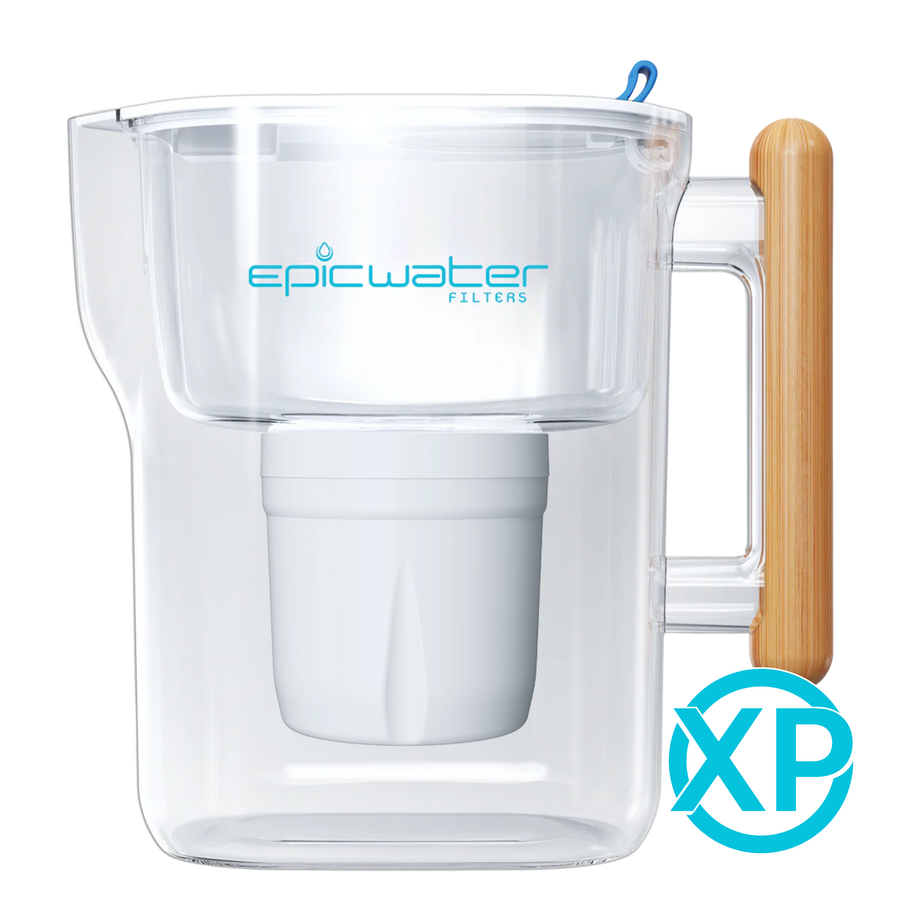
This is also when a good carbon filter starts earning its keep again. Utilities commonly flush lines and boost chlorine when they bring a system back, so the first days after restoration can taste and smell like a swimming pool. Chlorine taste and odor is exactly what activated carbon is built to reduce. And on every ordinary day before and after the storm, a filter like the Pure XP Pitcher or Dispenser is doing its everyday job on contaminants like PFAS, lead, and VOCs. A practical bonus for storm country: gravity filters need no electricity and no water pressure, so a pitcher keeps working through an outage as long as you have safe water to pour into it.
A 20 minute checklist to finish this week
- Count your people and pets, multiply by 14 gallons, and buy or fill toward that number.
- Sanitize and fill two or three food grade containers; label today's date.
- Put a refresh reminder on your calendar for mid-February.
- Keep one spare filter cartridge on the shelf for the post-storm swap.
- Look up what is in your water on a normal day with our What's in Your Water tool, so you know your baseline before the season tests it.
Storms take the tap offline; they do not have to take you by surprise. Store your gallons now, know the advisory playbook, and let your filter handle the everyday work it was designed for.
Aktie:
College Tap Water: A Move-In Guide for Dorms and First Apartments
Well Water and Drought: What to Test, What a Filter Can Do