
Is Tritan Plastic Safe? Why Epic Pitchers Are Made From It
A water filter pitcher has one job with two halves: take unwanted things out of your water, and put nothing back in. The second half is a materials question, and it deserves a straight answer, because your water sits against that pitcher in the fridge all day, every day.
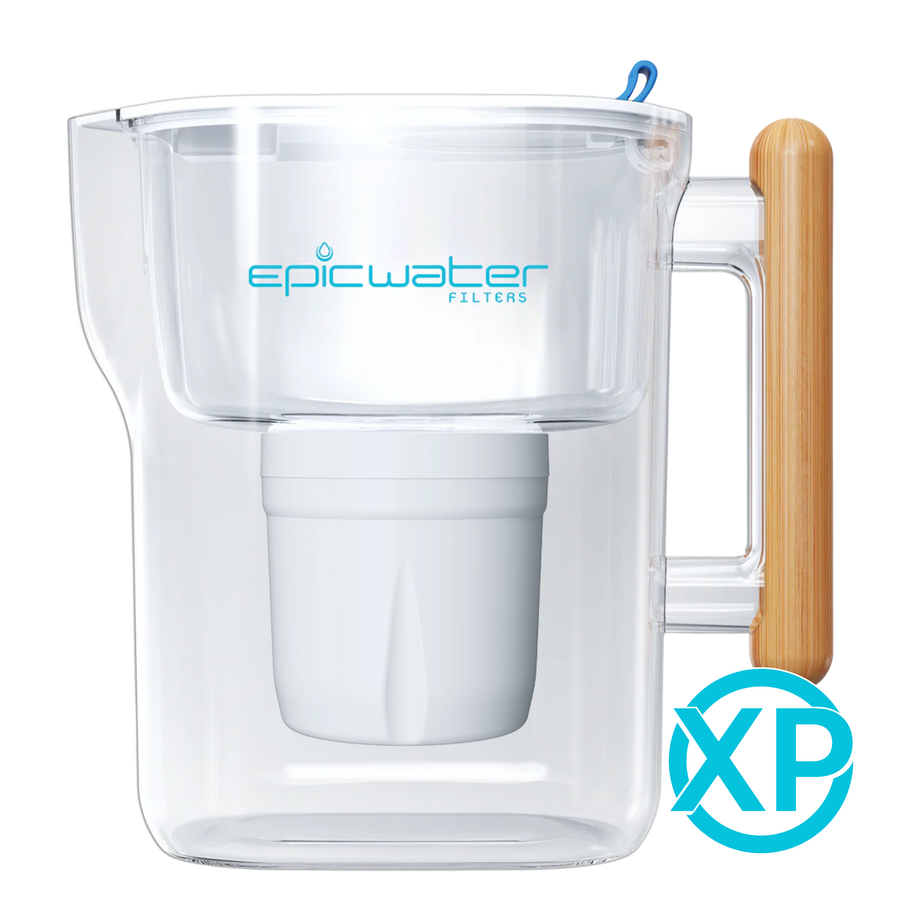
Epic pitchers and dispensers are crafted from BPA and BPS free, medical-grade Tritan. Here is what Tritan actually is, how it has been tested, what the one real controversy concluded, and why we think the material is still only half the story.

What Tritan is
Tritan is a copolyester made by Eastman at its plant in Kingsport, Tennessee. It was developed as a replacement for polycarbonate, the older clear plastic that is literally synthesized from BPA. Tritan has the qualities you want in drinkware: glass-like clarity, light weight, shatter resistance, and stability through daily use, which is why it also shows up in baby bottles, food storage, and medical devices.
The chemistry is the point. According to Eastman's published safety documentation, no BPA or BPS has ever been used as a raw material in Tritan, none is formed as a manufacturing byproduct, the material contains no ortho-phthalate plasticizers, and it is not on California's Prop 65 list of chemicals requiring a warning.
BPA-free is not the same as bisphenol-free
This distinction is where a lot of "BPA-free" marketing quietly falls apart. When BPA got its reputation, many manufacturers swapped it for close chemical cousins, most commonly BPS, and kept the BPA-free label. Research on those substitutes has raised many of the same endocrine-disruption questions that pushed people off BPA in the first place.
So the useful question is not "is it BPA-free?" It is "what is the material?" A bisphenol-free copolyester like Tritan answers that question by construction: there is no bisphenol in the recipe to begin with.
The controversy, told straight
If you have researched Tritan, you have probably run into the estrogenic-activity debate, and we would rather tell you the whole story than pretend it did not happen.
In 2011, a paper reported that many BPA-free plastics, including some Tritan samples, leached chemicals with estrogenic activity in cell-based tests, especially after stresses like UV exposure. Eastman responded with a third-party testing program that went several layers deeper: computer modeling of Tritan's monomers, cell-based assays at independent labs, and animal studies of the kind used in EPA's endocrine screening program. The results, published in the peer-reviewed journal Food and Chemical Toxicology in 2012, found no estrogenic or androgenic activity.
The dispute ended up in federal court. In 2013, a jury found that the labs behind the estrogenic-activity claims had made false and misleading statements about Tritan, and the Fifth Circuit affirmed the verdict in 2014. Science is never finished, and no material gets a forever pass. But on the specific question people ask about Tritan, the published testing and the courtroom record point the same direction.
The material is half the story
Here is the part most materials marketing skips: you do not drink from a resin pellet. You drink from a finished product with molded parts, a handle, a lid, and a filter housing. A clean resin can still end up in a poorly made product.
So let us be precise about which part holds which credential. The pitcher vessel is the named-materials part: BPA and BPS free Tritan plus food-grade polypropylene, with no ABS plastic anywhere. The certification lives on the filter inside: Pure XP and Nano XP filters are NSF certified to NSF/ANSI 42 for chlorine taste and odor reduction and material safety, and to NSF/ANSI/CAN 372 for lead-free materials. The vessel itself is not NSF certified, and we would rather tell you exactly that than round it up. When we say check the label, we mean ours too: certifications and published test data are checkable, and that is the standard we would tell you to hold any brand to, including our own pitchers.
How to treat a plastic pitcher right
Any plastic lasts longer and behaves better with a little care. Tritan as a material tolerates dishwashers without warping, but our guidance for Epic pitchers is simpler: hand wash the reservoir, body, and spout in warm soapy water, rinse, and let the parts air dry. The lid with the digital replacement timer should never go in the dishwasher or be soaked; wipe it down with a damp cloth.
Two more habits worth keeping: do not leave any plastic drinkware baking in a hot car, since heat stresses every polymer, and replace your filter cartridge on schedule so the part doing the actual filtration stays fresh.

The bottom line
We chose Tritan because it is the rare clear plastic where the chemistry, the third-party testing, and the regulatory record all line up: no bisphenols in the recipe, no ortho-phthalates, extensive published safety testing, and acceptance for food contact. The filters inside are NSF certified to NSF/ANSI 42 and NSF/ANSI/CAN 372, and the vessel materials are named so you can check them, because "trust us" is not a materials policy.
If you want to know what is in your tap water before choosing what to filter it with, start with our free What's in Your Water lookup. And whatever pitcher you buy, ask the two questions this article boils down to: what is the vessel made of, and what is the filter certified to?
Aktie:
Why Does My Water Smell Like Rotten Eggs? A Sink-by-Sink Guide
What to Do During a Boil Water Advisory