
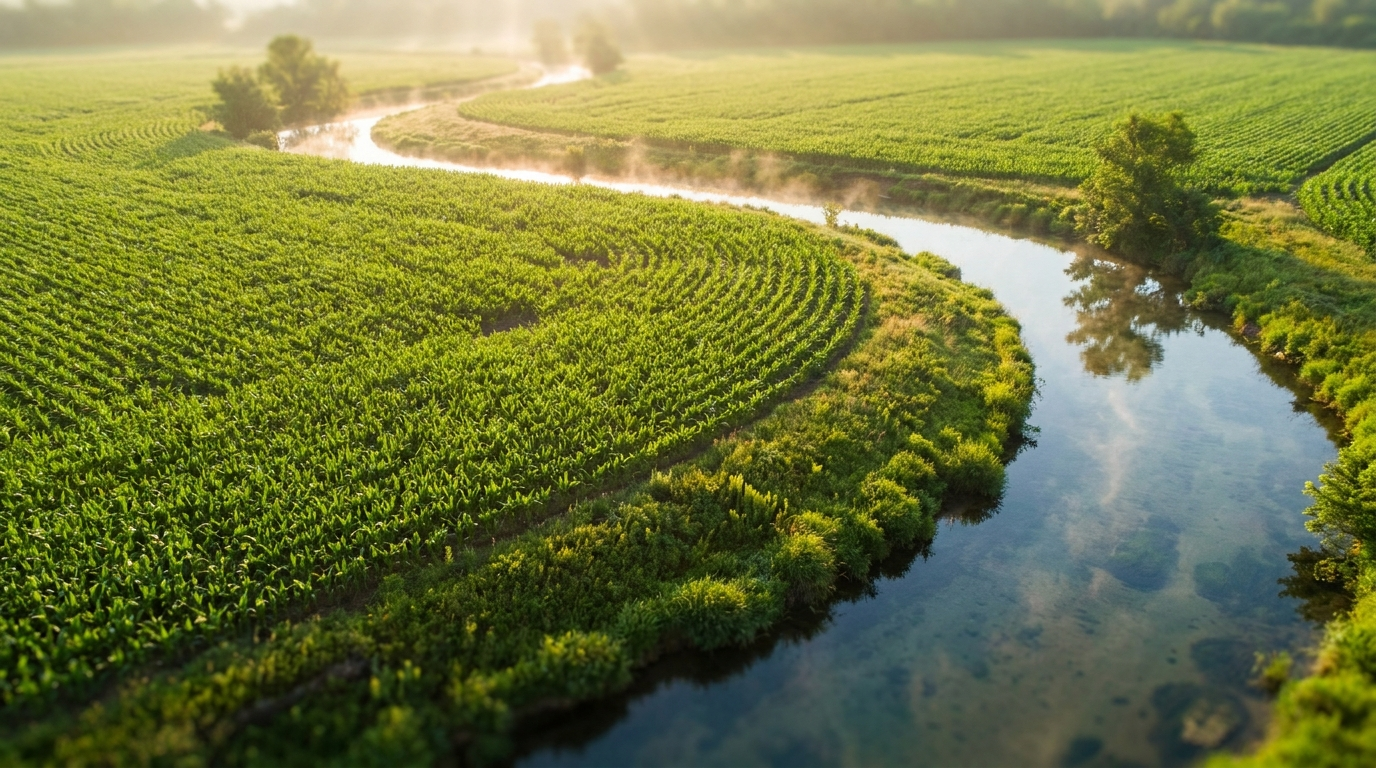
Pesticides in Tap Water: Why Summer Is Peak Season
If your tap water comes from a river or reservoir in farm country, summer is the season when it is most likely to carry a trace of herbicide. That is not alarmism, it is a predictable pattern tied to the farm calendar. And in July 2026, a decade-long study of Midwest and Great Plains rivers put fresh numbers behind it, reporting that pesticide pollution in these waterways is not improving and, in many places, is getting worse.
Here is what is actually happening, what the research says about the risk, and the practical steps you can take at home.
Why summer is peak season for herbicides

The most common culprit is atrazine, a weed killer applied to corn, sorghum, and sugarcane. Farmers spray it in spring and early summer, and the first heavy rains wash a share of it off fields and into nearby streams, rivers, and reservoirs. Because those surface waters feed many public drinking-water systems, atrazine levels in tap water tend to rise from late spring through summer, then fall again in the colder months.
Atrazine is the most commonly detected pesticide in United States tap water. According to the Environmental Working Group's Tap Water Database, it has turned up in samples from more than 2,000 utilities serving about 40 million people. The five states where it appears in the most public systems are all farm-heavy: Texas, Wisconsin, Missouri, Kansas, and Illinois.
The July 2026 river study named atrazine, along with the herbicide metolachlor and the insecticide imidacloprid, as the biggest threats to clean water across the region it examined. Two-thirds of the sites it sampled exceeded at least one benchmark meant to protect against short-term harm, and atrazine was the single pesticide pushing the most sites past those limits.
Is atrazine in drinking water a health concern?

The honest answer is that the science is still developing. Atrazine is an endocrine disruptor, meaning it can interfere with the body's hormone signaling. Some studies associate it with reproductive and developmental effects, and research has documented harm to frogs, fish, and other aquatic life. The findings in humans are not conclusive, and much depends on the level and length of exposure.
The United States EPA sets a legal maximum contaminant level for atrazine in public water. Many health advocates argue that limit, which has not been meaningfully updated in decades, is less protective than current science would support. Whatever your read on that debate, reducing avoidable exposure is a reasonable, low-cost step, especially for households with young children or anyone who is pregnant.
One thing worth clearing up: boiling does not help. Atrazine is a heat-stable chemical, so boiling will not break it down, and because some water leaves as steam, boiling can slightly concentrate what remains. Boiling is the right response to a bacterial boil-water advisory, but it is the wrong tool for a chemical like a herbicide.
How to reduce pesticides at home
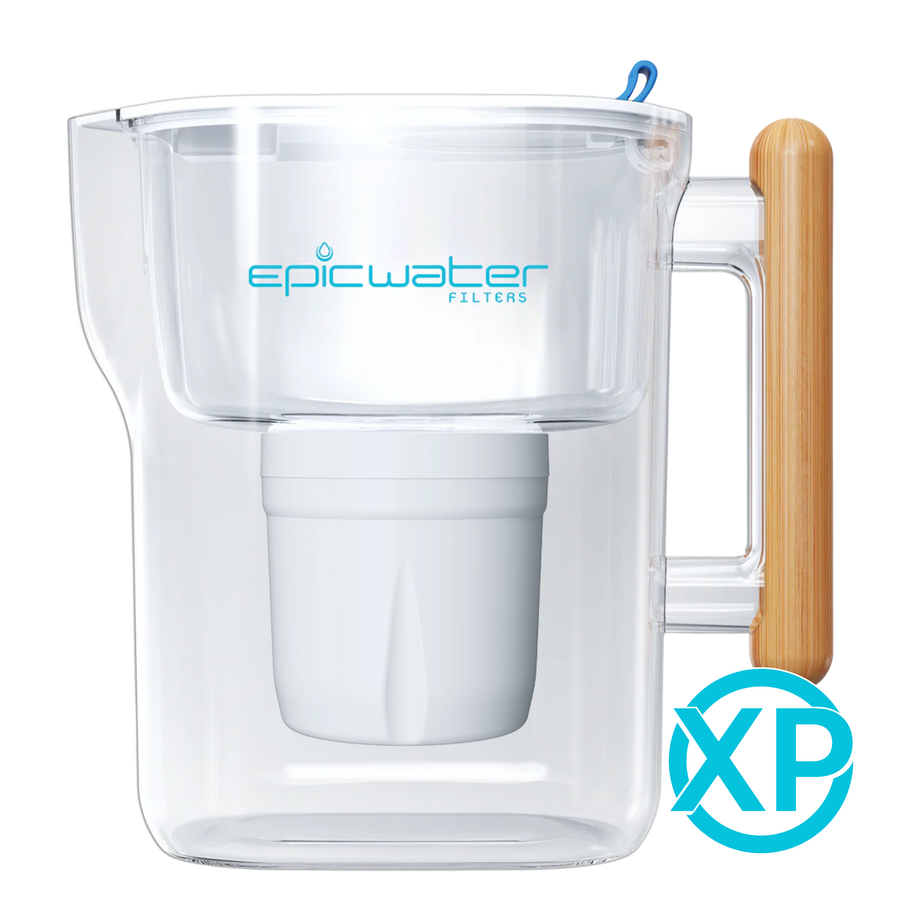
For trace organic chemicals like atrazine, activated carbon is one of the recognized treatment approaches. The EPA and university extension guides list activated carbon filtration among the effective methods, and the mechanism is straightforward: as water passes through the carbon, the herbicide molecules adsorb onto the carbon's vast internal surface instead of continuing into your glass.
Not all carbon is equal. A dense carbon block generally outperforms loose granular carbon for these contaminants, because a solid block forces water through a maze of compressed carbon with more contact time and no channeling around the media. Epic's Pure XP uses a carbon fiber block for exactly this reason. It is NSF certified to Standard 42 for chlorine taste and odor and to NSF/ANSI/CAN 372 for lead-free materials, and it is independently lab-tested to reduce 99.9% of lead and tested against the NSF/ANSI P473 protocol for PFOA and PFOS. Its reduction performance for lead and PFAS is independently tested rather than NSF certified, a distinction worth keeping clear.
A couple of honest limits are worth stating. Carbon does not remove nitrate, which often travels alongside pesticides in farm runoff; that requires reverse osmosis or ion exchange. And whichever filter you use, replace the cartridge on schedule, because carbon that has adsorbed its capacity stops working. If you want to see which contaminants are most relevant to your own area, Epic's What's in Your Water tool is a useful starting point.
The simple takeaway
Pesticides in tap water follow a season. Herbicides go on fields in spring and summer, rain carries a share into source water, and levels in the tap tend to peak in the warm months before easing off. You do not need to panic, but if you live in or downstream of farm country, a carbon block filter is a sensible, inexpensive barrier for the trace herbicides that define summer water, plus the chlorine taste and lead that a good filter handles year round.
Condividi:
Does Boiling Water Remove Contaminants? What It Kills and What It Does Not
What Does TDS in Water Mean? Why the Number Is Not a Safety Score