
Why Your Tap Water Smells Like a Pool: The Summer Chlorine Switch
If your tap water suddenly smells or tastes like a swimming pool this summer, you are not imagining it, and in most cases it is not a sign that anything is wrong. Each year, many water utilities temporarily change the way they disinfect their water, and that change is usually the reason behind the stronger chlorine smell.
This short guide explains what the summer chlorine switch is, why utilities do it, whether the water is safe to drink, and what you can do if the taste bothers you.
What is the summer chlorine switch?

Most large US water systems disinfect their water with chloramine, a longer-lasting blend of chlorine and ammonia that stays stable as water travels across miles of pipes. For a few weeks each year, often in spring or summer, many of these utilities temporarily switch to free chlorine, a stronger and faster-acting disinfectant. Water professionals sometimes call this a chlorine burn or a free chlorine conversion.
The switch is routine maintenance. Over time, chloramine can allow a process called nitrification to build up inside the distribution system, and a short free-chlorine period helps clean the pipes out. Warm weather speeds up biological growth inside water mains, which is why the free-chlorine window is so often scheduled for the warmer months.
You can see it on the 2026 calendar. Greenville Utilities in North Carolina scheduled its annual switch from June 16 through July 28. The City of Tampa ran one from May 29 to June 19. Several Central Texas cities, including Cedar Park and Round Rock, planned a coordinated switch beginning in early August.
Why does the water smell like a pool?

Free chlorine is more volatile than chloramine, so it carries a stronger, more noticeable pool-like odor. The water is doing the same job, disinfecting your supply, but the smell and taste are simply more obvious during the switch. For many people the change is subtle. For anyone sensitive to chlorine, it can be hard to miss.
Is the water safe to drink during the switch?
Yes. Both chlorine and chloramine are disinfectants approved by the US Environmental Protection Agency, and utilities run these temporary switches as planned maintenance, not in response to contamination. According to the Centers for Disease Control and Prevention, the water remains safe to drink and use throughout.
Two groups do need to take specific steps, and utilities call them out every time:
- Kidney dialysis centers must adjust how they treat and monitor water, so anyone on home dialysis should follow their clinic's guidance.
- Fish, aquarium, and pond owners should dechlorinate their water as usual, because chlorine and chloramine are both harmful to fish.
If either applies to you, a standard drinking water pitcher is not a substitute for those dedicated steps.
How long does the chlorine switch last?
Most temporary switches run about two to four weeks, though the exact window varies by utility. Your water provider posts the start and end dates on its website or through customer notifications, so the quickest way to know when your area's switch ends is to check directly.
How to reduce the chlorine taste and smell
If the taste bothers you, you have a few simple options:
- Chill it. Keeping water in a covered pitcher in the refrigerator lets some of the free chlorine off-gas, which softens the smell.
- Filter it. Activated carbon is the standard, well-proven way to reduce chlorine taste and odor. This is the aesthetic effect covered by NSF/ANSI Standard 42.
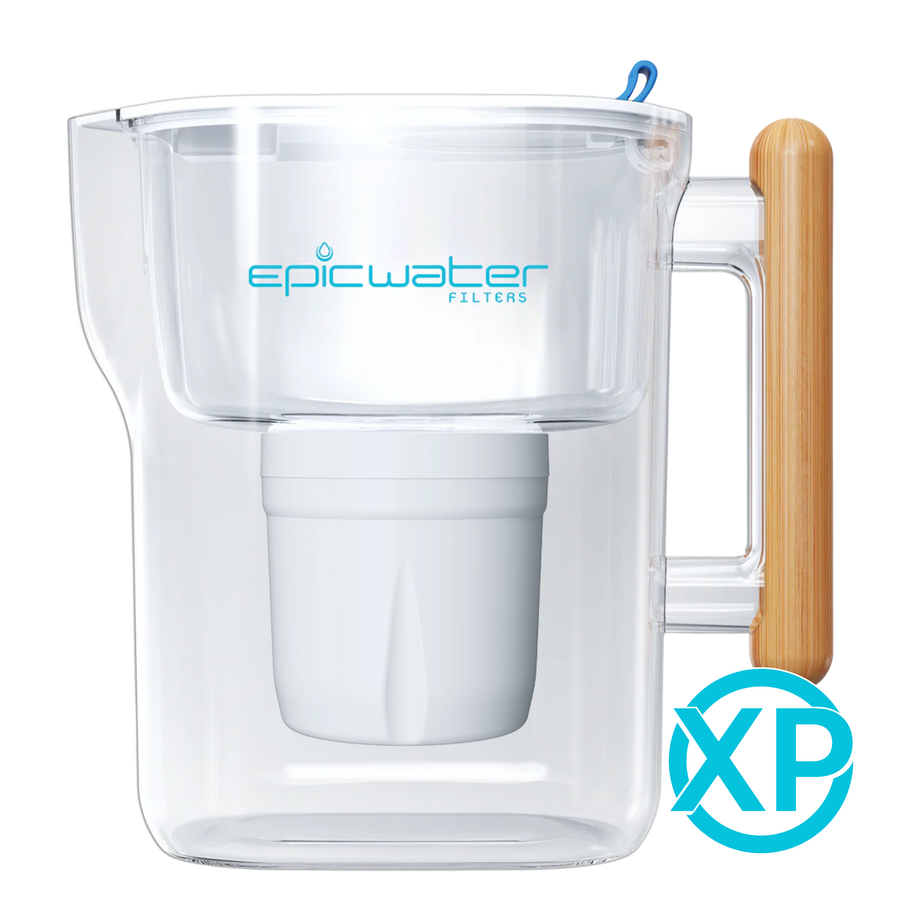
Epic's Pure XP filter is NSF certified to Standard 42 for chlorine taste and odor, along with NSF/ANSI/CAN 372 for lead-free materials. One helpful detail: free chlorine, the kind used during summer switches, is actually easier for carbon to reduce than chloramine, which is more stubborn and needs more contact time. So a good carbon filter tends to perform well during exactly these weeks. As with any filter, replacing the cartridge on schedule keeps it working.
An honest note: a filter improves the taste and odor of your water, but it does not replace your utility's disinfection, and you should always follow any specific advisory your utility posts.
The bottom line
A pool-like smell at the tap in summer is usually a sign that your utility switched to free chlorine for routine maintenance, not that your water is unsafe. The water stays safe to drink, the change is temporary, and if the taste is a nuisance, chilling or carbon filtering will take care of it. If you want to see what else is in your local supply, you can look it up with Epic's What's in Your Water tool.
Condividi:
L'acqua migliore per caffè e tè: l'acqua filtrata migliora il gusto?
Does Boiling Water Remove Contaminants? What It Kills and What It Does Not