
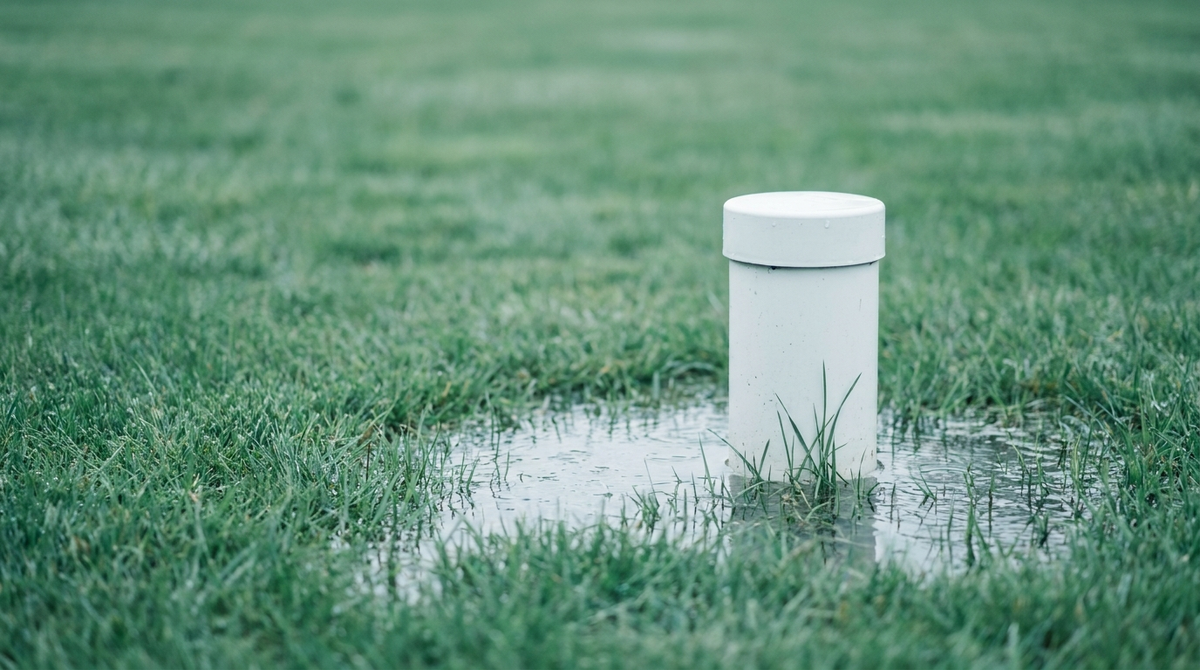
A nor'easter sat over the East Coast this weekend. If you draw your water from a private well, the number that matters is not how much rain fell. It is whether the water rose high enough to reach your well cap.
The storm ran Saturday into Monday, from North Carolina through New England, with 2 to 4 inches of rain across the Northeast and totals near 6 inches from New Jersey to Boston. High tide at Freeport on Long Island reached 7.8 feet, the highest in over two years.12
A public water system has to tell you when something goes wrong. A private well does not. Roughly 43 million Americans drink from one, and that water is not regulated under the Safe Drinking Water Act, or by most states.4 Nobody is going to call you.
What flood water does to a well
Flood water is not rain. By the time it stands in a yard it has crossed soil, roads, farm fields and septic systems, carrying bacteria and other contaminants with it. If it reached your well, the working assumption from state health agencies is that the well is contaminated until a laboratory says otherwise.67
Some wells are more exposed. Wisconsin's guidance singles out shallow-cased wells, wells in pits or basements, and wells in low ground. It also notes contamination can travel underground from a neighbor's flooded well, so a dry well is not automatically clear.6

The difficult part is that this is usually invisible. Water that runs clear and tastes ordinary can still carry coliform bacteria or E. coli. A change in taste, color or sediment is reason to stop drinking. No change is not evidence the water is fine.67
The order of operations
1. Stop drinking it.
Switch to bottled water or another supply you know is safe, for drinking, cooking, ice and brushing teeth. Do this before anyone looks at the well.357
2. Have the well cleaned and disinfected.
The CDC recommends a well or pump contractor do this, because of the electrical and confined-space hazards. Clear the debris, repair the electrical system, run the water clear, add a chlorine solution sized to the well, circulate it, let it stand, then flush until the chlorine smell is gone.37
3. Test before you drink.
Wait until the chlorine has cleared, then have a certified laboratory test for total coliform bacteria and E. coli. Minnesota's health department puts it bluntly: do not use the water until the lab says it is free of bacterial contamination. Be prepared to repeat if the first result is not clean.37
What to drink while you wait

Bottled water is the simple answer, and what the CDC recommends until testing confirms the water is safe.3 Where a health department calls for boiling, the standard instruction is a rolling boil of at least one minute.6
Boiling has a limit worth naming. It deals with bacteria and viruses. It does not remove nitrate, and because water leaves as steam while the nitrate stays behind, boiling concentrates it. Flooded farmland and overwhelmed septic systems raise nitrate and bacteria together, so on an agricultural well ask the lab to run nitrate alongside. We have covered what a nitrate or nitrite warning means for infants and formula, and what to test for on a well.5
Two further notes. A rotten-egg smell after a flood is worth telling the lab, since it can point at bacterial activity rather than the harmless geology explanation. And this is not the moment for a strip kit: the sample is the weak link in home testing.5
Find a certified drinking-water lab
For area-level background, Epic's What's in Your Water lookup lets you explore reported contaminants in your region. It is not a test of your own well.
Where a filter fits, and where it does not
We would rather say this plainly than sell around it. A pitcher filter is not a treatment for a flooded well. Epic's pitcher filters are not represented as microbiological purifiers, and no pitcher should be used to make bacterially unsafe water safe. Disinfection and a clean lab result come first.
Once the well is back and the bacteria question is settled, a filter has an honest job on taste, leftover chlorine, and the contaminants it is documented to reduce. Read certification and reduction separately. Pure XP is listed by NSF under Standard 42 for material safety and under NSF/ANSI/CAN 372 for lead content.89 Contaminant reduction is documented in separate independent testing, including lead at 99.9 percent under the NSF/ANSI 53 protocol and PFOA and PFOS under the NSF P473 protocol.10
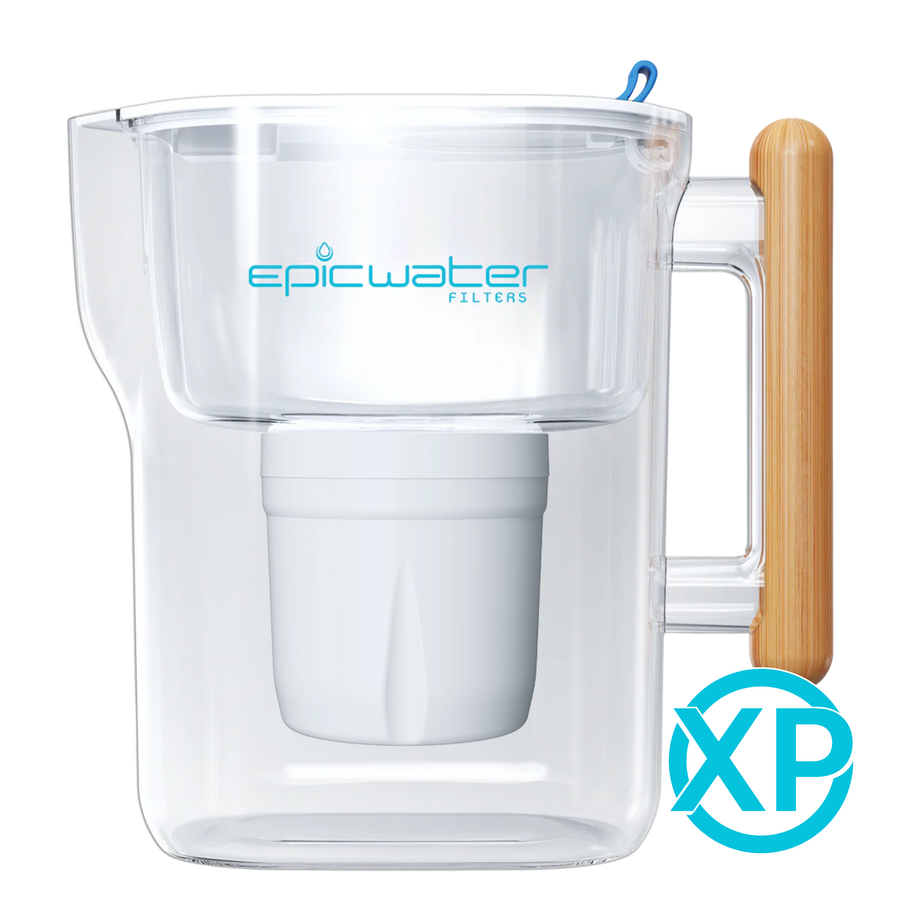
If a pitcher or dispenser fits your household once the well is back, explore Epic's pitchers, dispensers and bundles, and review the documentation for the exact filter first. On a public system rather than a well? Our guide to what to do after a boil water advisory lifts covers that path.
Questions about wells after a flood
Is my well water safe to drink after flooding?
Assume it is not until a certified laboratory says otherwise. If flood water reached the well, state health agencies advise treating it as contaminated: stop drinking, cooking and brushing teeth with it, disinfect the well, then test for bacteria.67
How do I know whether flood water got into my well?
Look at where the water stood. A submerged well, or one in a pit, basement or low spot, is treated as contaminated. Contamination can also move underground from a neighbor's flooded well, so proximity is reason enough to test.6
Can I just boil the water instead of disinfecting the well?
Boiling is an interim measure for bacteria, not a fix for the well. A rolling boil of at least one minute is the usual instruction while you arrange disinfection and testing. It does not remove nitrate, and it is wrong if the water smells of fuel or chemicals.36
How long until I can drink from my well again?
Plan on more than a week. The chlorine needs at least 12 hours in the well, and the CDC advises waiting 7 to 10 days after disinfection before sampling. If the first result is not clean, the process repeats.37
Will a water filter make flooded well water safe?
No. Epic's pitcher filters are not represented as microbiological purifiers and are not a treatment for a well that may carry bacteria. Use bottled water, have the well disinfected, and get a clean laboratory result first. A filter comes after that.
Sources & references
Reviewed September 28, 2026
- The Weather Channel / September 2026 nor'easter forecast and coastal flooding ↗Storm dates, rainfall totals and coastal inundation from North Carolina to New England.
- ABC News / Nor'easter brings strong winds, coastal flooding and high waves ↗Independent confirmation of rainfall totals and record tide levels, September 26 to 27, 2026.
- CDC / How to disinfect wells after an emergency ↗Contractor recommendation, 12-hour contact time, 7 to 10 day wait, coliform and E. coli testing.
- EPA / Private drinking water wells ↗Over 43 million Americans on private wells, and their exclusion from Safe Drinking Water Act regulation.
- EPA / Protect your home's water ↗Annual testing for coliform bacteria and nitrate, and post-flood guidance to avoid the well.
- Wisconsin DNR / Recommendations for private wells inundated by flooding ↗Which wells are most vulnerable, switching to a safe source, and the one-minute rolling boil.
- Minnesota Department of Health / Flood precautions for private water wells ↗Assume contamination, disconnect power, disinfect, then test through a certified laboratory.
- NSF / Official Standard 42 component listing ↗Pure XP certification for material safety requirements only.
- NSF / Official Standard 372 listing ↗Lead-content certification of the listed filter components.
- Epic Water Filters / Testing documents ↗Independent performance reports, data sheets and certification resources.
Flood response varies by well construction, by state and by what the water carried. Follow your health department, well contractor and certified laboratory over any general article, this one included. The well and countertop photographs are generated editorial illustrations. The Pure XP image is an official product photograph.
Condividi:
Why Is My Tap Water Cloudy? The Two Minute Glass Test
What a Disinfection Byproduct Violation Notice Actually Means