
The advisory arrives with clear instructions. The all‑clear arrives with a single sentence, and you are left standing in your kitchen wondering whether to run the taps, dump the ice, or throw out the filter cartridge you kept using the whole time.
On Monday, September 14, a 30‑inch water main broke in Cary, North Carolina before dawn. Pressure fell across the town’s Central Pressure Zone, roughly 50,000 customers were told to boil water for one minute, and thirty schools dismissed students early.12 By 4:30 the next morning it was over. All fourteen samples came back free of bacteria and the advisory was lifted.3
The honest answer depends on who your utility is, because the guidance genuinely differs between them. That is not a failure on your part.
What the advisory was actually about
A precautionary boil water advisory after a main break is usually not a statement that something was found in your water. It is a statement about pressure.
A pressurized distribution system keeps outside material out. When pressure drops, that protection weakens and material around a break can move the wrong way. Cary’s notice said as much: precautionary, issued because of low pressure, with no harmful bacteria detected. North Carolina’s guidance calls for boiling while a System Pressure Advisory is in effect regardless.1
That is why these advisories end quickly. The utility samples, waits for microbiological results, and lifts the notice when they come back clear.3 It also explains why the follow‑up at your house is modest. The system lost its margin of safety for a few hours.4

Why your utility’s instructions may differ
Set three sets of guidance side by side and the spread is obvious. Cary told customers that flushing home lines was not required, offering one optional minute to clear discoloration or air.3 Pinellas County, Florida tells residents to run cold water at every tap for five minutes, and states plainly that there is no need to replace or clean filters.5
A recovery checklist used by health officials in southeast Michigan takes the most thorough line of the three: remove the faucet aerator, flush cold taps for five minutes, flush the hot water tank for fifteen to thirty minutes depending on its size, and discard and replace refrigerator, faucet, and under‑sink filters.6
None of these is wrong. A brief pressure dip that never produced a positive sample is not the same situation as an extended outage with suspected contamination, and utilities write for the event they actually had.7 The practical rule: your utility’s notice is the instruction that applies to you. An article, this one included, is background.
The steps that hold up almost everywhere
Run your cold taps before you drink. Even where it is called optional, running cold water clears what sat in your pipes during the event and draws fresh, disinfected water in from the main. CDC’s facility guidance says to flush beyond five minutes, until residual disinfectant is detectable.7 Five minutes at the kitchen tap is a sensible household equivalent.5
Dump the ice. Ice made during the advisory came from water you were told to boil. Discard it, then make and throw away a few more batches so the feed line clears. This instruction appears in nearly every version of the guidance.67
Handle the filter deliberately. A standard carbon drinking‑water cartridge is not designed or tested to remove bacteria, so if untreated water passed through yours, the cartridge neutralized nothing. Some utilities judge flushing sufficient.5 Others say replace.6 CDC takes the most conservative path: remove point‑of‑use filters, flush the outlet, then install a new one.7
If your cartridge is near the end of its rated life, replace it. If it is nearly new and your utility says flushing is enough, following your utility is reasonable. What you should not do is assume the filter protected you during the advisory. It was not built for that job.

What a filter can and cannot do here
A drinking‑water filter is not a substitute for a boil water advisory. A pitcher or faucet filter is not a microbiological purifier, and pouring advisory water through one does not make it safe. Boil or use bottled water, as the notice directs.4
Once it lifts, the honest role for a filter is the ordinary one it always had: taste, odor, and the specific contaminants its documentation covers. A fresh cartridge is an inexpensive reset, not a treatment.
Read the claims precisely. Epic’s Pure XP is listed by NSF under Standard 42 for material safety and under NSF/ANSI/CAN 372 for lead content.89 Those listings describe what the filter is made of, not bacteria removal. Contaminant‑reduction figures sit in separate independent testing reports.10
Find your water quality report
For background on what has been reported near you, Epic’s What’s in Your Water lookup is a starting point. It is area‑level information, not a test of your tap.
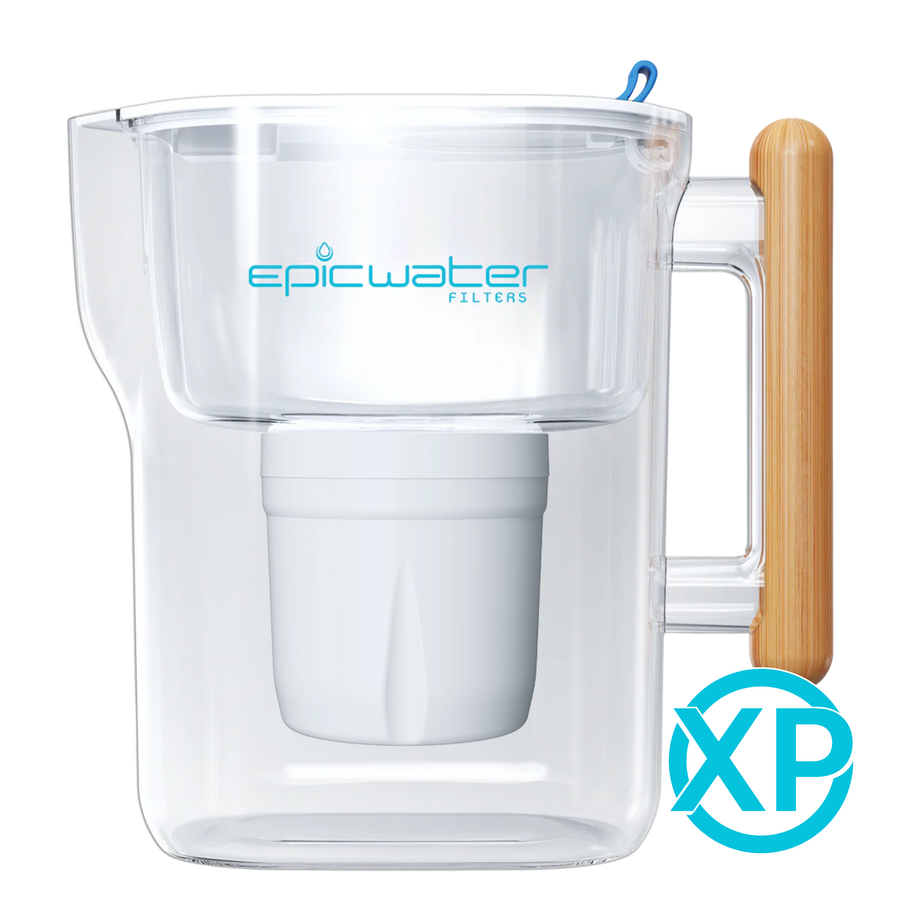
If a pitcher or dispenser fits your household, explore Epic’s pitchers, dispensers, and bundles. Read the documentation for the exact filter before choosing.
If something still looks or smells wrong
A lifted advisory is not the end of it if your water still looks off. Cloudy or discolored water after an event usually traces to disturbed sediment in the main or trapped air in your lines, and it usually clears by running the tap.3 Air looks milky white and settles from the bottom of a glass within a minute or two.
If it does not clear, or the taste or smell is unfamiliar, call your utility instead of guessing. They know what work happened on your street.5
Questions about the end of a boil water advisory
Do I need to flush my pipes after the advisory is lifted?
It depends on your utility. Some require five minutes of cold water at every tap; Cary told customers flushing was not required. Running the cold taps for a few minutes is a low‑cost step either way.
Should I replace my water filter?
Guidance splits. Some utilities say flushing the lines is sufficient; others tell you to discard and replace refrigerator, faucet, and under‑sink cartridges. If yours is near the end of its rated life, replace it, after flushing rather than before.
Do I have to throw out ice?
Yes, and this one is consistent. Ice made during the advisory came from water you were told to boil. Discard it, then make and throw away about three more batches.
Does my water heater need to be flushed?
Some utilities say flushing the cold taps is enough. Others call for running hot water until it turns cool, roughly fifteen minutes for a 40‑gallon tank and thirty for a larger one. Check your own notice.
Was there actually bacteria in my water?
Often no. A precautionary advisory after a main break is triggered by the loss of pressure, not a detection. In Cary, all fourteen samples were free of bacteria. The advisory existed because low pressure removes a safety margin.
Can I use my pitcher filter instead of boiling next time?
No. A standard drinking‑water filter is not a microbiological purifier and is not tested to remove bacteria. Boil for one minute or use bottled water, as your notice directs.
Why did the advisory end so quickly?
Because the utility was waiting on laboratory results, not repairs alone. Once samples came back clear, the reason for the precaution was gone.
Sources & references
Reviewed September 16, 2026
- Town of Cary / System Pressure Advisory news release, September 14, 2026 ↗The 30-inch main break, the Central Pressure Zone, the one-minute boil instruction, and the note that the advisory was precautionary.
- WRAL / Cary water main break coverage, September 2026 ↗Scale of the event: roughly 50,000 customers affected and thirty schools dismissed early.
- CBS 17 / Boil advisory lifted in Cary, September 15, 2026 ↗Fourteen samples free of bacteria, the 4:30 a.m. lift, and the optional one-minute flush for discoloration or air.
- CDC / Drinking Water Advisory Communication Toolbox (PDF) ↗How utilities issue and rescind advisories after main breaks and pressure loss, and what a boil instruction is for.
- Pinellas County, Florida / What to do after a boil water notice is lifted ↗Five minutes of cold flushing at every tap, no filter replacement needed, and who to call about cloudy water.
- Oakland County Health Division / After a boil water advisory has ended, recovery checklist (PDF) ↗Aerator removal, hot water tank flush times, three-batch ice clearing, and filter discard and replacement.
- CDC / Water system repair and recovery after a boil water alert ↗Flush beyond five minutes until residual disinfectant is detected; remove point-of-use filters, flush, then install new ones.
- NSF / Official Standard 42 component listing ↗Pure XP listed for material safety requirements under Standard 42.
- NSF / Official Standard 372 listing ↗Lead-content certification of the listed filter components.
- Epic Water Filters / Testing and certification documents ↗Independent performance reports and data sheets for contaminant-reduction figures.
Recovery instructions after a boil water advisory vary by utility, by system, and by the nature of the event. Follow the notice your own utility issued. Nothing here is a substitute for that notice or for guidance from your local health department. The water main and filter cartridge photographs are generated editorial illustrations, not photographs of the Cary repair or of Epic products. The Pure XP image is an official product photograph.
Aktie:
Do You Have a Lead Service Line? One in Five Is Still Unknown
The Best Water for Coffee: The 98% of the Cup Most People Skip