
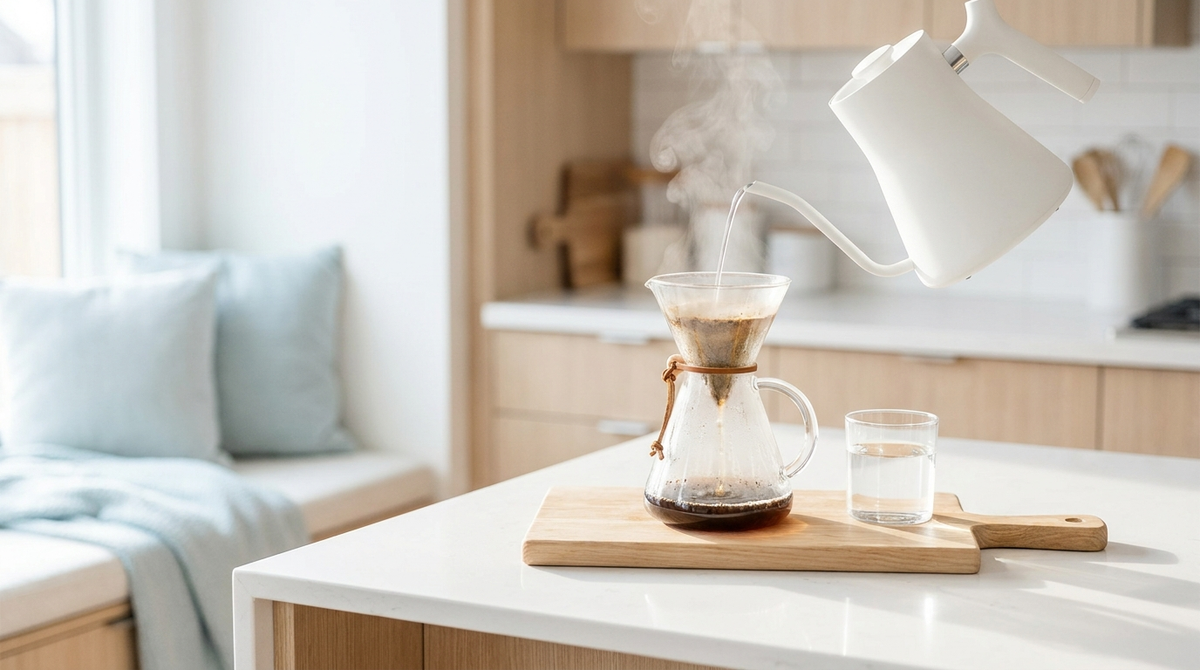
The Best Water for Coffee: The 98% of the Cup Most People Skip
Fall coffee season officially opened this week. Starbucks brought its fall menu back on August 25, the pumpkin cups are everywhere, and home kettles across the country are switching from iced back to hot. It is the time of year when people upgrade beans, grinders, and brewers. Almost nobody upgrades the ingredient that makes up most of the cup.
A brewed cup of coffee is more than 98 percent water. The Specialty Coffee Association (SCA), the organization behind professional brewing standards and competitions, publishes a water quality standard for exactly this reason: the same beans, brewed with different water, make noticeably different coffee. The good news is that the two water problems that matter most at home are simple to understand, and one of them has a certified fix.
Chlorine: great for pipes, rough on coffee
Municipal tap water in the United States is supposed to contain chlorine when it reaches you. EPA rules require public systems that disinfect to maintain a detectable disinfectant residual throughout the distribution system, generally at least 0.2 milligrams per liter entering the pipes, with a legal ceiling of 4.0 milligrams per liter. That residual is a real safety feature. It protects water from microbial contamination on the long trip between the treatment plant and your kitchen.

The trouble is that chlorine's job ends at your faucet, and coffee is where it does its most noticeable damage. The SCA water standard sets its target for total chlorine at zero. Even trace levels can react with compounds in roasted coffee to form chlorophenols, which read in the cup as a medicinal, plasticky, or band-aid note. Utilities also adjust disinfection seasonally, which is one reason the same bag of beans can taste different in August than it did in May.
The mineral instinct most people get backwards
When people hear that tap water affects coffee, the common move is to reach for the emptiest water possible: distilled, zero TDS, or reverse osmosis jugs. Coffee chemistry points the other way. A peer-reviewed study in the Journal of Agricultural and Food Chemistry, The Role of Dissolved Cations in Coffee Extraction, found that dissolved minerals such as magnesium and calcium actively help pull flavor compounds out of the grounds during brewing. Strip the water empty and you tend to get a flat, hollow cup.
The SCA standard reflects that. Alongside zero chlorine, it targets roughly 150 milligrams per liter of total dissolved solids inside a wide acceptable range, moderate calcium hardness near 68 milligrams per liter, alkalinity near 40 milligrams per liter, and a neutral pH. You do not need to chase lab numbers at home. The practical translation is short: chlorine out, minerals in.

What a certified carbon block does, and what it does not
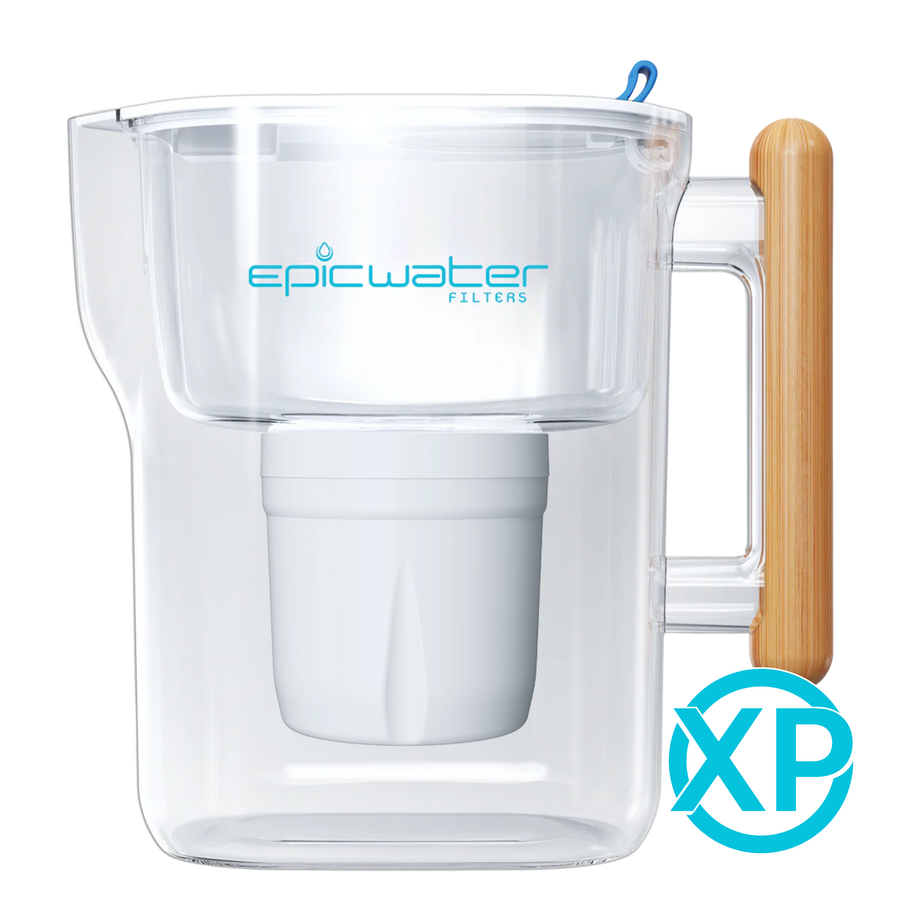
This is the rare water topic where the certified claim and the actual problem line up exactly. Epic's Pure XP and Nano XP filters are NSF certified to Standard 42, the standard covering chlorine taste and odor reduction along with material safety, and to NSF/ANSI/CAN 372 for lead-free material compliance. Clearing chlorine before you brew is not a side effect. It is the certified job.
Just as important for coffee, a solid carbon fiber block is not a softener and not a reverse osmosis membrane. Calcium and magnesium pass through, which is exactly what extraction wants. The same block is also independently tested against the health list you would want handled anyway: 99.9 percent lead reduction against NSF/ANSI 53 criteria, and PFOA and PFOS reduction against NSF P473 criteria. Better coffee and a shorter worry list come out of the same Pure XP pitcher.
Honest boundaries, stated plainly: a carbon filter will not stop kettle scale, because scale is those same pass-through minerals coming out of solution when water is heated. Descale the machine on its schedule. A filter also does not set water to a lab-perfect SCA profile; it moves the biggest lever, chlorine taste and odor, while leaving the minerals in. And if your utility uses chloramine rather than chlorine, boiling barely touches it either way. Your utility's annual water quality report says which one you have.
A simple brewing water routine for the season
- Brew with cold, freshly filtered water. Never draw from the hot tap, where water has been sitting in the tank and the plumbing.
- Look up what is actually in your local water with the free What's in Your Water tool, which reads utility data by zip code.
- Replace the cartridge on schedule. Taste and odor reduction fades as adsorption sites fill up, and a returning pool-water note is the classic sign.
- Descale the kettle or espresso machine on the manufacturer's schedule. That is an appliance chore, not a water safety problem.
- If the tap smell changes suddenly, check your utility's notices before blaming the beans. Seasonal disinfection changes are common and temporary.
Fall is the season of better coffee rituals. Before the next bag of single-origin beans, fix the ingredient that is 98 percent of every cup. It is the cheapest upgrade in the routine, and the one your taste buds notice first.
Aktie:
Your Boil Water Advisory Just Lifted. Now What?
Does a Water Filter Remove Fluoride? A 2026 Guide