
Counterfeit Water Filters: How to Tell If Yours Is Real
A water filter is one of the few products people buy specifically to protect their health, then trust completely and rarely think about again. That trust is exactly what makes counterfeit filters so effective, and so quietly dangerous. A fake can copy the packaging, print a convincing certification logo, and sell for a little less than the real part, while removing far less than you think, or in some cases nothing at all.
This is not a fringe worry. Counterfeit water filters have become one of the most copied consumer products online, and the problem is live in 2026. So here is a calm, practical guide: how fakes reach you, why they matter more than a normal knockoff, and the three checks that keep one out of your kitchen.
Fake filters are a real 2026 problem

Replacement filters are the ideal counterfeit target: a repeat purchase, strong brand recognition, and a sealed product that is almost impossible to inspect before you install it. U.S. Customs and Border Protection has intercepted shipments of thousands of counterfeit refrigerator filters at once, and major appliance makers have issued repeated warnings about copies of their cartridges. Consumer testing organizations have flagged the same pattern, and in July 2026 an FDA device-recall listing for a water filter model was updated, a reminder that even the genuine supply chain gets scrutiny while the fake one operates in the shadows.
Most fakes reach people through third-party marketplace listings, the kind where the brand looks right but the actual seller is someone you have never heard of, often at a price that undercuts the real part. That is the single biggest tell, and the easiest one to act on.
Why a counterfeit is worse than no filter
It is tempting to treat a fake as a minor rip-off, a slightly worse version of the real thing. The reality is more concerning. Independent testing and industry groups, including the Association of Home Appliance Manufacturers, report that counterfeit filters frequently fail to remove the contaminants a genuine cartridge is engineered to reduce, including lead. Some go further and use low-grade or non-food-safe materials that were never tested for drinking water, and investigators have occasionally found filler material sitting where filtration media should be.
So the harm is not simply that a fake removes a bit less. It is that it can remove almost nothing while looking exactly like protection. A filter you wrongly trust changes what you are willing to drink and give your family, which is arguably riskier than knowing you have no filter at all.
How to tell if a water filter is real

You cannot judge a filter by the photo on a listing, because the whole point of a counterfeit is to look identical. Instead, check three things that are much harder to fake.
1. Check the seller
Buy from the manufacturer directly, or from a retailer the manufacturer names as authorized. On a marketplace, look at who actually sells and ships the item, not just the brand printed on the page. If a replacement filter is dramatically cheaper than the same part sold direct, treat that as a warning sign rather than a deal.
2. Verify the certification
A printed NSF or NSF/ANSI logo proves nothing on its own, because anyone can print a logo. Some fakes even reuse a real certification number that belongs to a different, genuinely certified product, so a careless search appears to confirm it. Verify the exact brand and model in the certifier's official listings database, and confirm which standard it covers.
3. Inspect the cartridge
When it arrives, compare the weight, packaging, and print quality against the official product images. Counterfeits often weigh less, feel hollow, or ship in packaging with misspellings, blurry logos, or missing date codes. A genuine cartridge is packed with real filtration media and feels like it.
What a real certification actually means
Certification is worth understanding, because it is the thing fakes imitate most. When a filter is certified to a standard like NSF/ANSI 42 for chlorine taste and odor, or NSF/ANSI 53 for specific health-related contaminants, it means a certifier tested that exact model and audits it over time. That is different from a product that has been independently tested against a protocol without full ongoing certification. Both can be meaningful, but they are not the same claim, and a trustworthy brand tells you which is which rather than blurring them.
For context, Epic's Pure XP is NSF certified to Standard 42 and to NSF/ANSI/CAN 372 for lead-free wetted materials. Its other results, including 99.9% lead reduction evaluated against NSF/ANSI 53 and testing against the NSF/ANSI P473 protocol for PFOA and PFOS, are independently lab-tested rather than NSF certified, and we state it that way on purpose. A certification, however, only protects you on a genuine filter. On a counterfeit, the same words are just ink.
Buying direct is the simplest protection
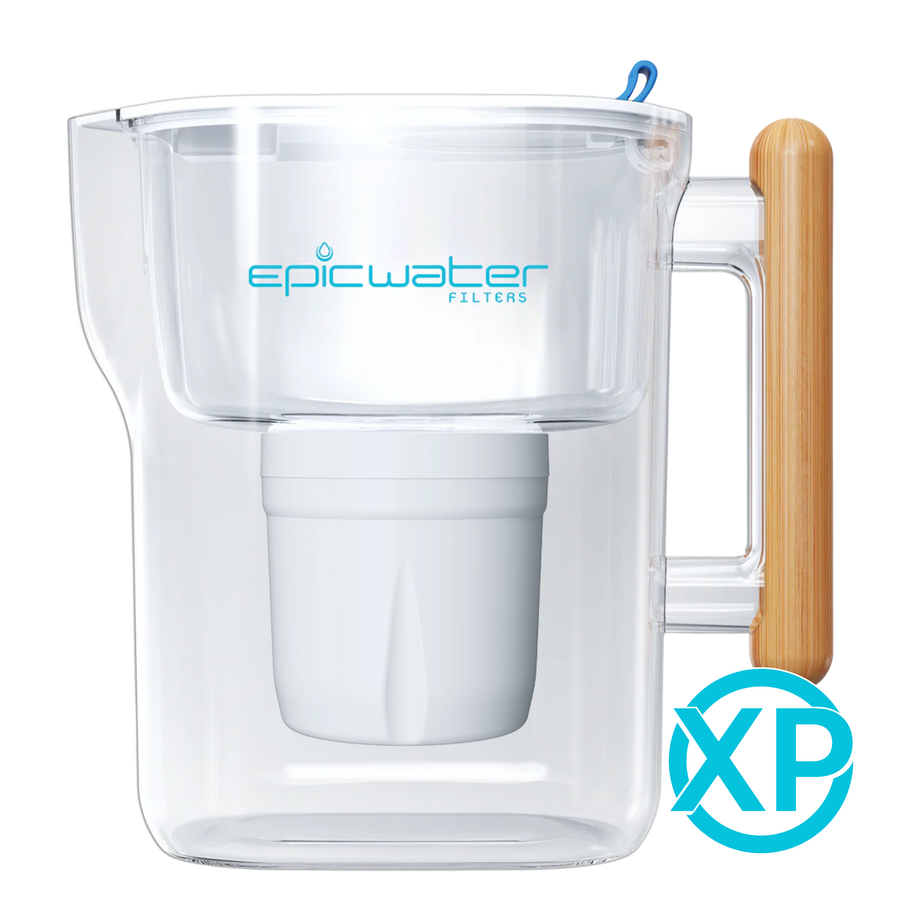
All of this gets much simpler when you remove the marketplace from the equation. Buying a filter and its replacement media directly from the manufacturer means the cartridge in your hand is the one the company made and tested. There is no unknown reseller in the middle, no mystery about which model you received, and no counterfeit to inspect. Epic sells Pure XP and its media factory direct, and CoreXchange sends genuine replacements on schedule, so you are never tempted to hunt for a cheaper unknown cartridge when yours is due.
Even a genuine carbon filter has honest limits worth remembering: it reduces chlorine taste and odor and organic chemicals, but it is not a microbiological purifier and is never a substitute for boiling during a boil water advisory. If you want to know what is actually in your water before choosing any filter, start with our What's in Your Water tool and your utility's annual report.
The short version
Counterfeit water filters copy everything except the part that matters, the filtration itself. Check the seller, verify the certification for the exact model, and inspect the cartridge when it arrives. Better still, buy direct from the manufacturer so there is no fake to catch in the first place. A filter is only protection if it is real.
Aktie:
What Does TDS in Water Mean? Why the Number Is Not a Safety Score
Is Filtered Tap Water Safe for Baby Formula? What a Filter Can and Cannot Do