
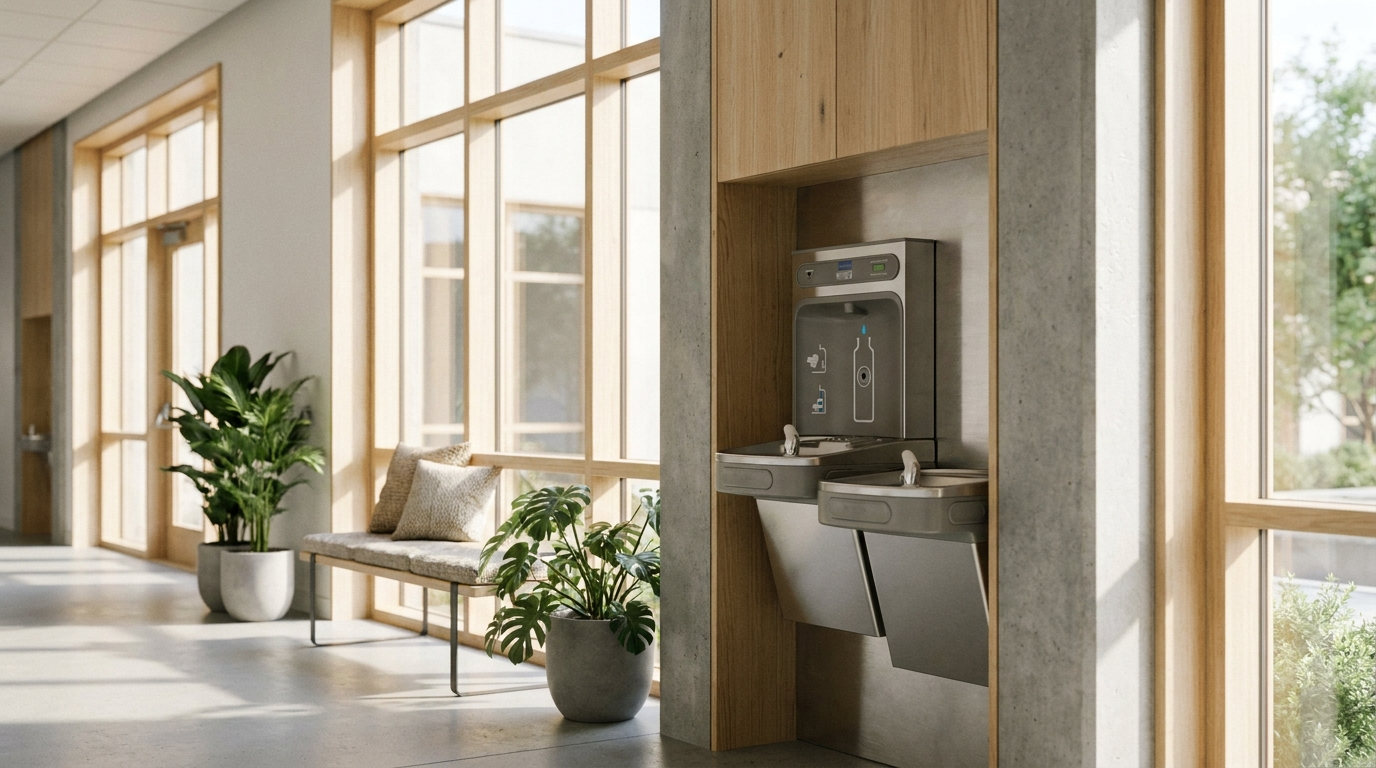
Lead in School Drinking Water: A Back-to-School Guide for Parents
As a new school year begins, most parents think about supplies, schedules, and lunches. Fewer think about the water fountain down the hall. Yet lead in school drinking water is a real, well-documented issue, and the start of the year is one of the most sensible times to pay attention to it. The reassuring part is that the picture is calm and manageable once you understand where lead comes from and what you can actually do about it.
Where lead in school water comes from
Lead almost never comes from the source water or the treatment plant. It comes from the plumbing between the street and the fountain. In older school buildings, that path can include lead service lines, brass fixtures and valves, and the solder used to join copper pipes before it was restricted in 1986. When water sits in contact with any of that metal, a small amount of lead can dissolve into it.

This is why two buildings in the same town, drinking the same municipal water, can show very different results at the tap. The age and materials of the plumbing inside the building are what matter most.
Why the start of the school year matters
Lead builds up in water that sits still, and school plumbing sits still for a long time. Water that stays in the pipes overnight, over a weekend, or across an entire summer break has more time to dissolve lead from any lead-bearing fixtures it touches. The first water drawn after a long idle period, often called the first-draw sample, tends to carry the most lead.
That makes the first mornings back in the fall a natural moment to think about it. Running a fountain for a bit before drinking, or simply filling from home, both reduce the exposure that comes from stagnant water.
What the testing numbers mean
If you find a district report, here is how to read it. The federal action level for lead in a public water system is 15 parts per billion, and it is being tightened under newer federal rules. But that number is written for utilities, not for the fountains inside a school. Most schools are not regulated as their own water systems, so their internal outlets are often not covered by that action level the way a home tap is.
Instead, many schools test under the EPA's voluntary 3Ts program, which stands for Training, Testing, and Telling: train staff on where lead hides, test the outlets, and tell families the results. States that require school testing set their own limits, and they tend to be stricter. New York, for example, lowered its school action level to 5 parts per billion in 2023, and many public health experts argue for limits as low as 1 part per billion, because no blood lead level is considered safe for a developing child. In one statewide review, about a third of New York school buildings had at least one outlet over the state limit. In states with mandatory testing, the first five-year retesting cycle begins in July 2026, so fresh results may be available this year.
Why even low levels matter for kids
Lead is especially concerning for children because it affects the developing brain. It is linked to lower IQ, attention and behavior difficulties, and slowed growth, and there is no known safe level of exposure. That does not mean a single sip from a school fountain will harm a child, and the odds that school water alone causes an elevated blood lead level are low. But because the effects add up across every source, reducing exposure wherever it is easy to do so is worthwhile.
What parents can do
You have more control than it might seem. A few practical steps:
- Look up your school's testing results. Search your district website for lead or 3Ts results, or ask the office which outlets were tested, when, and whether any were replaced or taken out of service.
- Ask about flushing and fill stations. Some schools flush outlets after long breaks, and a filtered bottle-fill station is a strong sign. If you are unsure, have your child use a bottle rather than the fountain.
- Send filtered water from home. This is the one control that does not depend on the age of the building or the district's budget.
If you want to see what else might be in your area's water beyond lead, Epic's What's in Your Water tool is a simple place to start.

Where a home filter helps, and where it cannot
Be clear about the boundary, because it is the whole point. A home water filter does nothing to the water inside your child's school. It cannot reach the fountains, fixtures, or pipes in that building. What it can do is give you clean, lead-reduced water at home to fill a reusable bottle your child carries in.
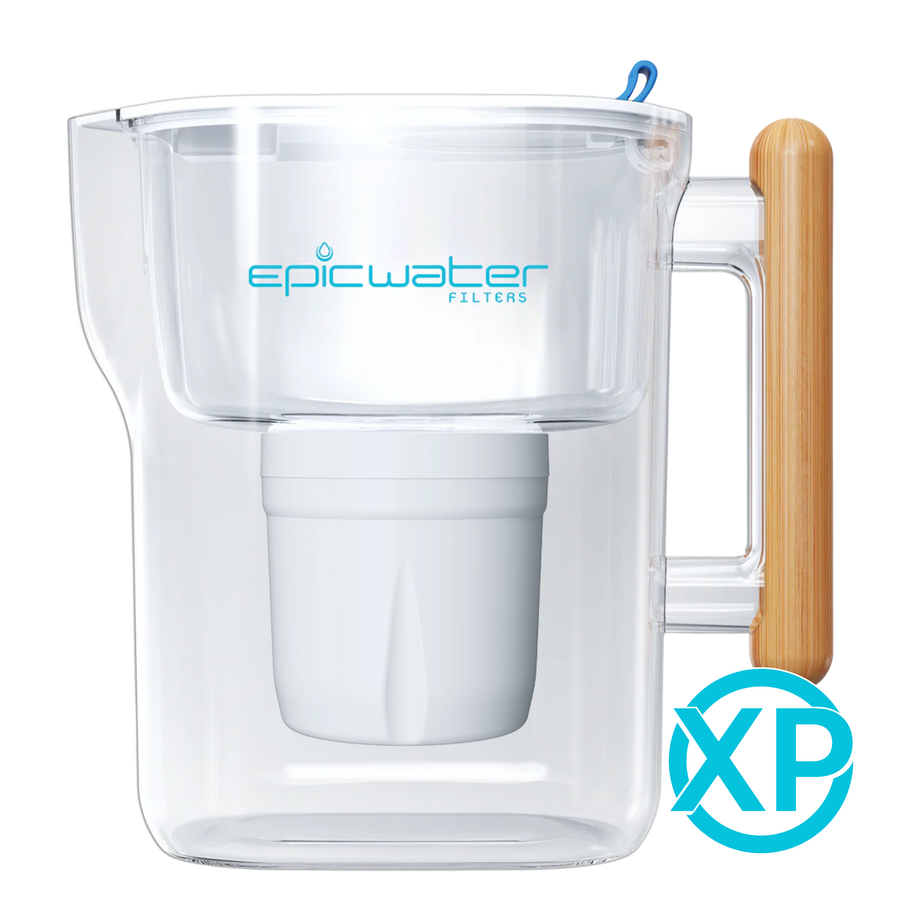
On your own tap, a quality carbon block reduces lead along with chlorine taste and odor. Epic's Pure XP line is NSF certified to Standard 42 and NSF/ANSI/CAN 372, and independently lab-tested to reduce 99.9 percent of lead, evaluated against NSF/ANSI 53. To keep that honest: the lead result is independently tested, not NSF certified, and a filter only performs as tested when you replace the media on schedule. For families filling several bottles each morning, a dispenser holds more than a pitcher, which makes the routine easier.
The simple takeaway
Lead in school water is a real issue, but it is not a reason to panic. Water leaves the plant clean and can pick up lead from old plumbing on the way to the fountain, and long idle periods over the summer make it worse. Check your district's results, ask about flushing and fill stations, and fill a bottle at home. The filter handles the water you own, and the district's testing and fixture program handles the water at school.
Condividi:
Are Refrigerator Water Filters Enough? What They Remove, What They Miss
College Tap Water: A Move-In Guide for Dorms and First Apartments