
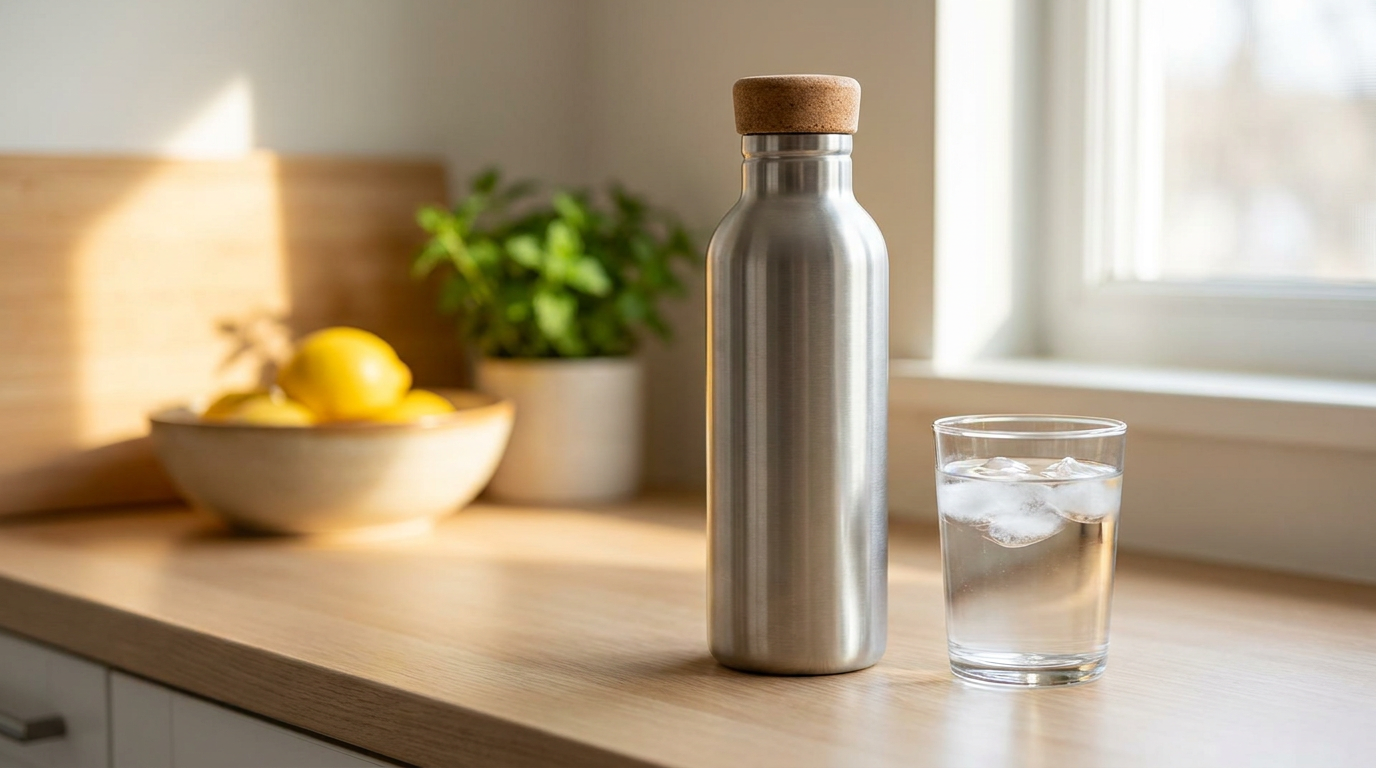
It is one of the most searched water questions of the summer, and the 2026 heat wave has made it more urgent than ever. A heat dome has pushed temperatures past 100 degrees across much of the country, and a plastic water bottle left on a car seat can heat up fast. So is it safe to drink? The short, calm answer: drinking a bottle that sat in a warm car once is generally low risk for a healthy adult. The concern is not a single sip. It is heat, time, and reuse, and what those three things do to plastic over the long run.

What actually happens to a bottle in a hot car
Most single-use water bottles are made from PET, a plastic that is manufactured using a trace amount of antimony as a catalyst. Some plastics and caps also contain BPA, a compound linked to hormone disruption. At room temperature, very little of these moves into the water. Heat changes that. When plastic gets hot, chemical migration speeds up, and the hotter and longer the exposure, the more can cross into the water.
A parked car is close to a worst case. On an 80 degree day, the inside of a car can climb past 110 degrees in under half an hour, and on a truly hot afternoon interiors can reach roughly 150 degrees or more. In one widely cited study, bottles held at about 158 degrees Fahrenheit for several weeks showed antimony levels rise many times over, along with detectable BPA. Microplastic particles can also shed as plastic degrades. None of this means a single warm bottle will make you sick. It means single-use bottles are designed for cool, one-time use, not for being cooked on a dashboard for days.
Why reuse makes it worse
Refilling a single-use bottle stacks a second problem on top of the first. Those thin bottles are meant for one use, and the scratches and wear that come with reuse can shed more microplastics and make it easier for chemicals to migrate through the plastic. At the same time, the warm, moist inside of a refilled bottle is an easy place for bacteria from your mouth and hands to grow, especially in summer heat. If you want a bottle you refill every day, use one built for it, such as stainless steel or glass, and keep it clean.

The honest fix is upstream
Here is the part most articles skip. A home water filter cannot undo this problem after the fact. A carbon filter treats your tap water before you drink it, and it cannot reverse antimony or BPA that has already leached into a sealed bottle baking in your car. So the answer is not a special filter for bottled water. The answer is to stop cooking single-use plastic in the first place, and to carry clean tap water in a bottle made for reuse.
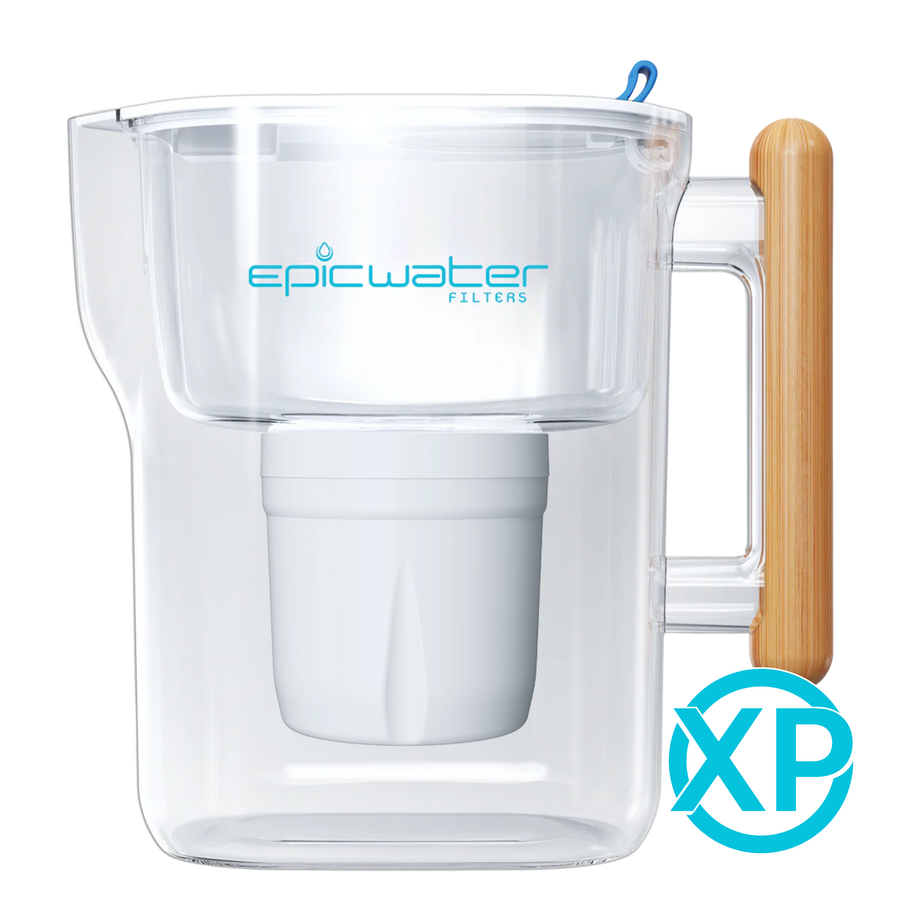
That is where a good carbon filter earns its place. Filtering your own tap water reduces chlorine taste and odor, lead, and many organic chemicals, so the water you pour into a reusable bottle starts clean and tastes cold. Epic's Pure XP is a carbon fiber block that is NSF certified to Standard 42 for chlorine taste and odor and to NSF/ANSI/CAN 372 for lead-free materials, and it is independently lab-tested to reduce 99.9% of lead. If microplastics are your main worry, Nano XP is independently tested to reduce over 99.9% of microplastic particles. Either way, you skip the case of plastic bottles in the trunk and control what goes into your bottle.
A simple summer routine
You do not need to panic about one warm bottle. You just need a habit that keeps heat and reuse out of the loop.
- Do not store cases of bottled water in a hot car, garage, trunk, or sunny window for long periods.
- If a bottle has clearly cooked in extreme heat for a long time, it is reasonable to pour it out.
- Fill a stainless steel or glass bottle with filtered tap water, and keep it in a bag or cooler rather than on a hot dashboard.
- Wash your reusable bottle regularly, since any bottle can grow bacteria when it is refilled and left warm.
One honest boundary worth repeating: a carbon filter is not a microbiological purifier, so during a boil water advisory it is not a substitute for boiling. Follow your utility's instructions. And if you want to see which contaminants matter most where you live before choosing a filter, Epic's What's in Your Water tool is a good place to start.
The bottom line
Drinking water that sat in a hot car once is unlikely to harm a healthy adult. The real issue is repeated heat and reuse, which slowly raise the amount of antimony, BPA, and microplastics that move from single-use plastic into the water. The levels are small, but they are not zero, and they are easy to avoid. Keep bottled water out of the heat, and for everyday hydration, carry filtered tap water in a bottle built for reuse. It is cleaner, cheaper, and it skips the whole hot-plastic question.
Condividi:
Is Filtered Tap Water Safe for Baby Formula? What a Filter Can and Cannot Do
Algae Blooms and Your Tap Water: What Cyanotoxins Mean