
What to Do During a Boil Water Advisory
If your phone buzzes with a boil water advisory, or you see one taped to your building door, the first feeling is usually a small jolt of worry. The good news is that an advisory is a manageable, well-understood situation, and knowing a few simple steps takes most of the stress out of it. This is a calm, practical guide to what a boil water advisory means, exactly what to do while it is in effect, whether your water filter helps, and how to get your plumbing back to normal once the all-clear comes.
What a boil water advisory actually means
A boil water advisory is a message from your water utility that the tap water may not be safe to drink without treating it first, usually because it could contain bacteria, viruses, or parasites. The key word is may. Most advisories are precautionary. They go out the moment a risk appears, and often before any contamination has actually been confirmed, because it is far safer to warn everyone first and test second.
So an advisory is not proof that your water is contaminated. It is the system working as intended: a warning issued while the utility repairs a problem and runs safety tests. Until it is lifted, the safe move is simple. Treat any water you will drink, cook with, or use for ice, brushing teeth, and mixing baby formula as if it needs to be made safe, and boiling is the most reliable way to do that.

Why boil water advisories keep happening
Most advisories come down to aging infrastructure. Many of the water mains under US streets have been in the ground for decades, and as they corrode they break more often. When a main breaks or system pressure drops below about 20 psi, that loss of pressure matters: it can let bacteria and dirt get pulled into the pipes through the damaged section. The utility responds by issuing a precautionary advisory while it repairs the line and confirms the water is clean again.
This is why advisories often cluster during heat waves and cold snaps, when temperature swings stress old pipes, and why a single neighborhood main break can put thousands of homes under a notice for a day or two. It is inconvenient, but it is also a sign that the safeguards are doing their job.
What to do while the advisory is in effect
Here is the practical version. Until your utility says the water is safe again, make your water safe yourself before you drink or cook with it.

Boil it: the reliable method
- Bring the water to a rolling boil and hold it there for one full minute.
- At high altitude, generally above about 6,500 feet, boil for three minutes, since water boils at a lower temperature up there.
- Let it cool on its own, then store any extra in clean, covered containers.
- Use boiled or bottled water for drinking, ice, brushing teeth, washing produce, and mixing baby formula.
If you cannot boil
- You can disinfect clear water with plain, unscented household bleach: about one eighth of a teaspoon of 5 to 9 percent bleach per gallon, or a quarter teaspoon if the water is cloudy.
- Stir it well and let it stand for at least 30 minutes before use.
- Bottled water is simpler if you have it, and it is the safer choice for infants, pregnant people, and anyone with a weakened immune system.
- Bleach is less reliable against parasites like Cryptosporidium, so boiling stays the first choice whenever you have a heat source.
Do not rely on your filter
This is the part people most often get wrong. A standard pitcher, refrigerator, or carbon block filter is designed to improve taste and reduce chemical contaminants like chlorine and lead. It is not built to remove or kill bacteria and viruses, so it cannot make microbiologically unsafe water safe. During an active advisory, boil your water or use bottled water instead. If you want a clearer picture of what a home filter is and is not meant to handle in everyday water, Epic's What's in Your Water tool is a useful place to start.
What about water filters, then?
A good filter still earns its place. Its value is everyday water, not emergencies. Once the water is declared safe again, utilities often add extra chlorine when they restore service, and a broken main can leave a chlorine taste and some sediment behind for days. That is exactly what a carbon fiber block is built for.
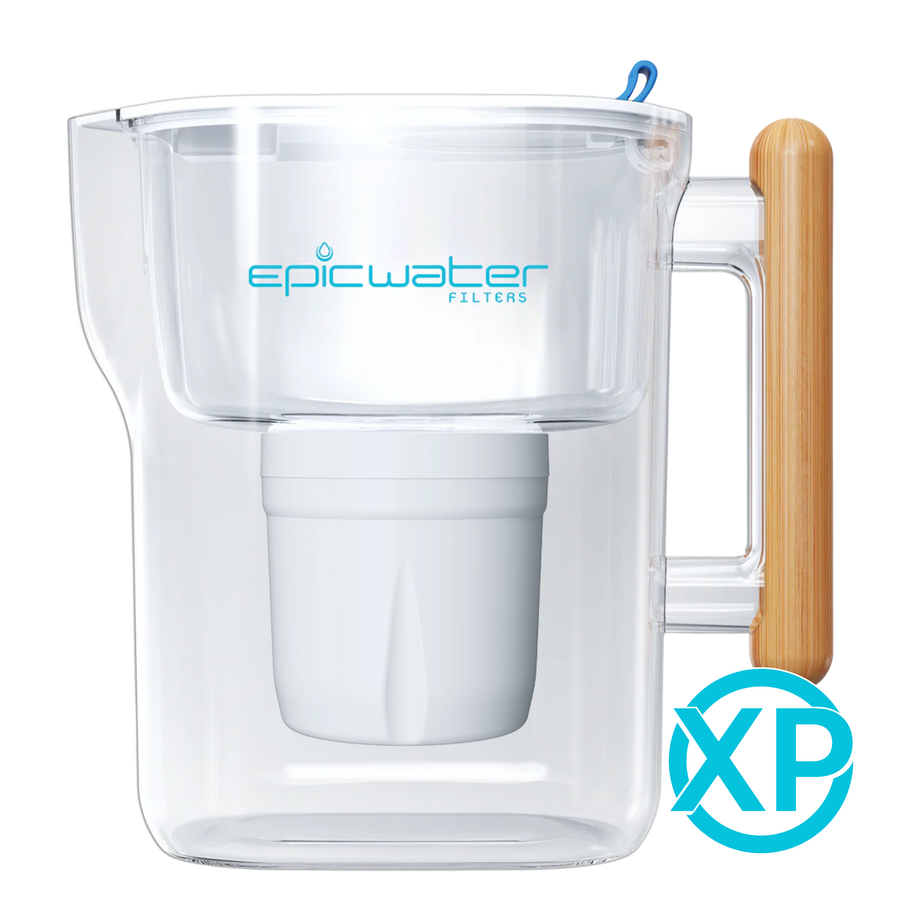
Epic's Pure XP is a carbon fiber block, NSF certified to Standard 42 and NSF/ANSI/CAN 372, and independently lab-tested to reduce 99.9 percent of lead. It is the everyday filter that quietly handles chlorine taste and odor and the heavy chlorination that often follows a main break. Nano XP adds microbiological and microplastics reduction as the more protective everyday option, though even that is not a substitute for following an active boil water advisory. The honest rule is straightforward: boil during the advisory, and let a filter handle the everyday water and the messy aftermath once it lifts.
The day the advisory is lifted
When the all-clear comes, take a few minutes to reset your plumbing before you go back to normal:
- Run each cold tap for several minutes to flush the lines.
- Dump the ice from your freezer and flush the refrigerator dispenser and ice maker lines.
- If unsafe water may have passed through your filter cartridge, replace it, because a filter can trap and hold contaminants.
- Run appliances like dishwashers and water heaters through a cycle if your utility recommends it.
The bottom line
A boil water advisory is usually a precaution, not a crisis. Boil your water for a full minute, or use bottled water, for anything you will swallow. Do not count on a filter to make unsafe water safe. And once the advisory lifts, flush your lines and swap your cartridge if needed. Keep a good filter for what it is actually great at: cleaner, better-tasting water every day, including the chlorine-heavy water that often follows a repair.
Condividi:
Why Does My Water Smell Like Rotten Eggs? A Sink-by-Sink Guide
How to Test Your Tap Water at Home: Free Lookups, Strips, and Labs