

Why Does My Water Smell Like Rotten Eggs? A Sink-by-Sink Guide
Few water problems announce themselves as loudly as the rotten egg smell. One whiff from a faucet and the whole glass feels suspect. Here is the reassuring part: the gas behind that smell, hydrogen sulfide, is something your nose detects at astonishingly low levels, in air at concentrations as low as about 0.5 parts per billion according to federal toxicologists. The smell almost always shows up long before anything approaching a health concern, and in most homes it traces back to one of four sources. With one evening and a drinking glass, you can usually find yours.
Even better: two of the four common sources never involve your water supply at all, and their fixes can cost nothing.
What the smell actually is
Hydrogen sulfide (H2S) is a gas produced by decaying organic matter, by chemical reactions between water and sulfur-bearing rock, and by sulfur bacteria that live in the low-oxygen corners of wells, plumbing, and water heaters. The Minnesota Department of Health, which publishes one of the clearest guides on the subject, is direct about the stakes: in most cases the rotten egg smell does not relate to the sanitary quality of the water. Sulfur bacteria themselves are not harmful, though their slime can clog plumbing and encourage iron bacteria.
There is a telling regulatory detail here. Hydrogen sulfide has no federal drinking water limit, and Penn State Extension explains why: water becomes aesthetically undrinkable long before the gas reaches harmful concentrations in water. Your nose, in other words, is a smoke alarm with a hair trigger. Sudden changes are always worth investigating, and Minnesota's to-be-safe advice for well owners is a coliform bacteria and nitrate test. But the smell alone is usually an aesthetic problem with a findable source.

Start with the one-minute glass test
Before blaming the water, rule out the drain. Sink drains collect soap, hair, and food debris, and the bacteria living in a drain trap or overflow can produce a sulfur smell that only seems to arrive with the water. Fill a glass at the suspect faucet, walk a few steps away from the sink, and smell the water again.
- If the glass smells clean, the odor is coming from the drain. Flushing and scrubbing the trap and overflow usually ends it, for free.
- If the glass still smells, the water itself is carrying hydrogen sulfide, and the next test narrows down where it picks the gas up.
The sink-by-sink diagnosis
The Minnesota Department of Health publishes a simple decision tree. After the house has sat unused for a few hours, smell the cold and hot water at several faucets and match the pattern:
- Only the hot water smells. The water heater is the factory. Many tanks contain a magnesium anode rod, an anti-corrosion part that can chemically convert naturally occurring sulfate into hydrogen sulfide.
- Cold water smells, but fades after running a few minutes. Sulfur bacteria are living in the well or the home's plumbing. Disinfection is the fix.
- Only faucets connected to a water softener smell. The bacteria have settled in the softener. The manufacturer's disinfection instructions apply.
- Every tap smells and running does not help. The hydrogen sulfide is in the groundwater itself, the one pattern that calls for whole-house treatment sized to a measured level.

The fixes, cheapest first
The drain fix is free. The rest scale with the finding:
- Water heater: a plumber can replace the magnesium anode rod with an aluminum one, keeping corrosion protection while removing the odor chemistry, then flush and disinfect the tank. State guidance cautions against DIY here; heater work involves scalding temperatures and pressure.
- Well or plumbing bacteria: shock chlorination knocks the colony back, though Penn State Extension notes the smell often returns within weeks, in which case a licensed well professional and continuous treatment are the durable answer.
- Groundwater itself: state guidance points to activated carbon only for trace levels, below about 1 milligram per liter. Above that, the tools are oxidizing media filters such as manganese greensand, aeration, or continuous chlorination with filtration, all whole-house installations sized to a real measurement.
One testing note: hydrogen sulfide escapes from water quickly, so a mailed sample loses the very thing you are trying to measure. Concentration tests need to happen at the tap or be chemically stabilized on the spot. If you are sizing treatment, work with a state-certified lab and follow their collection instructions exactly.
Where a drinking water filter honestly fits
A carbon filter is the polish in this story, not the sledgehammer. Activated carbon adsorbs hydrogen sulfide at trace levels, which is why both Minnesota's health department and Penn State Extension put its effective range under about 1 milligram per liter. If your water clears the diagnosis above and you are left with a faint whiff, or you simply want your everyday drinking water to taste like nothing at all, that is the carbon block's home turf.
Our Pure XP pitcher filter is NSF certified to Standard 42 for chlorine taste and odor reduction and to NSF/ANSI/CAN 372 for lead-free materials, with independent testing behind its lead and PFOA/PFOS reduction claims. What it is not: a fix for strong, house-wide sulfur water. That job belongs to whole-house oxidation or aeration equipment, and no pitcher, ours included, should claim otherwise.
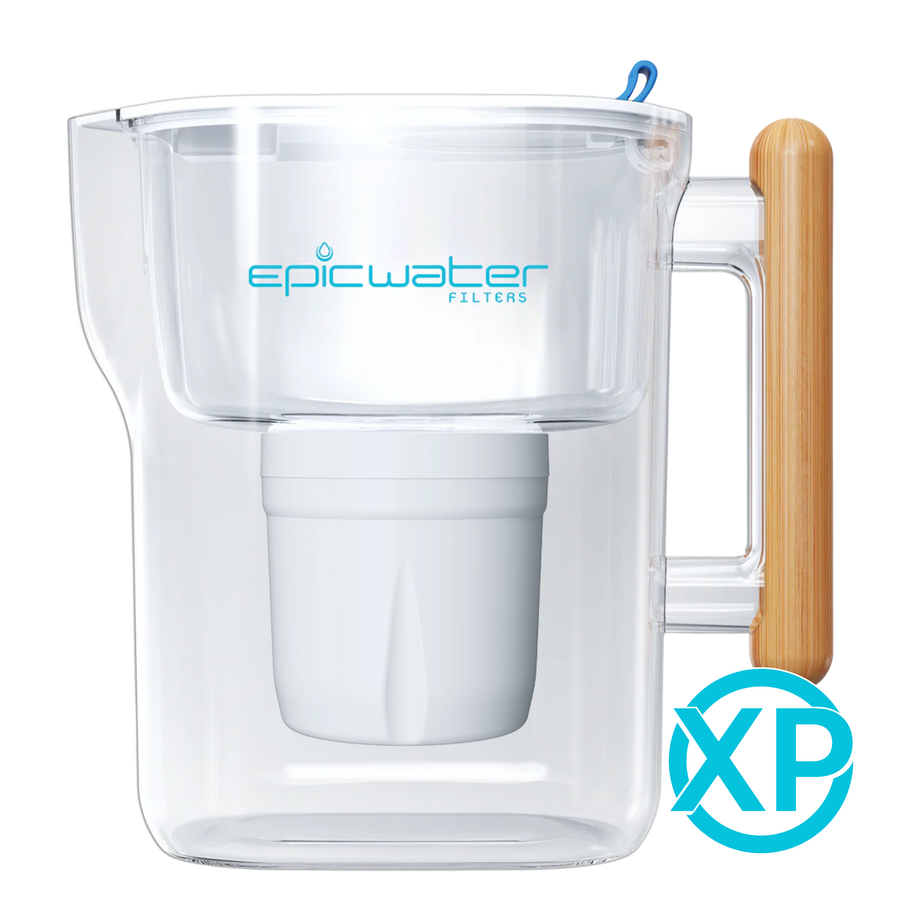
Not sure what else is in your tap? Enter your zip code into our free What's in Your Water tool and check your utility's latest annual report before buying anything.
The bottom line
A rotten egg smell is dramatic, rarely dangerous, and unusually solvable. Run the glass test, read the hot-versus-cold pattern, and fix the source before spending on gear: clean the drain, swap the anode, disinfect the well, or size real treatment to a real number. Then let a certified carbon filter handle what it handles best, which is making every glass afterward taste like nothing happened.
Condividi:
Is Tritan Plastic Safe? Why Epic Pitchers Are Made From It
What to Do During a Boil Water Advisory