
Why Does My Tap Water Taste Metallic?
A glass of water is not supposed to taste like a handful of coins. When it does, the instinct is to blame the water company, but in most homes the metallic taste enters after the treatment plant: from the mains under your street, your own pipes, or your water heater. The good news is that a few free checks usually find the source. The important caveat is that the one metal worth worrying about most, lead, is the one you cannot taste at all.
The metals behind the taste
Four metals cause almost every metallic-tasting glass of tap water.
- Iron produces the strongest metallic flavor. It comes from aging iron or steel water mains, rusty galvanized pipe, and well water. Interestingly, researchers who characterized metallic off-flavors found that much of what we call metallic "taste" is actually retronasal smell: iron reacting at the tongue creates odor compounds your nose reads as metal.
- Copper dissolves out of household copper lines and brass fittings, especially when water is acidic or has been sitting in the pipes for hours. It can read as metallic, bitter, or slightly astringent, and at higher levels it can leave blue-green stains on fixtures.
- Zinc leaches from galvanized plumbing, which is steel pipe coated in zinc. Older homes with galvanized lines are the usual suspects.
- Manganese often travels with iron and adds a bitter, metallic edge, sometimes with brown-black staining.
Behind several of these is a common driver: water chemistry. Water with a low pH is more corrosive, and corrosive water pulls metal out of every pipe and fitting it touches on the way to your glass.

Where the EPA draws the line
Federal rules split these metals into two very different categories, and your tongue cannot tell them apart.
Iron, manganese, and zinc sit under the EPA's secondary drinking water standards: 0.3 mg/L for iron, 0.05 mg/L for manganese, and 5 mg/L for zinc. These are non-enforceable guidelines aimed at taste, odor, and staining, not health limits. Water that exceeds them can taste unpleasant while remaining safe by federal health standards.
Copper and lead are different. Both are regulated under the enforceable Lead and Copper Rule. Copper has a health-based action level of 1.3 mg/L; sustained levels well above it can cause nausea and stomach upset, and infants are the most sensitive group. Lead has an action level of 15 parts per billion and a health goal of zero.
Here is the part that matters most: at the concentrations found in household tap water, lead has no taste, color, or odor. The level required for a human tongue to detect it is estimated in the hundreds or thousands of parts per billion, far above any level that is already a health concern. A metallic taste is not a lead detector, and a neutral taste is not an all-clear. The same corrosion chemistry that pushes iron and copper into your glass can carry lead you will never notice. That makes a new metallic taste a useful prompt: not a diagnosis, but a reason to look.
Three free checks that find the source
Before you buy anything, run these in order. They cost nothing and they narrow the problem fast.
- Cold vs hot. Pour a glass from each. If only the hot side tastes metallic, the water heater is the likely source: the tank, its sacrificial anode rod, and the sediment layer at the bottom all add their own chemistry, and heat accelerates corrosion. Flushing the tank or having a plumber swap the anode rod often solves it. Either way, drink and cook from the cold tap only, which is standing EPA guidance.
- First draw vs flushed. Taste water that sat in the pipes overnight, then run the cold tap for a few minutes and taste again. If the flushed glass is clean, the metals are dissolving into water while it stands in your own plumbing. That points at your pipes, and it is also exactly the scenario where corrosive water picks up lead silently.
- One faucet vs every faucet. A single offending fixture usually means that faucet's aerator, valve, or the short run of pipe behind it. Every faucet, all the time, points upstream to the service line or the mains.

Check the paperwork, then test
Your utility publishes an annual water quality report with measured levels of iron, manganese, copper, and lead in the system. You can also look up your zip code with Epic's What's in Your Water tool. Remember that lead and copper mostly enter after the plant, from service lines and home plumbing, so the report is the starting point, not the final word.
If your checks or your report give you any reason for concern, test properly. Many utilities offer free lead testing, and state-certified labs handle metals panels with the right methods and detection limits. Skip the home test strips: metals at parts-per-billion levels are simply not a color-chart question.
Where a filter honestly fits
A drinking-water filter is a response, not a report card, and it is not the right tool for every metallic-taste story. If the problem is a corroding water heater, fix the heater. If it is heavy iron staining or a well with a serious iron load, that is a whole-house iron system, not a pitcher.
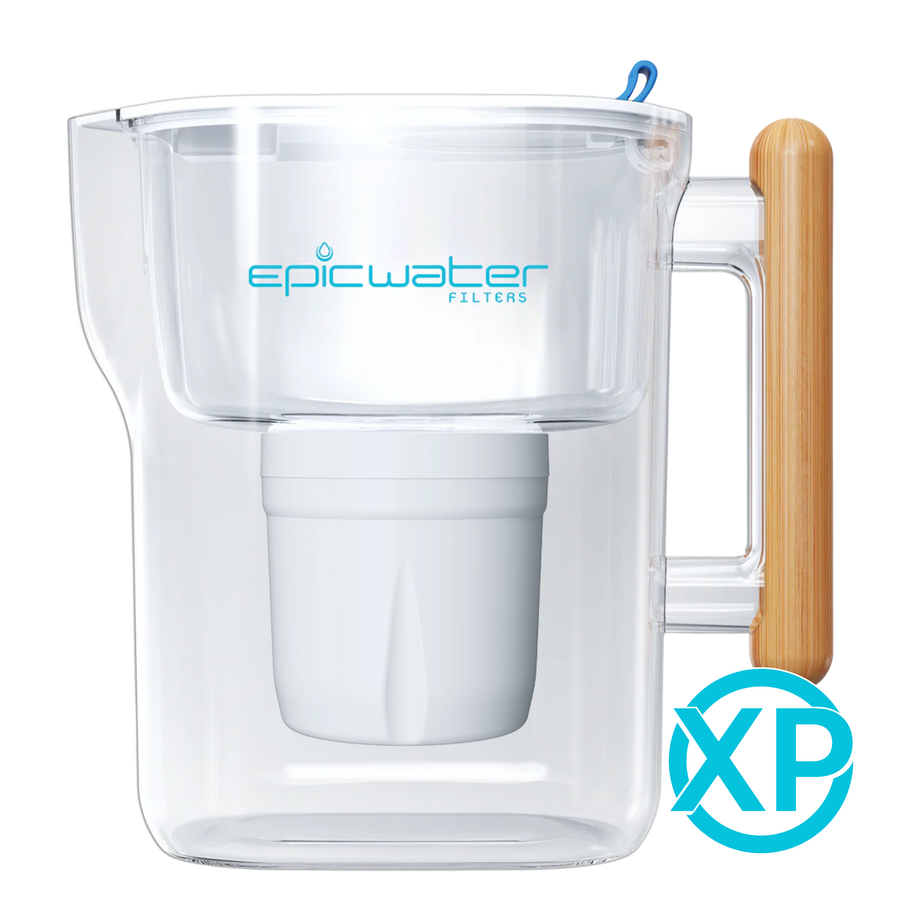
Where a quality carbon block filter earns its place is the water you actually drink. Epic's Pure XP is NSF certified to Standard 42 for chlorine taste and odor reduction and material safety, and to NSF/ANSI/CAN 372 for lead-free materials. Its contaminant-reduction performance is independently tested: lead reduced 99.9% under the NSF/ANSI 53 protocol, and PFOA/PFOS tested under NSF P473. Independent testing is not the same thing as certification, and we say so plainly; the data is published so you can check the claims yourself.
The routine that follows is simple. Drink and cook from the cold tap. Flush after long stagnation, like a vacation. Filter the water you drink. Replace the cartridge on schedule. And if the taste changes again, treat it the way you treated it this time: as a prompt to check, not a mystery to live with.
Aktie:
Your Boil Water Advisory Just Lifted. Now What?
The Best Water for Coffee: The 98% of the Cup Most People Skip