
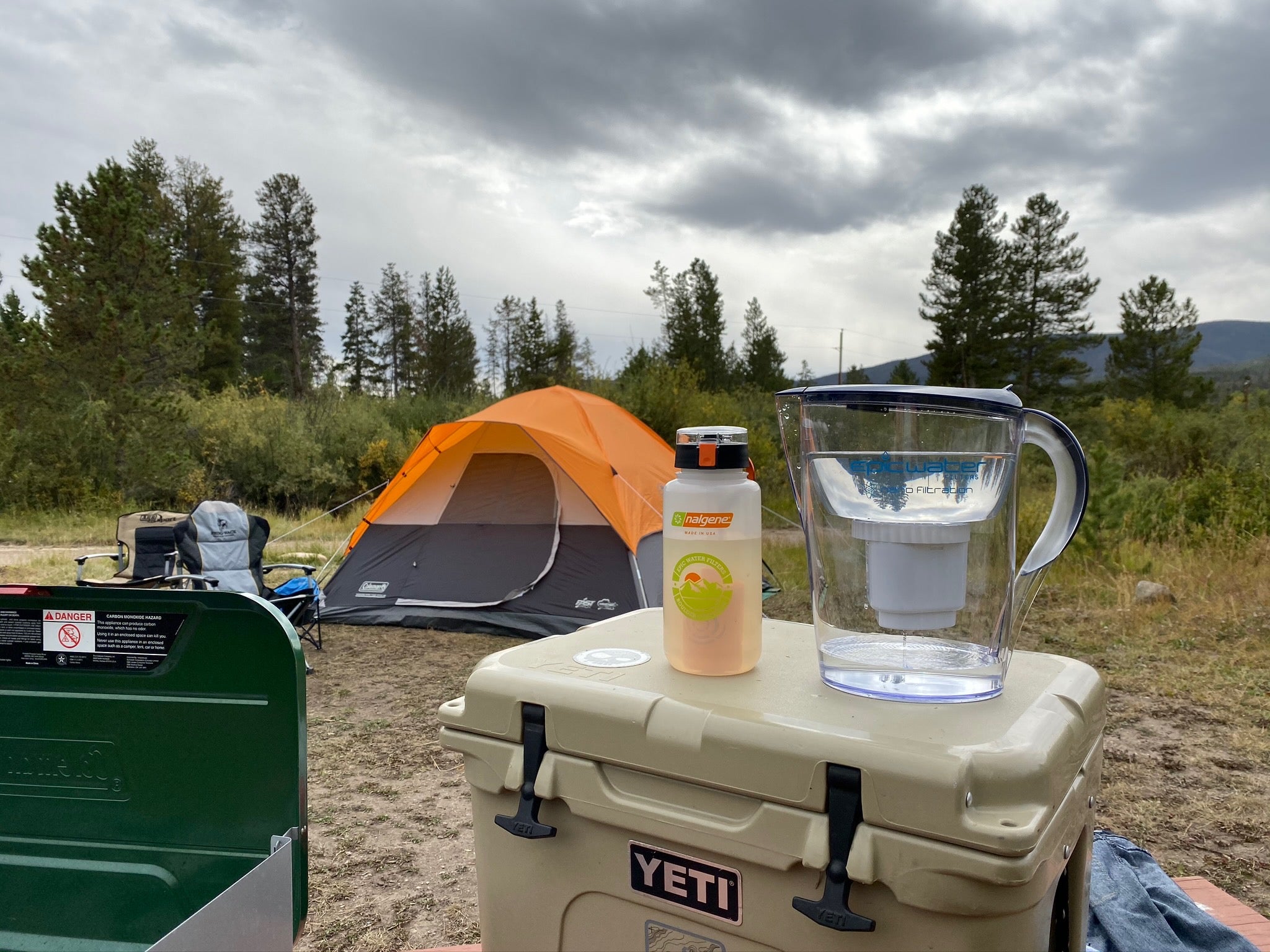
Quick answer: Most water filter pitchers cannot remove bacteria, and most do not claim to. Standard carbon pitcher filters are designed for chlorine, taste, and certain chemicals, not microorganisms. A few pitchers are the exception. Epic's Nano XP pitcher is independently tested to NSF/ANSI standards including P231, the microbiological purifier standard, with 99.99% reduction of giardia and 99.95% reduction of viruses. LifeStraw's hollow fiber pitcher and LARQ's UV model also make microbiological claims. If bacteria is your concern, check a pitcher's published test data before buying, because a typical carbon pitcher will not do the job.

Why most water filter pitchers do not remove bacteria
Waterborne contamination is not a fringe concern. The CDC estimates that roughly 7.2 million Americans get sick from waterborne diseases each year. Chemical contaminants like lead tend to cause harm slowly over years of exposure, while microorganisms such as E. coli, giardia, and viruses can make you seriously ill within days.
The majority of pitchers on the market use granular activated carbon (GAC) filters. GAC is genuinely good at what it is designed for: it reduces chlorine, improves taste and odor, and, depending on the formulation, can reduce some other contaminants. That is why it is the industry standard for inexpensive pitchers, and for treated city water with no microbial issues it is often perfectly adequate.
The limitation is physical. Loose carbon granules leave relatively large channels for water to pass through, and bacteria, cysts, and viruses are small enough to pass with it. GAC filters are not designed as a barrier to microorganisms, which is why brands that use them do not make bacteria claims.
GAC vs carbon block and nanofiber filtration

Newer pitcher designs pack carbon into solid blocks and pair it with additional media. A carbon fiber block creates a dense network of microscopic channels with far more surface area than loose granules, which improves removal of chlorine, heavy metals, pesticides, and volatile organic compounds. To stop microorganisms, some filters add a layer of electro-positive nanofiber fabric with sub-micron pores that physically trap cysts, bacteria, viruses, and microplastics. This combination is what separates the handful of microbiologically rated pitchers from everything else on the shelf.
What to look for in a bacteria-rated pitcher
Marketing language is cheap; test data is not. Before trusting any pitcher with well water or emergency use, look for:
- Testing to NSF/ANSI P231. This is the microbiological purifier protocol covering bacteria, viruses, and cysts. A pitcher tested only to Standard 42 (taste and chlorine) or 53 (health contaminants like lead) has not demonstrated anything about microorganisms.
- Published percentages. Reputable brands publish a performance data sheet showing reduction rates by contaminant. If you cannot find one, assume the filter was not tested for it.
- The right technology. Sub-micron nanofiber media, hollow fiber membranes, and UV treatment can address microorganisms. Loose granular carbon on its own cannot.
Which pitchers remove bacteria? Brand by brand

Here is how the popular options compare on bacteria specifically:
- Brita pitcher: GAC filter, no bacteria claim
- Brita Stream: GAC filter, no bacteria claim
- ZeroWater: no bacteria claim
- PUR: GAC filter, no bacteria claim
- LifeStraw pitcher: carbon plus hollow fiber membrane, claims bacteria removal
- LARQ pitcher: UV light plus carbon, claims bacteria treatment on the UV-equipped version
- Clearly Filtered: no bacteria claim
- Aquagear: carbon block, no bacteria claim
- Soma, Nakii, Waterdrop: GAC filters, no bacteria claims
- Epic Nano XP: carbon fiber block plus dual-layer nanofiber media, independently tested to NSF/ANSI P231 with 99.99% giardia and 99.95% virus reduction
Product lines change, so treat this as a starting point and check the manufacturer's current certification or performance data sheet before you buy. To be clear, the brands without bacteria claims are not being dishonest; they simply built filters for a different job, and for disinfected city water that job is usually enough.
The Epic Nano XP: a pitcher tested for bacteria removal

The Nano XP pitcher is Epic's answer to exactly this question. It uses a dual-layer nano pleated filter with an American-made carbon fiber block core, and it is independently tested to NSF/ANSI Standards 42, 53, 401, P231, and P473, with NSF certification to Standards 42 and NSF/ANSI/CAN 372. From its published test results:
- Giardia: 99.99% reduction
- Virus: 99.95% reduction
- PFAS (forever chemicals): 99.6% reduction
- Lead: 99.4% reduction
- Chlorine: 96.8% reduction
- Microplastics: 99.25% reduction
Each filter is rated for 100 gallons, roughly 3 to 4 months of everyday use, and the replaceable inner cartridge lets you keep the outer housing, cutting plastic waste by up to 75% per refill. It is designed for everyday tap water, well water, camping, and emergency preparedness. One honest caveat: the Nano XP does not reduce fluoride, so if fluoride removal is your priority, look at the Pure XP pitcher instead.

"Our tester's overall favorite to use, this filter's design is simple - it has a large reservoir that is easy to access and refill. Replacing filters is also straightforward. The filter removed about 98 percent of forever chemicals in the drinking water tested." - EWG's Guide to PFAS Water Filters, on Epic Water Filters
When bacteria removal actually matters
If you are on municipal water, your utility already disinfects it, and bacteria in the tap is rare outside of main breaks and boil advisories. A standard carbon pitcher may be all you need day to day, though a microbiologically tested filter adds a useful extra barrier for those advisory events.
The case is stronger if you are on a private well, which no utility monitors for you. Coliform bacteria can enter wells through surface runoff, septic issues, or damaged casings, and contamination can follow heavy rain. A bacteria-rated pitcher is a sensible daily safeguard, and worth having on hand for camping and emergencies. It is not a substitute for testing your well annually and fixing a persistent contamination problem at the source.
The bottom line
Yes, there are water filter pitchers that remove bacteria, but they are the exception, and the way to identify them is published microbiological test data, not marketing copy. The Epic Nano XP pitcher is tested to NSF/ANSI P231 purifier standards, making it a strong fit for well water, emergency preparedness, and anyone who wants microorganism protection built into their daily pitcher. If you are on disinfected city water and care more about lead, PFAS, chlorine, and fluoride, the Pure XP pitcher is the better match. You can compare the full lineup in our pitchers collection, and replacement cartridges for both are in replacement filters.
Related reading
- Plastic water bottles and microplastics
- Why is Dasani water bad for you?
- Benefits of baking soda in water
- How much does water weigh?
Sources
- Epic Water Filters: Nano water filter pitcher performance data sheet, tested against NSF Standards 42, 53, 401, P231, P473
Brita, PUR, ZeroWater, LifeStraw, LARQ, Clearly Filtered, Aquagear, Soma, Nakii, and Waterdrop are trademarks of their respective owners, which are not affiliated with Epic Water Filters. This article is for educational purposes and is not medical advice.
Share:
Orange, California Water Quality Report
Pasadena, California Water Quality Report