
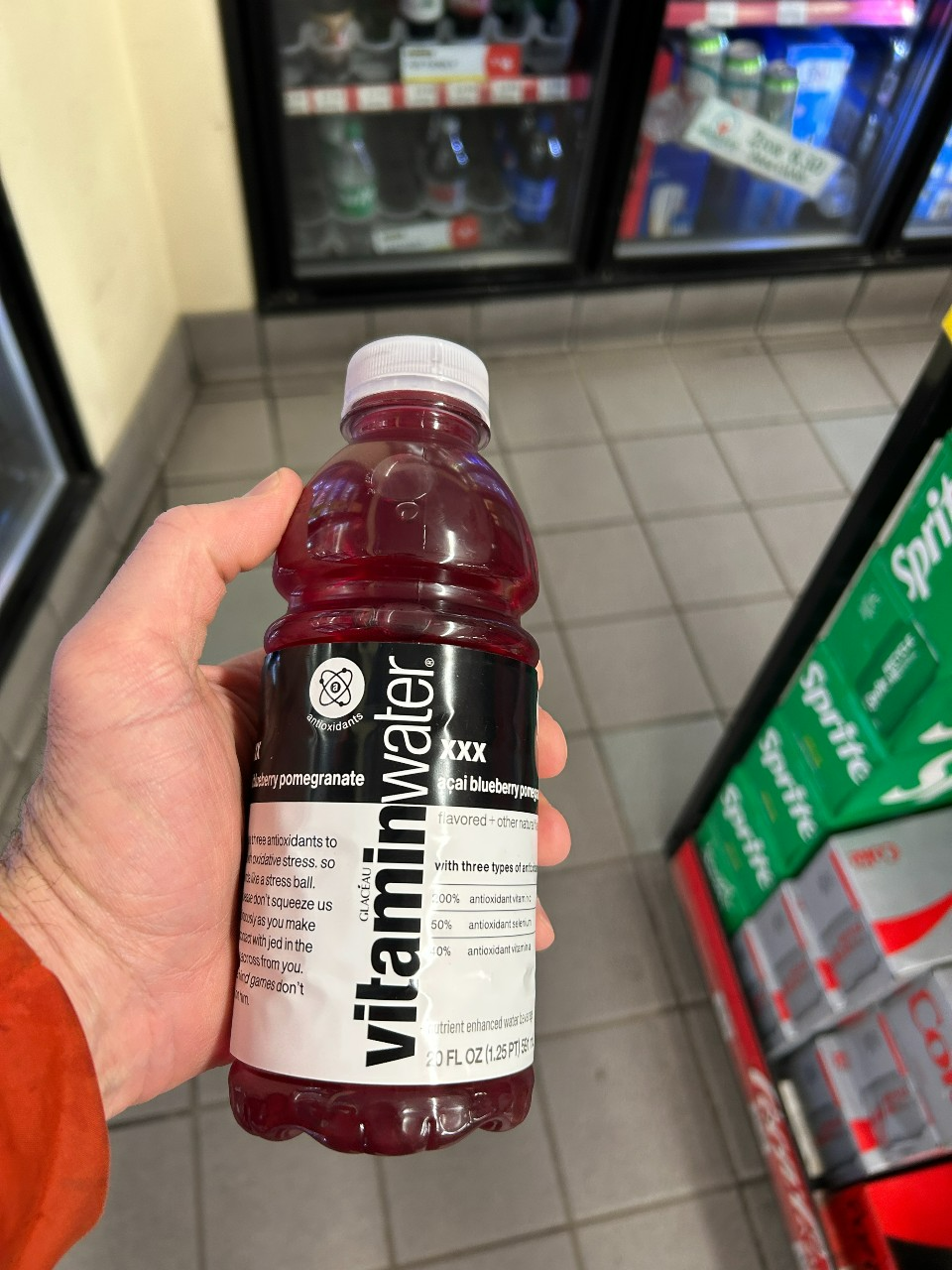
Quick answer: No, vitamin water is not a health drink. A 20 ounce bottle of the regular version carries about 32 grams of added sugar, which is most of a day's recommended limit, and the vitamins it adds are ones most people already get from food. It is a soft drink with a vitamin label on it. The zero-sugar version solves the sugar problem and is a reasonable occasional swap, but neither version is a replacement for plain water.
Vitamin water nutrition facts: what is actually in the bottle

The regular line (XXX, Power-C, Refresh, Focus, Essential, Energy) is built from a short list: water, cane sugar, crystalline fructose, added vitamins and minerals, and natural flavors. Here is what each part of that actually means.
About 32 grams of sugar in a 20 ounce bottle
This is the number that matters most. A 20 ounce bottle of regular vitaminwater contains roughly 32 grams of sugar. For comparison, a 12 ounce can of Pepsi has about 41 grams. So it is less sweet than a soda, and a great deal sweeter than the name suggests. The American Heart Association recommends a daily added sugar ceiling of 25 grams for women and 36 grams for men, which one bottle uses up most of or exceeds.
Sugar in liquid form is the part worth paying attention to. It goes down fast, it does not fill you up the way food does, and those calories land on top of whatever you already ate. If you are drinking one most days, that is the habit to look at, not any single ingredient.
The vitamins are real. You are probably not short on them.
Vitamin water is not lying about the vitamins. Depending on the flavor, a bottle delivers a meaningful share of the daily value for vitamin C and several B vitamins. The catch is that these are among the nutrients Americans are least likely to be low in, and they are water soluble, so whatever your body does not need gets excreted. You are drinking sugar to top up nutrients you already had.
The nutrients that genuinely go missing in a typical Western diet, things like fiber, magnesium, potassium and vitamin D, are largely not what is in the bottle. A piece of fruit, a handful of nuts, or a plain multivitamin covers this ground without the sugar.
Cane sugar and crystalline fructose
Crystalline fructose is a corn-derived sweetener with a higher fructose share than table sugar. Research on fructose from sweetened beverages associates high intakes with liver fat accumulation and cardiometabolic risk, which is a good reason to watch the total sugar number rather than to treat one sweetener as uniquely dangerous. The studies look at sustained heavy intake, not one bottle. The honest framing is simple: treat vitamin water as the sugary drink it is.
What "natural flavors" actually means

"Natural flavors" is a legal category, not a description. The FDA definition requires that the flavor originate from plant or animal material, but it says nothing about how much processing happens after that, and the exact composition is proprietary. Both The New York Times and NPR have covered how little the phrase tells a shopper.
That is a transparency gap, not evidence of harm. Flavor compounds are used in tiny amounts and are reviewed for safety. A small number of people do react to specific flavor ingredients, and for them the vagueness is a genuine problem. For everyone else it is mostly a reason to be skeptical of the health halo the words create.
Is acai blueberry pomegranate vitamin water good for you?

XXX, the acai blueberry pomegranate flavor, is not meaningfully different from the rest of the regular line. The fruit in the name is flavor, not a serving of fruit, and the ingredient panel is the familiar one: water, cane sugar, crystalline fructose, natural flavors and added vitamins. If you want what acai, blueberries and pomegranate actually offer, which is fiber and a real matrix of plant compounds, eat them.
What about vitaminwater Zero?
Zero is the more defensible product. It drops the sugar to zero and sweetens with stevia leaf extract and erythritol instead, so the calorie and blood sugar objections mostly go away. If the choice is between the regular version and Zero, Zero is the better one.
A few honest caveats. Erythritol is a sugar alcohol, and sugar alcohols cause bloating or digestive upset in some people at higher intakes. The long-term effects of daily non-sugar sweetener consumption are still an active research area rather than a settled question. And intensely sweet drinks, sugar or not, keep your palate expecting sweetness with every sip, which works against the habit most people are trying to build. Occasional Zero is fine. Zero as your everyday water is a swap worth reconsidering.
Does vitamin water hydrate you?

Yes, it hydrates. It is mostly water, and the claim that sugary drinks dehydrate you is overstated at these concentrations. The fluid still counts.
The real hydration problem is different: sweet drinks are easy to over-drink, and every ounce comes with sugar and cost attached. Plain water does the same job with none of that, which is why sports and nutrition guidance keeps landing on water for ordinary daily hydration.
Microplastics in single-use plastic bottles

Vitamin water is sold in #1 PET plastic, the same material used for bottled water. A lab analysis published in Frontiers in Chemistry found an average of 325 microplastic particles per liter across major bottled water brands, with the packaging itself as a likely source. The health effects of ingesting those particles are not established, and that uncertainty is the honest state of the science rather than a scare.
The cost and the waste are easier to pin down. A daily bottle habit runs several dollars a day and produces roughly 365 bottles a year per person. We go through the research in our guide to microplastics from plastic water bottles.
The bottom line
Vitamin water is a sweetened soft drink with a vitamin panel attached. It is not dangerous, and there is nothing wrong with having one. It is just not the health product the name implies: about 32 grams of sugar for vitamins you likely did not need, at a few dollars a bottle.
For everyday hydration, filtered tap water is the honest alternative. No sugar, no additives, no plastic bottle, and pennies per gallon. The Epic Pure XP pitcher is independently tested to reduce lead, PFAS, chlorine, and over 99.9% of microplastics, so the water you are replacing the bottle with is genuinely better. For the gym bag or the office, a filtered water bottle gives you clean water from any tap. Browse all pitchers and dispensers or filtered bottles.
Related reading
- Why Is Dasani Water Bad For You?
- Is Gatorade Zero Bad For You?
- Is Powerade Good for You?
- Are Plastic Water Bottles Giving You Microplastics?
Sources
- Fructose and Cardiometabolic Disorders: The Controversy Will, and Must, Continue — NCBI
- Potential Health Risks From Beverages Containing Fructose Found in Sugar or High-Fructose Corn Syrup — NCBI
- Fructose Consumption, Lipogenesis, and Non-Alcoholic Fatty Liver Disease — PubMed
- Are 'Natural Flavors' Really Natural? — The New York Times
- Is 'Natural Flavor' Healthier Than 'Artificial Flavor'? — NPR
- Synthetic Polymer Contamination in Bottled Water — Frontiers in Chemistry
VITAMINWATER is a trademark of Energy Brands, Inc. This article is for educational purposes and is not medical advice.
Share:
Neti Pot Water
Is Carbonated Water Bad For You?