
Quick answer: Pure water has a pH of exactly 7.0, which is neutral. Distilled water starts at 7 but drifts slightly acidic, to around 5.8, as it absorbs carbon dioxide from the air. Lemon water is strongly acidic at roughly 2 to 3, and tap water in the U.S. typically falls between 6.5 and 8.5, the range the EPA recommends in its secondary drinking water standards. And an honest note up front: because your stomach sits at a pH of about 1.5 to 3.5, the pH of what you drink has essentially no effect on your body's pH.
What is pH?

The pH scale measures how acidic or basic a solution is, running from 0 to 14. A pH of 7 is neutral; lower values are acidic and higher values are basic (alkaline). Pure water sits exactly at 7 because it contains an equal number of hydrogen and hydroxide ions, which is why it serves as the benchmark the rest of the scale is measured against. The scale is logarithmic, so each whole number step is a tenfold change: lemon juice at pH 2 is not a little more acidic than distilled water at 5.8, it is thousands of times more acidic.
pH of water and common drinks
| Liquid | Typical pH |
|---|---|
| Stomach acid | 1.5 to 3.5 |
| Lemon juice | About 2 |
| Lemon water | 2 to 3 |
| Black coffee | About 5 |
| Distilled water (exposed to air) | About 5.8 |
| Pure water | 7.0 (neutral) |
| Tap water (EPA recommended range) | 6.5 to 8.5 |
| Human blood | 7.35 to 7.45 |
| Baking soda in water | 8 to 9 |
The pH of drinking water

Real-world drinking water is never perfectly pure, so its pH moves around with dissolved minerals, salts, organic matter, and gases. The EPA's secondary drinking water standards recommend utilities keep tap water between 6.5 and 8.5. That is a guideline about pipes and taste rather than an enforceable health rule: water below 6.5 can be corrosive enough to leach metal from plumbing, while water above 8.5 can taste bitter and leave scale deposits. If your water sits inside that range, its pH is not something to worry about.
The pH of distilled water

Freshly distilled water is neutral at 7.0. But distilled water is a blank slate with no dissolved minerals to buffer it, so the moment it is exposed to air it starts absorbing carbon dioxide, which forms a small amount of carbonic acid. That pulls the pH down to roughly 5.8. This slight acidity is chemically real but harmless to drink; it mainly matters in lab work and industrial applications where pH needs to be measured and controlled precisely.
The pH of lemon water

Lemon juice has a pH of about 2, and diluting it in a glass of water lands lemon water around 2 to 3, firmly acidic. It is still a perfectly reasonable drink: it adds vitamin C, it makes plain water more appealing, and many people find it pleasant with meals. You may have read that lemon water is "alkalizing" and balances your body's pH. That claim does not hold up, for the reason covered next. The genuine downside of a strongly acidic drink is tooth enamel, so if you drink lemon water daily, a straw and a water rinse afterward are sensible.
Does the pH of your drink change your body's pH?
No, and this is the part alkaline water and lemon water marketing tends to skip. Everything you drink lands in your stomach, where the pH is about 1.5 to 3.5, far more acidic than any beverage. Whatever pH your water had, it is overwhelmed on arrival. Meanwhile your blood pH is held in a tight band of 7.35 to 7.45 by your lungs and kidneys, and it stays there regardless of what you eat or drink; if it drifted meaningfully, you would be in a hospital, not a juice bar. Drink water at whatever pH tastes good to you. Hydration matters; the number on the pH meter does not.
Does filtering change water's pH?

Somewhat, depending on the method. Reverse osmosis strips out dissolved minerals, which leaves the water unbuffered and slightly acidic, similar to distilled water. Activated carbon filtration removes chlorine, disinfection byproducts, and other taste and odor compounds while leaving beneficial dissolved minerals largely in place, so the pH stays close to where your tap water started. Either way, the shift is small and well within the range your body shrugs off. The better reason to filter is what else is in the water: lead, PFAS, chlorine byproducts, and microplastics, none of which show up on a pH strip.
The bottom line
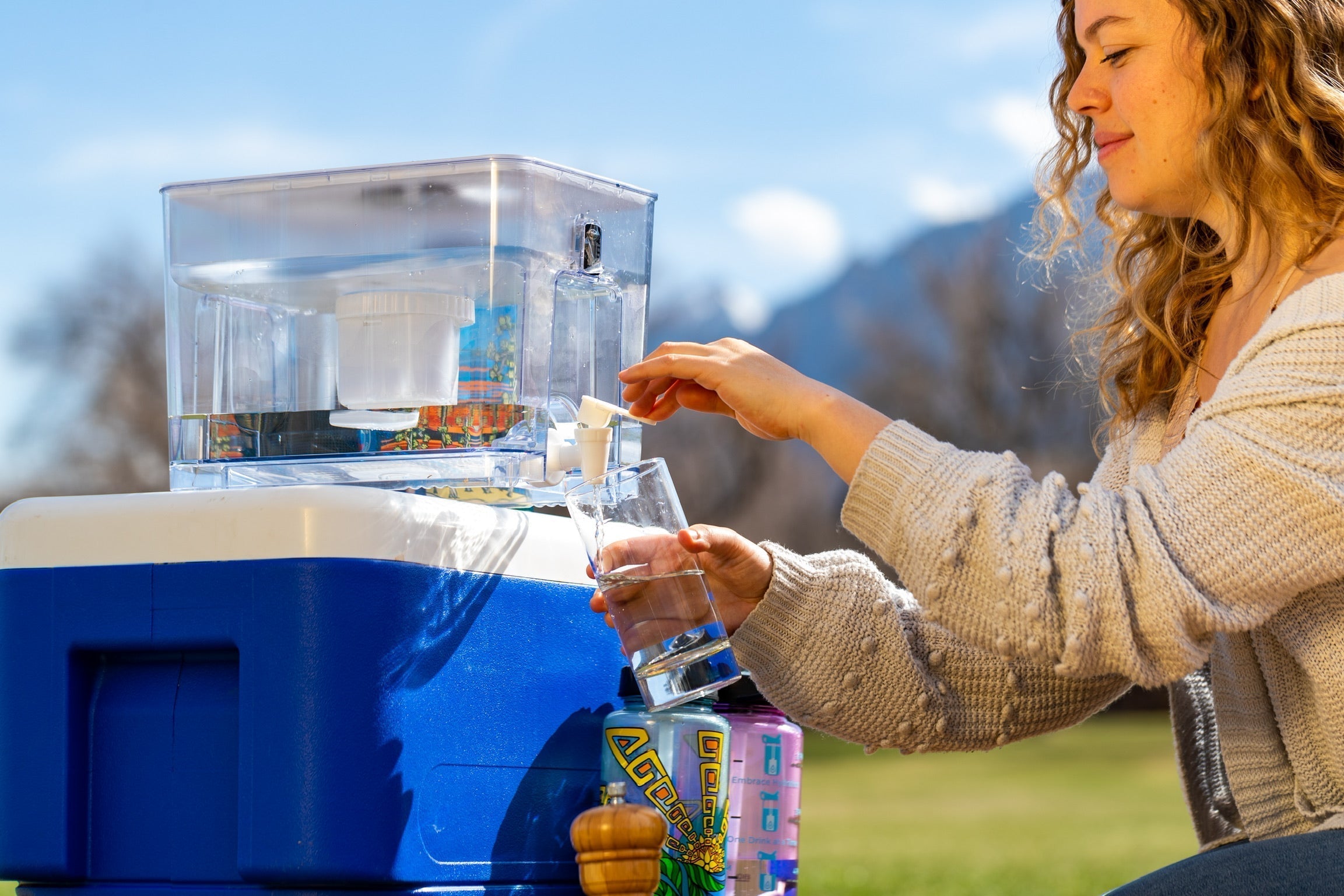
Pure water is pH 7.0, tap water is normally 6.5 to 8.5, and nothing you drink will move your body's pH. So skip paying a premium for alkaline water and put the attention on contaminants instead. The Pure XP Pitcher is independently tested to reduce lead, PFAS, chlorine, and over 99.9% of microplastics while leaving the natural mineral content, and the taste, of your water intact. The Pure XP Dispenser does the same for bigger households, and a filtered water bottle covers the gym bag. All pitcher options are here.
Related reading
- Benefits of baking soda in water
- How much does water weigh?
- How much weight will I lose on a 3-day water fast?
- Plastic water bottles and microplastics
Sources
This article is for educational purposes and is not medical advice.
Share:
Can You Drink Distilled Water?
Bioaccumulation & Biomagnification of Heavy Metals and Toxic Chemicals