
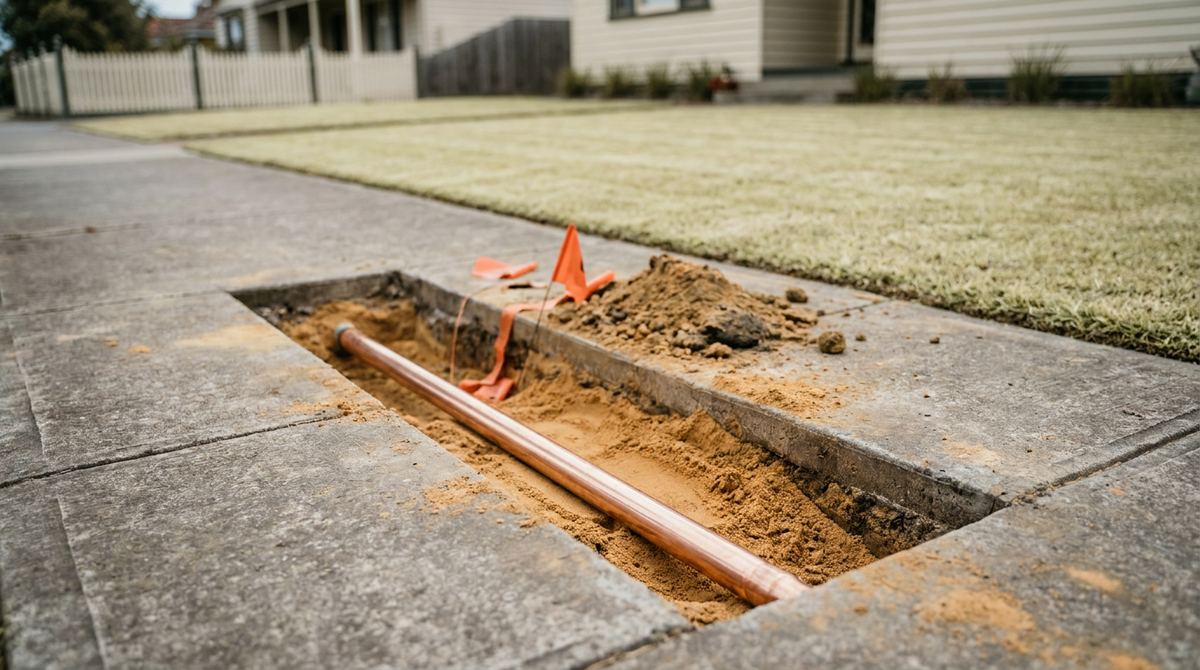
A letter arrives from your water utility. Crews will be on your street soon to pull out the lead service line running to your house. That is good news, and it is also where most people stop reading.
Replacing the line is the only permanent fix for lead coming from the pipe itself. It is also a construction job on a pipe that spent decades building lead scale on its inner wall. Cutting and pulling it knocks some of that scale loose, so for a period afterward your tap can carry more lead than it did the week before.45
That is no argument against the replacement. It is an argument for knowing what your utility owes you, and what only you can do.
Why your street is being dug up now
EPA’s Lead and Copper Rule Improvements require water systems to replace the lead and galvanized service lines under their control within ten years.2 A baseline inventory and replacement plan are due November 1, 2027, with new tap monitoring from January 2028.3
Cities are not waiting. On October 27, 2026, the Syracuse Common Council approved bonding twenty five million dollars for up to 1,700 lines, after 1,362 earlier this year, targeting June 2027.1 Rochester has replaced over 14,000, finishing by 2032.6 Many households will get this letter.
If you have not checked what serves your address, see our guide to identifying a lead service line.

Worse before better
Lead in a service line is not mostly dissolved in the water. Much of it sits in a scale layer on the pipe wall. EPA warns that ground tremors from nearby construction can suddenly release more lead, and tells homeowners to watch for work on their street.4
What breaks loose is particulate lead: flakes rather than dissolved ions. Particles are unpredictable, showing up in one glass and not the next, which is why a single clean result right after the work means less than people assume. If your water runs cloudy or gritty, our guide to reading cloudy tap water helps.
Partial replacements deserve attention. Where the utility replaces only its own portion and leaves your side in lead, research in Environmental Science & Technology found lead release can stay elevated well past the work.5 If you are offered a right of entry form so the crew can do your side too, signing it is the better outcome.
The flush is the step people skip
Your contractor should hand you a written flushing procedure, and it beats any general advice, this article included. Follow it first. Where nothing was given, EPA advises flushing before drinking and asking your utility for the time appropriate to your home.4
Two details get forgotten. The aerator, the screen at the end of the faucet, is exactly where loose particles collect: unscrew it, rinse it, put it back. And one flush is not the whole job. Run water through the system periodically over the following weeks.
The pattern matches any system disruption, so the post advisory flush and replace routine applies here too.

The six months after
Use a filter certified to reduce lead for everything you drink and cook with, for the full period your utility specifies, and replace the cartridge on schedule. EPA notes a cartridge used past its rated life can be less effective at removing lead.4 Draw cold water only.
Be stricter where stakes are higher. Infant formula and the water a pregnant household member drinks are the clearest cases, and our pregnancy checklist puts lead in order against the rest. EPA sets the goal for lead at zero, because EPA and CDC agree there is no known safe level in a child’s blood.4
To verify, ask your utility to sample your tap three to six months after the work rather than reaching for a hardware store strip or a mail in score. Use a state certified laboratory. Epic’s What’s in Your Water lookup gives area level background, not a test of your tap.
What a pitcher filter cannot do. It does not remove the pipe and it does not replace the flush. It treats only the water you pour through it, so the tap you drink from in a hurry and the ice maker behind the fridge are not covered.
Read the claims separately. Pure XP is listed by NSF under Standard 42 for material safety and NSF/ANSI/CAN 372 for lead content.78 Reduction of 99.9 percent of lead is documented separately, in independent testing under the NSF/ANSI 53 protocol.9 Two claims, kept apart on purpose.
Read EPA on lead in drinking water
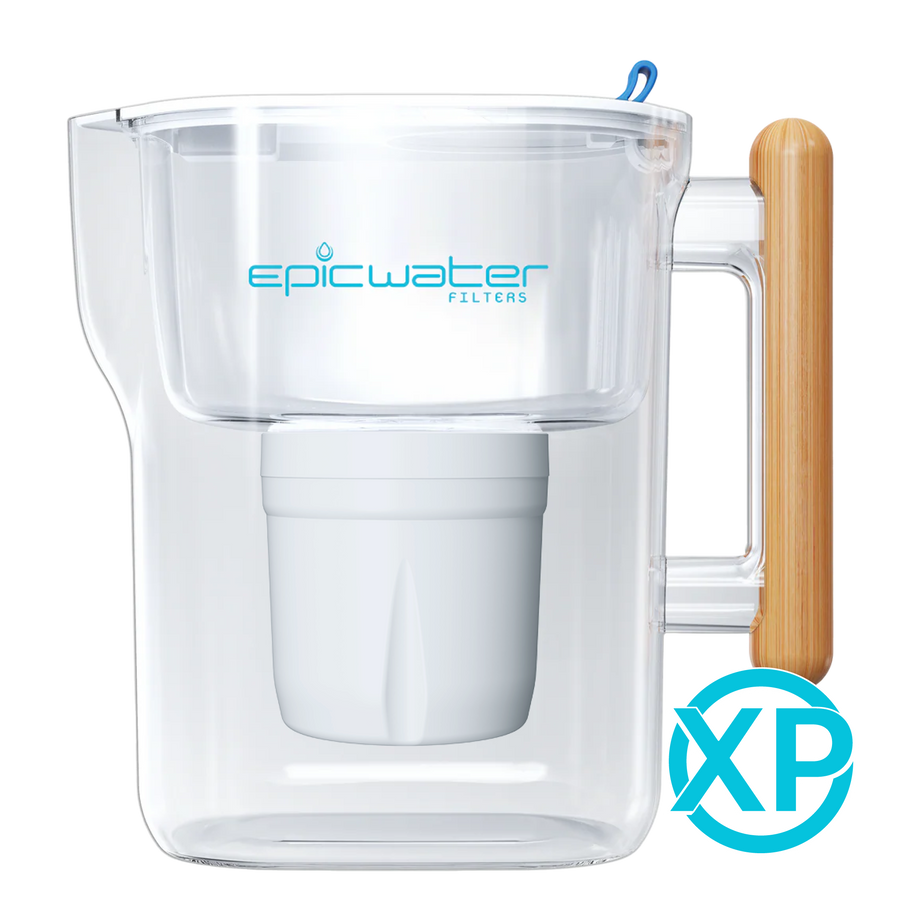
If a pitcher or dispenser suits the household, explore Epic’s pitchers and dispensers, and read the test report.
Questions about lead line replacement
Is my water safe to drink right after the replacement?
Treat it as disturbed until you have flushed as instructed and worked through the filter period your utility specifies. That is why the federal rule pairs this work with a filter and flushing instructions, not an all clear.
How long do I need to flush?
Follow the written procedure you were given. The right duration depends on the length of your line and your plumbing, so EPA advises asking your utility for the time appropriate to your address.
Why do I still need a filter if the lead pipe is gone?
Scale knocked loose can keep moving through your plumbing, and lead can also come from older fixtures and solder the replacement never touched. The filter covers the months while things settle.
What if only part of my line was replaced?
Then lead pipe remains on your side, and research on partial replacements found lead release can stay elevated afterward. Ask about completing the job, and keep filtering meanwhile.
Should I test with a kit from the hardware store?
A color strip gives a rough indication, not a lead result. Ask your utility to sample your tap, read your annual water quality report, and use a state certified laboratory for your own number.
Does an Epic filter remove lead?
Independent testing under the NSF/ANSI 53 protocol documents reduction of 99.9 percent of lead. Separately, Pure XP holds NSF listings under Standard 42 for material safety and 372 for lead content. Those listings are not certifications of contaminant reduction.
Sources & references
Reviewed October 28, 2026
- Spectrum News 1 / Syracuse approves $25 million for lead service replacement ↗October 27, 2026 vote: up to 1,700 lines, June 2027 target.
- EPA / Lead and Copper Rule Improvements ↗The final rule and its ten year replacement requirement.
- EPA / Final LCRI fact sheet for states and water systems (PDF) ↗Disturbance provisions and the 2027 inventory deadline.
- EPA / Basic information about lead in drinking water ↗Goal of zero, construction tremors, flushing, expired cartridges.
- Environmental Science & Technology / Lead release after partial replacements ↗Lead release measured in a metropolitan distribution system.
- WHEC / Rochester replaces 14,000 lead water service lines ↗A second city example of replacement pace.
- NSF / Official Standard 42 component listing ↗Pure XP, material safety requirements only.
- NSF / Official Standard 372 listing ↗Lead content certification of listed components.
- Epic Water Filters / Testing documents ↗Independent reports, including lead under the NSF/ANSI 53 protocol.
Procedures vary by utility and by home. Follow the written instructions your water system or contractor provides. This article describes service line replacement as a category, not any one city’s program. The trench and faucet images are generated illustrations. The Pure XP image is an official product photograph.
Aktie:
Arsenic in Well Water: What a Pitcher Filter Cannot Do
Road Salt Season Is Starting. What It Does to Your Tap Water.