
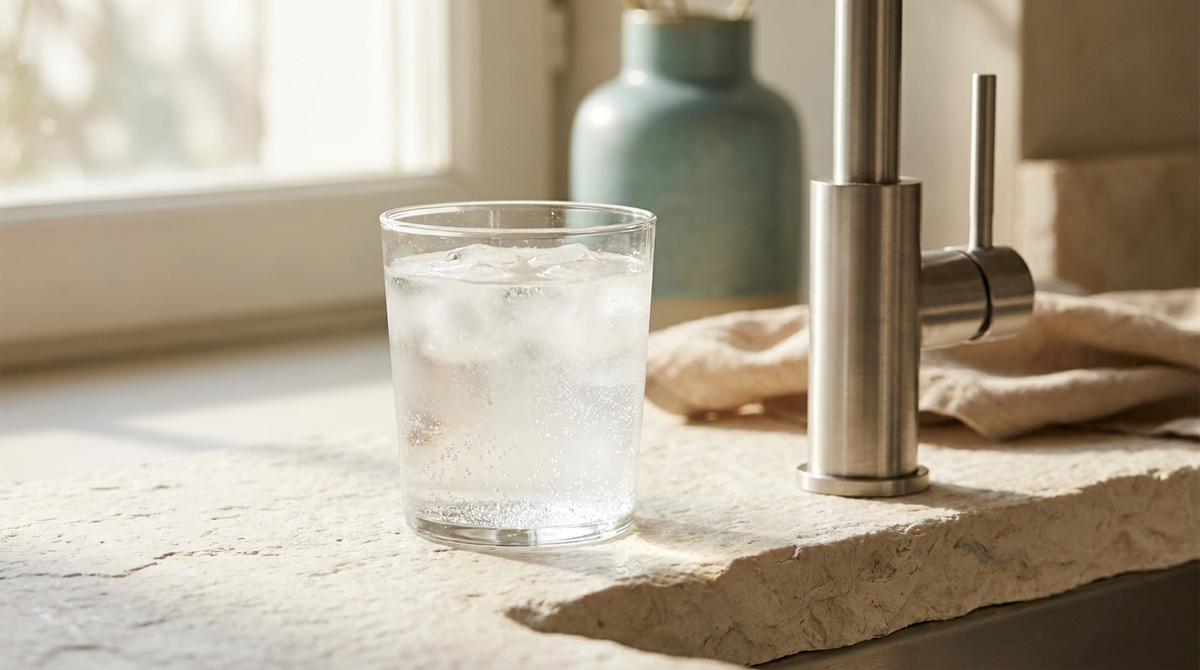
You fill a glass at the kitchen sink and the water comes out white. Not brown, not dirty, just milky. A minute later the same glass looks completely normal. That sequence is one of the most common appearance questions utilities field, and the usual answer is air rather than anything in the water.
It is also a seasonal question. Cold water holds more dissolved air than warm water, so the milky glass turns up far more often once source water cools in autumn, and it stays common right through winter.35
One situation is worth separating out. After a utility repairs a broken main, the same cloudiness can appear for a different reason, and a few extra steps apply. Cleveland Water told customers exactly that three days ago.12
What the milky look usually is
Water absorbs air from the atmosphere, and the colder it is, the more air it can hold. Inside a pressurized main that air stays in solution. The water then warms as it travels through the ground, and warms again sitting in your plumbing.3
Opening the tap drops that water to atmospheric pressure. The dissolved air comes out of solution all at once as millions of tiny bubbles, the same way a carbonated drink fizzes the moment you crack the cap.35
St. Louis's water division notes the effect shows up most often in the morning, after water has warmed overnight in basement pipes. Its advice is unglamorous and correct: run the tap for a few seconds until colder water arrives from the service main.3
The two minute glass test
Cal Water publishes a check anyone can run without buying anything. Fill a clean glass with cold tap water, set it on the counter, and watch it.4
The USGS describes the same physics and the same remedy: let the glass stand until the bubbles leave.5
When it follows work on the main

Repairs are the other common trigger, and this past week supplied a clean example. Cleveland Water issued a precautionary boil advisory on September 18, 2026 after a 12 inch main broke on Solon Road in Bedford Heights, Ohio, affecting parts of Twinsburg, Macedonia and Northfield.2
Samples from six locations inside the advisory area showed no pathogens, and the advisory was lifted the following Saturday morning.1
The part worth borrowing is what the utility told everyone outside the advisory zone. Surrounding areas might see discolored or cloudy water for a few days, that water was safe to drink without boiling, and a five minute full house flush, every cold tap, tub and shower at once with aerator screens removed, would help clear it.1
It flagged something people miss, too. A pressure disturbance can temporarily raise lead levels in homes that still have lead in the plumbing, so it suggested a filter certified to reduce lead for drinking, cooking and brushing teeth during that window.2
Boiling is the wrong tool for the lead half of that. EPA is direct about it: boiling does not remove lead, and because it drives off water as steam it can leave the remaining water slightly more concentrated.7 Flushing the pipes and using only cold water for drinking and cooking are the measures that actually help.6
When cloudy water deserves a closer look
Entrained air is harmless. A few other causes are not, and they behave differently in the glass.4

Fine suspended solids settle downward and leave a haze or a layer rather than clearing upward. On a private well, persistent cloudiness can point to silt, a failing well screen, or surface water reaching the aquifer, and none of that resolves itself.5
On a public system, your annual Consumer Confidence Report is the free starting point for what your utility measures and finds.8
Find your water quality report
For area level background, Epic's What's in Your Water lookup shows what has been reported nearby. It is not a test of the water at your own tap.
Colour is a different diagnostic. If the water is tinted rather than white, start with why tap water turns brown. If an advisory just ended near you, the flush and replace playbook covers the order. If the lead note above applies, identifying your service line is the more useful next step.
What a filter changes here, and what it does not
A drinking water filter will not stop your water looking milky. The air comes out of solution at the tap itself and leaves on its own within a minute or two. Buying a filter to solve that is buying the wrong thing.
Where a filter earns its place is the window after a service disruption, and the everyday concerns your utility report actually names.2
Read certification and reduction testing as two separate things. Pure XP's official NSF listings cover Standard 42 material safety and Standard 372 lead content.910 Contaminant reduction, including lead at 99.9% under the NSF/ANSI 53 protocol, is documented separately in independent testing.11
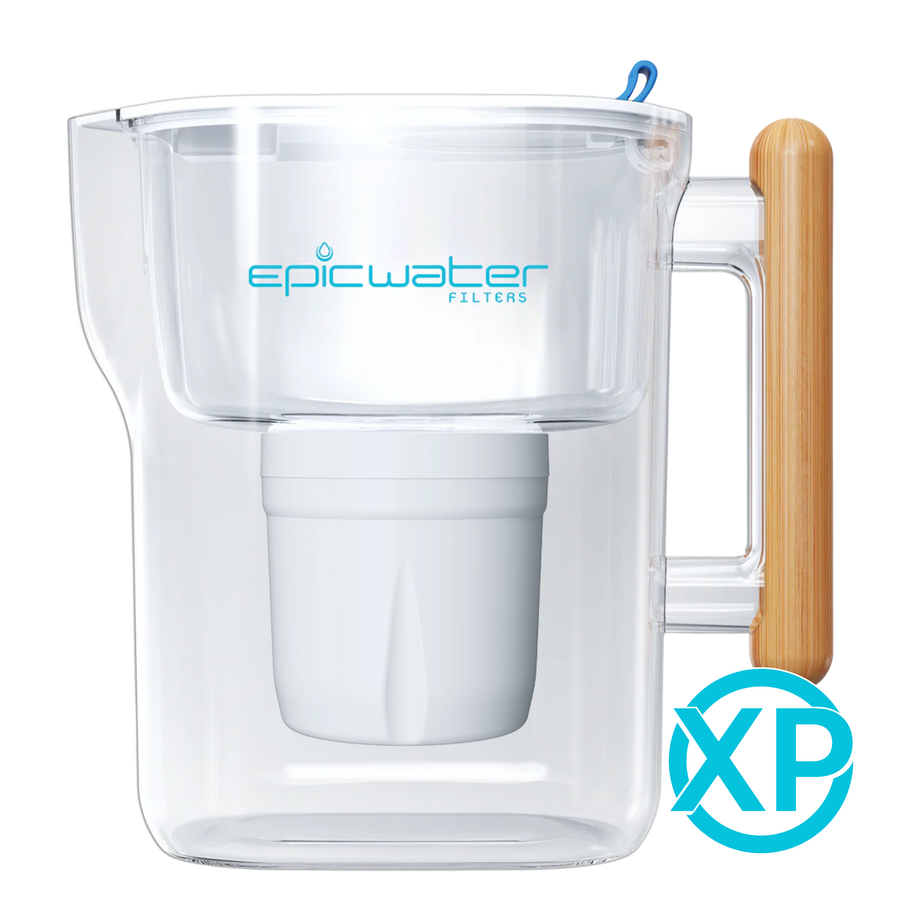
A filter is not a substitute for following a boil advisory, and it will not fix cloudiness that is really sediment or a well problem. If a pitcher or dispenser fits what you found, explore Epic's pitchers, dispensers and bundles, and read the documentation for the exact filter first.
Questions about cloudy tap water
Is cloudy tap water safe to drink?
When the cloudiness is dissolved air, yes. Utilities describe it as a physical response to a change in temperature and pressure rather than a water quality problem. Cloudiness that does not clear, or that comes with sediment or an odour, is a different question and worth a call.
Why is it worse first thing in the morning?
Water sitting overnight in indoor plumbing warms up, which reduces how much air it can hold in solution. The first glass of the day releases that air as soon as pressure drops at the tap. Running the tap briefly brings in colder water and the effect fades.
Why does this happen more in autumn and winter?
Colder water holds more dissolved air. As source water cools through the autumn, water entering the distribution system approaches saturation, so more air is available to come out of solution later. Utilities drawing from rivers and reservoirs see a clear seasonal pattern.
My water went cloudy after a water main break. What should I do?
Follow your own utility, because instructions are local. In the Bedford Heights repair, Cleveland Water told surrounding customers the cloudy water was safe without boiling and suggested a five minute full house flush of all cold taps, tubs and showers at once, aerator screens removed. If a boil advisory covers your address, that takes priority.
Can boiling clear it up?
Boiling is for microbial risk during an advisory, not for appearance. It drives dissolved air out, but so does letting the glass stand. Boiling also does not remove lead, and EPA notes it can leave the remaining water more concentrated.
Will a water filter stop my water looking milky?
No. The air is released at the tap, after any pitcher or faucet filter has done its work, and it disappears by itself. A filter is worth considering for contaminants your utility report or a certified lab actually identifies, not for bubbles.
Sources & references
Reviewed September 21, 2026
- News 5 Cleveland (WEWS) / Boil advisory lifted for Twinsburg, Macedonia and Northfield ↗Cleveland Water guidance on cloudy water after the repair, safety without boiling, and the five minute full house flush.
- Cleveland 19 (WOIO) / Boil advisory issued in Summit County after water main break ↗The September 18, 2026 break details and Cleveland Water's notice on discolored water, cloudy water and lead.
- City of St. Louis Water Division / Cloudy or milky tap water ↗Seasonal dissolved air explanation, the morning pattern, and the run the tap remedy.
- California Water Service / Why does my water appear milky or cloudy? ↗The glass test, clearing from the bottom up, and the sputtering plus sediment warning signs.
- USGS Water Science School / Why is my drinking water cloudy? ↗Air solubility under pressure and temperature, and letting the water stand to clear.
- EPA / Basic information about lead in drinking water ↗Flushing pipes and using only cold water for drinking, cooking and formula.
- EPA / Does boiling water remove lead? ↗Boiling does not remove lead and can leave the remaining water more concentrated.
- EPA / Consumer Confidence Reports ↗How to find your water system's annual water quality report.
- NSF / Official Standard 42 component listing ↗Pure XP certification for material safety requirements only.
- NSF / Official Standard 372 listing ↗Lead content certification of the listed filter components.
- Epic Water Filters / Testing documents ↗Independent performance reports, data sheets and certification resources.
Cloudy water has more than one cause and local instructions differ, so follow your own utility's guidance. The Bedford Heights details describe one repair in September 2026 and are included as an example, not as advice for every system. The trench and glass photographs are generated editorial illustrations. The Pure XP image is an official product photograph.
Share:
Earthy taste, slow filter: what fall reservoir turnover does to your tap water
Earthy taste, slow filter: what fall reservoir turnover does to your tap water