
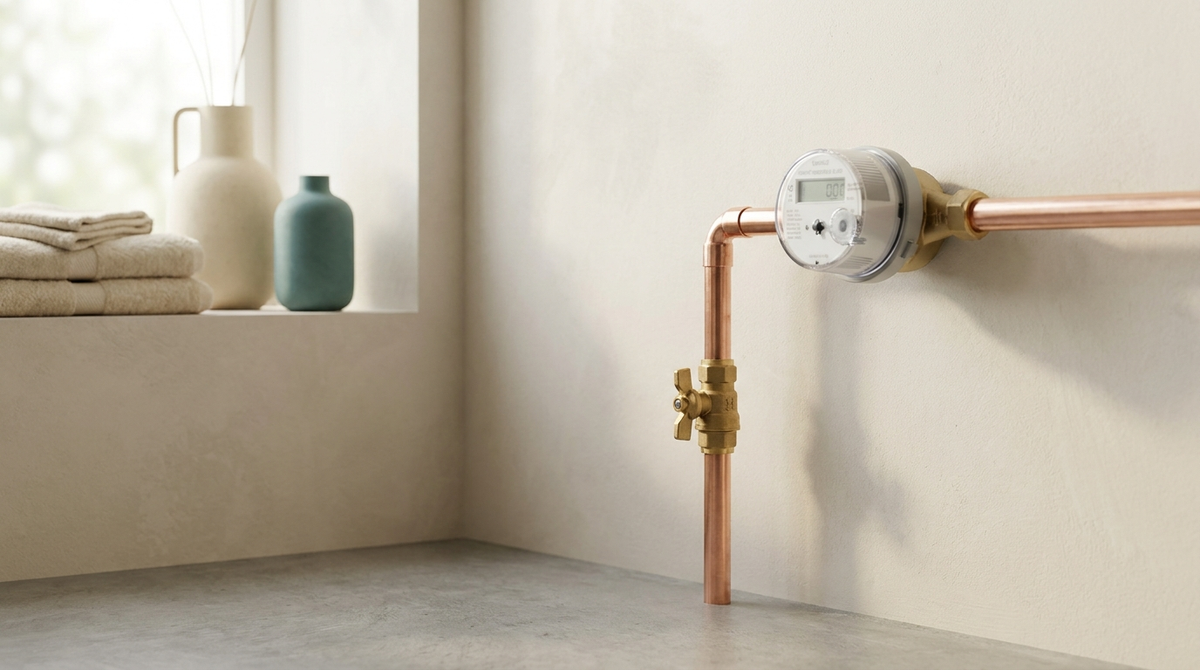
The pipe that carries water from the street into your house is called a service line. For roughly one in five homes in the United States, nobody has written down what it is made of.
That gap made the news on September 10, when the Associated Press reported that about 6,300 water systems serving 3.8 million Americans still have not filed the lead pipe inventory federal rules required by October 2024. More than 1,300 have been cited by the EPA for missing that deadline.1
That backlog explains why your utility may not have an answer for you yet. It also points to a check you can do yourself, in about five minutes, with a coin and a magnet.
Why one in five lines is a question mark
Federal rules required every community water system to inventory its service lines and sort each one as lead, non-lead, galvanized requiring replacement, or unknown. That inventory was due October 16, 2024, and must be publicly accessible. A fuller baseline inventory is due November 1, 2027.2
Building that list is harder than it sounds. Records from the era when lead was standard are often lost or illegible, and about 3,500 systems report that they do not know what their lines are made of. The EPA estimates roughly 4 million homes and businesses are still connected by lead pipe.1

The stakes rise in 2027, when systems must start replacing 10 percent of their lead and galvanized-requiring-replacement lines a year, with full replacement due within ten years. Unknown lines count toward that target, so every question mark becomes a pipe that has to come out of the ground. Replacements run $8,000 to $15,000 each.12
The five-minute check at your own house
You do not have to wait for the paperwork. The EPA publishes a free, picture-led guide called Protect Your Tap for exactly this, and the equipment list is short: a penny, and a magnet.4
Look where the line enters the building, usually in a basement or crawlspace on the street side of the meter. Lead is soft and dull grey: it scratches to bright silver with a coin, and a magnet will not stick. Galvanized steel also looks grey but is hard, will not scratch bright, and holds a magnet. Copper scratches to the color of a penny.
Age is the other clue. Lead service lines went in from the late 1800s into the 1950s, and lead pipe was banned in 1986. Chicago tells residents with unknown lines to assume lead if the building predates that ban, a reasonable default anywhere with older housing.1
Ask your utility for the inventory
Systems serving more than 50,000 people must post the inventory online; smaller systems can post it or make it available another way, such as at the utility office. From the baseline inventory onward, the public version must include a location identifier for each lead and galvanized-requiring-replacement line.2
Your utility’s annual Consumer Confidence Report is the other free document worth reading: source water, what was detected, and who to call.5 See also our guide to what a water test can and cannot tell you.
Find your water quality report
For area-level background, Epic’s What’s in Your Water lookup is a starting point. Like a utility report, it describes an area, not the pipe under your front yard.
What to do while the answer is pending
EPA and the CDC agree there is no known safe level of lead in a child’s blood, and service lines remain the largest single source of lead in drinking water. How much reaches the tap depends on water chemistry and pipe condition, which is why an unknown line deserves caution.13
EPA’s steps are unglamorous and free: run the cold tap after water has sat, use cold water only for drinking, cooking, and formula, clean the aerator, and use a filter certified for lead as instructed. Bathing and showering are not the concern; skin does not absorb lead from water.3 We covered the hot-tap rule in our piece on lead in school drinking water, and the same logic applies to older apartment and dorm plumbing.

Testing is the only way to confirm whether lead is present at your tap, since faucets and interior plumbing can contribute even when the line is not lead. EPA recommends a certified laboratory, sampling from the faucets you drink from. It puts the typical cost at $15 to $100, and some states and utilities cover it.46 Skip the home score kits and strips here.
Find a certified drinking-water lab
Replacing a line also disturbs old corrosion scale and can raise lead at the tap afterward. The rules require the system to warn you, explain flushing, and supply a device certified to reduce lead plus six months of cartridges before the line returns to service.2 Discolored water after nearby pipe work is usually a separate issue, covered in why tap water turns brown.
What a pitcher filter can and cannot do here
A filter treats water where you drink it. It does not change what is buried in your yard, and it is not a substitute for testing. What it can do is reduce specific contaminants, to the extent documented for that exact filter.
Read certification and reduction testing as two separate things. Pure XP’s NSF listings cover Standard 42 material safety and NSF/ANSI/CAN 372 lead content: the components are lead-free and safe as materials.78 Reduction is documented separately: Pure XP is independently tested for 99.9 percent lead reduction under the NSF/ANSI 53 protocol.9 Different claims, and anyone selling you a filter should keep them apart.
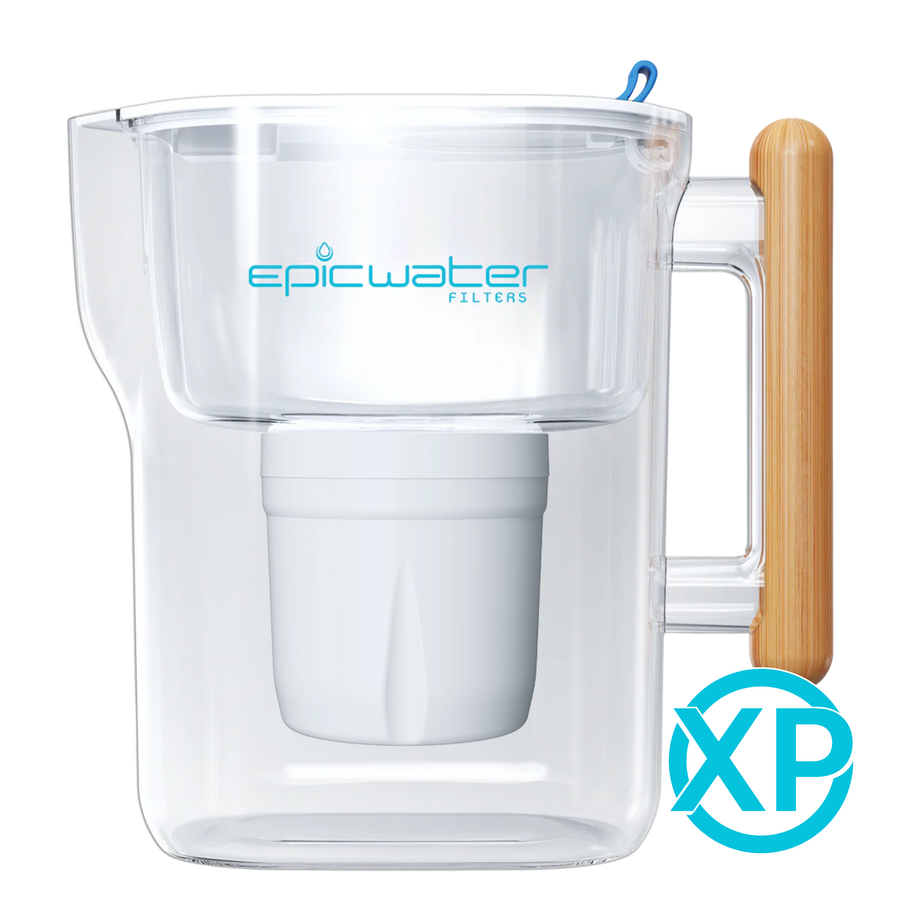
If a pitcher or dispenser suits your household, explore Epic’s pitchers, dispensers, and bundles. Replace cartridges on schedule: a filter past its rated capacity is not doing that job.
Questions about lead service lines
How do I tell if my service line is lead?
Find where the line enters the building, ahead of the meter, and use a coin and a magnet. Lead is soft, scratches to bright silver, and is not magnetic. Galvanized steel is hard, will not scratch bright, and is magnetic. Copper scratches to a penny color. EPA’s Protect Your Tap guide shows it in photographs.
My utility says my line is “unknown.” What does that mean?
It means the system has no record establishing the material, not that it has been found safe. Treat an unknown line as a lead line until it is identified, and ask when the utility expects to resolve your address.
Is my utility required to tell me?
Water systems must make their service line inventory publicly accessible, and those serving more than 50,000 people must post it online. Thousands of systems are behind schedule, so you may have to ask directly.
Will boiling the water help?
No. Boiling does not remove lead, and because water evaporates it can slightly concentrate what is left. Use cold water, run the tap after periods without use, and use a filter documented to reduce lead.
What is Pure XP certified and tested to do?
Pure XP is listed by NSF under Standard 42 for material safety and NSF/ANSI/CAN 372 for lead content. Contaminant reduction, including 99.9 percent lead reduction under the NSF/ANSI 53 protocol, is documented in separate independent testing. Review the published report for the exact filter before relying on a specific figure.
Sources & references
Reviewed September 14, 2026
- Associated Press / The push to remove lead pipes is on (September 10, 2026) ↗Inventory backlog figures, unknown-line share, Chicago replacement program, and replacement costs.
- EPA / Lead and Copper Rule Improvements: service line inventory and replacement (PDF) ↗Inventory categories and deadlines, public accessibility, replacement rate, and post-replacement filter provision.
- EPA / Basic information about lead in drinking water ↗Health effects, no known safe blood lead level, and household steps to reduce exposure.
- EPA / Protect Your Tap: a quick check for lead ↗Step-by-step guide to identifying a lead service line, plus testing cost and lab guidance.
- EPA / Consumer Confidence Reports ↗Find the annual water quality report for your public water system.
- EPA / Certified drinking-water laboratories ↗State certification programs and laboratory contact information.
- NSF / Official Standard 42 component listing ↗Pure XP certification for material safety requirements only.
- NSF / Official Standard 372 listing ↗Lead-content certification of the listed filter components.
- Epic Water Filters / Testing documents ↗Independent performance reports, including lead reduction tested under the NSF/ANSI 53 protocol.
Inventory status, replacement schedules, and assistance programs vary by water system and state. Contact your utility or state drinking-water program for the situation at your address. This article describes how to identify a service line and reduce exposure; it is not a substitute for testing by a certified laboratory or for official guidance during an advisory. The trench and kitchen images are generated editorial illustrations. The Pure XP image is an official product photograph.
Share:
Your Boil Water Advisory Just Lifted. Now What?
The Best Water for Coffee: The 98% of the Cup Most People Skip