
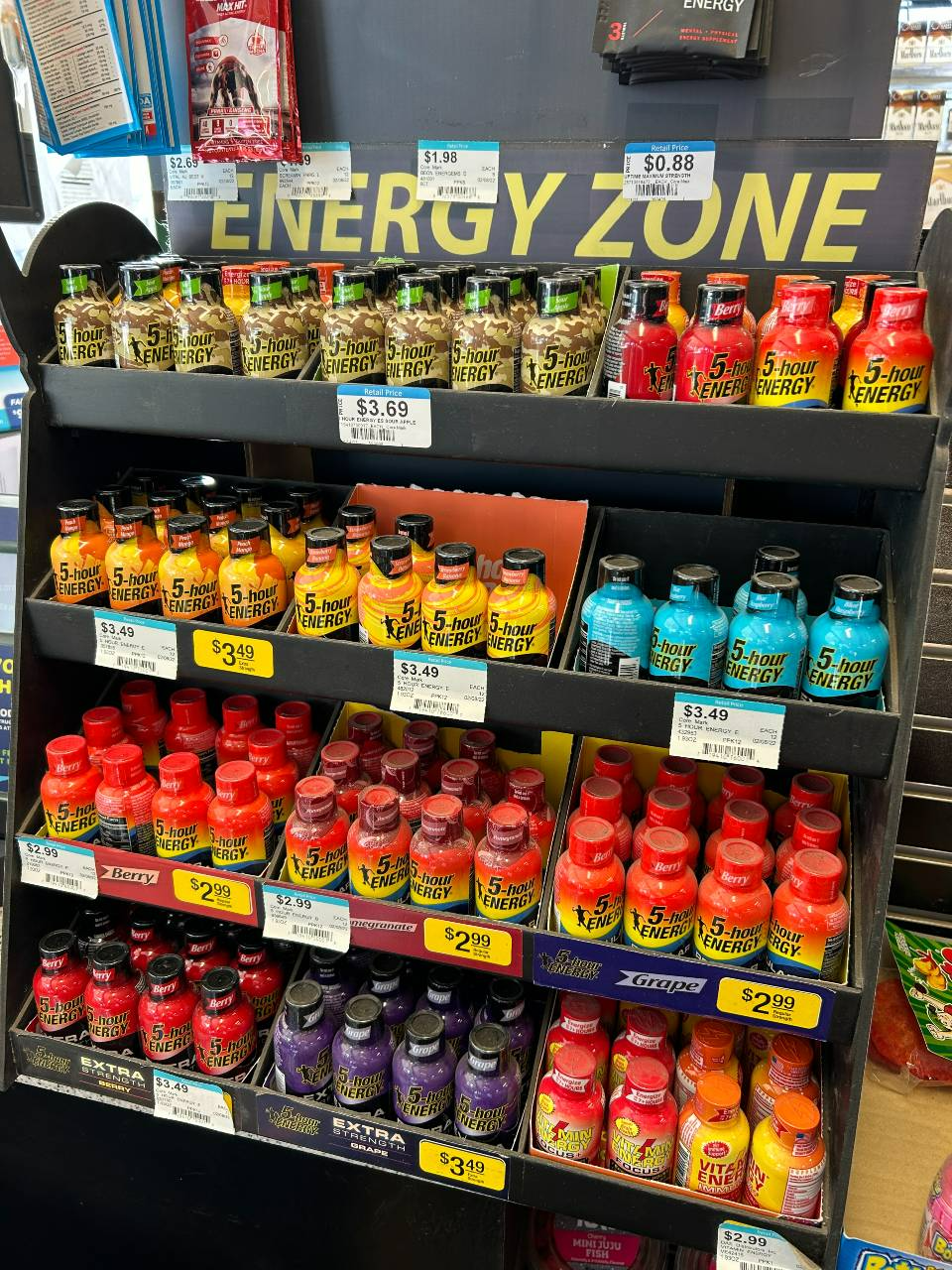
Quick answer: A regular 5-Hour Energy shot packs about 200 mg of caffeine into 1.93 ounces, roughly the caffeine of two cups of coffee, and the Extra Strength version has 230 mg. It also delivers B vitamins at many times the daily value. The most common side effects are jitters, a racing heart, trouble sleeping, headaches, and the famous niacin flush, a harmless but uncomfortable wave of skin redness and tingling. An occasional shot is unlikely to harm a healthy adult. Daily use, doubling up, or use by anyone under 18 is where the trouble starts.
What is in a 5-Hour Energy shot?

The label lists an "energy blend" of taurine, glucuronolactone, malic acid, N-acetyl L-tyrosine, L-phenylalanine, caffeine, and citicoline, plus B vitamins, purified water, natural and artificial flavors, sucralose, and preservatives (potassium sorbate, sodium benzoate, and EDTA). There is no sugar; the sweetness comes from sucralose.
Two ingredients do the heavy lifting. Caffeine provides the alertness, and it is a lot of caffeine for a two-ounce bottle. The B vitamins are dosed far beyond daily needs, which is what makes the product feel distinctive and also what causes its best-known side effect. Ingredients like taurine and glucuronolactone are naturally present in the body, but their long-term effects at supplemental doses are not well studied.
Common side effects of 5-Hour Energy
Most side effects trace back to getting a coffee-shop-sized dose of caffeine in two swallows:
- Jitters, anxiety, and a racing heart. 200 mg at once can raise heart rate and blood pressure, especially in people who are caffeine-sensitive or who rarely use caffeine.
- Trouble sleeping. Caffeine lingers for hours. A late-afternoon shot can still be working at bedtime, and lost sleep is usually why people need another shot tomorrow.
- Headaches. Regular caffeine use changes blood flow in the brain. Skip a day and the rebound can trigger a withdrawal headache.
- Dependence. Daily use builds tolerance, so the same shot does less, and stopping abruptly brings fatigue, irritability, and headaches.
- Digestive upset. Concentrated caffeine on an empty stomach bothers some people.
The niacin flush
This is the side effect 5-Hour Energy is famous for. The shot contains niacin (vitamin B3) at well above the daily value, and in some people that triggers a flush: skin on the face, neck, and chest turns red, warm, and tingly for 15 to 30 minutes. It can feel alarming the first time, but it is a harmless, well-known reaction to supplemental niacin, not an allergy. It fades on its own.
B6 and B12 megadoses
The label also lists vitamins B6 and B12 at many times what anyone needs in a day. Your body simply excretes most of the excess B12, and a single daily shot keeps B6 below official upper intake limits, so this is more pointless than dangerous. But there is no evidence the megadoses add energy. If you are not deficient, the caffeine is doing essentially all of the work.
How much caffeine is in 5-Hour Energy?
| Drink | Caffeine per serving |
|---|---|
| Coffee (8 oz cup, for reference) | ~95 mg |
| Green tea (cup, for reference) | 30-50 mg |
| 5-Hour Energy Regular Strength | 200 mg per bottle |
| 5-Hour Energy Extra Strength | 230 mg per bottle |
For healthy adults, the commonly cited safe ceiling is about 400 mg of caffeine per day from all sources. One Extra Strength shot plus a morning coffee and an afternoon soda gets you there quickly, which is why the label warns against taking more than two shots a day and why stacking shots with other caffeine is the most common way people get into trouble.

What happens if you drink 5-Hour Energy every day?
The realistic daily-use risks are a cycle of borrowed alertness (caffeine masks tiredness, disrupts sleep, and deepens the fatigue it treats), rising tolerance, and sustained elevated blood pressure in susceptible people. Research on heavy long-term energy drink use is still developing; one long-term animal study cited below found changes in heart muscle tissue with chronic intake, and cardiologists generally advise people with heart rhythm problems or high blood pressure to be careful with concentrated caffeine.
Is 5-Hour Energy bad for your kidneys?
There is no strong evidence that moderate use damages healthy kidneys. Caffeine is a mild diuretic and a two-ounce shot contributes almost nothing to your fluid needs, so heavy users who replace water with shots can end up underhydrated, which is hard on the whole system. If you have kidney disease, ask your doctor before using concentrated caffeine products at all.
Sucralose and "natural flavors"

5-Hour Energy is sweetened with sucralose, an FDA-approved artificial sweetener. The honest state of the science: some studies, including a JAMA Network Open trial cited below, suggest sucralose may affect appetite and reward signaling, and researchers continue to study effects on gut bacteria and metabolism. Other large reviews have not found clear harm at normal intakes. The amount in a two-ounce shot is small, so this is a reason for moderation, not alarm.
"Natural flavors" is a looser label term than it sounds. The FDA allows flavors derived from plant or animal sources to be processed and modified in the lab and still be called natural, so the phrase tells you little about what is actually in the bottle. That is a transparency gripe more than a safety one, but it is worth knowing when you read labels.
Can kids or teens take 5-Hour Energy?

No. The American Academy of Pediatrics is unambiguous that caffeinated energy products are not appropriate for children or adolescents, and 5-Hour Energy's own label says it is not intended for minors. A 200 mg dose that gives an adult jitters is a much bigger dose relative to a child's body weight, and caffeine interferes with the sleep that developing brains depend on. Research cited below also found that age warnings on labels do little to stop high schoolers from using these products, so this one falls to parents.
Alternatives that actually work
If you reach for a shot most afternoons, it is worth asking what the fatigue is really about. Mild dehydration reads as tiredness and poor focus, and it is one of the most common causes of the 2 pm slump. Some better tools:
- Water first. A big glass of cold filtered water is free, hydrating, and surprisingly effective against the afternoon fade.
- Black coffee or green tea. If you want caffeine, coffee (about 95 mg per cup) and green tea (30-50 mg) deliver it in gentler, better-studied doses.
- A short walk or daylight. Movement and light are legitimate alertness tools with no crash.
- Protein-forward snacks instead of sugar, which spikes and dips.
- Sleep. No shot repays a chronic sleep debt. That is the root cause the bottle is papering over.
Bottom line
5-Hour Energy is a concentrated caffeine delivery system with a B vitamin megadose attached. Used occasionally by a healthy adult, it will most likely just do its job, possibly with a niacin flush as the price of admission. Used daily, it tends to trade away sleep and build dependence while the vitamins pass through unused. It is not for kids, and it should not be stacked on top of a heavy coffee habit.
If your energy problem is really a hydration problem, fix that first and cheaply. The Pure XP pitcher is independently tested to reduce lead, PFAS, chlorine, and over 99.9% of microplastics, so your default drink is one you actually want to reach for. For the gym bag or desk, a filtered water bottle keeps clean water within reach all day, and replacement filters keep either going.
Related reading
- Monster energy drink side effects
- Are Celsius drinks bad for you?
- Is C4 bad for you?
- Is Gatorade Zero bad for you?
Sources
- Medical University of South Carolina: Energy Drinks May Do More Harm Than Good Says Researchers
- Frontiers in Public Health: Health Effects and Public Health Concerns of Energy Drink Consumption in the United States
- Pediatrics (American Academy of Pediatrics): Sports Drinks and Energy Drinks for Children and Adolescents: Are They Appropriate?
- ACSM's Health & Fitness Journal: Stimulant-Containing Energy Drinks: What You Need to Know
- NCBI PubMed Central: Long-term consumption of energy drinks induces biochemical and ultrastructural alterations in the heart muscle
- NCBI PubMed Central: Age restriction warning label efficacy and high school student consumption of highly-caffeinated products
- JAMA Network Open: Obesity and Sex-Related Associations With Differential Effects of Sucralose vs Sucrose on Appetite and Reward Processing
- PubMed: Nonnutritive sweeteners and cardiometabolic health: a systematic review and meta-analysis
- The New York Times: Are 'Natural Flavors' Really Natural?
- Clarkson University: Natural Caffeine Offers Longer Lasting Improvement on Cognition and Moods
5-HOUR ENERGY is a trademark of International IP Holdings, LLC. This article is for educational purposes and is not medical advice.
Share:
Is Brita Water Actually Good For You?
Oklahoma City, Oklahoma Water Quality Report