
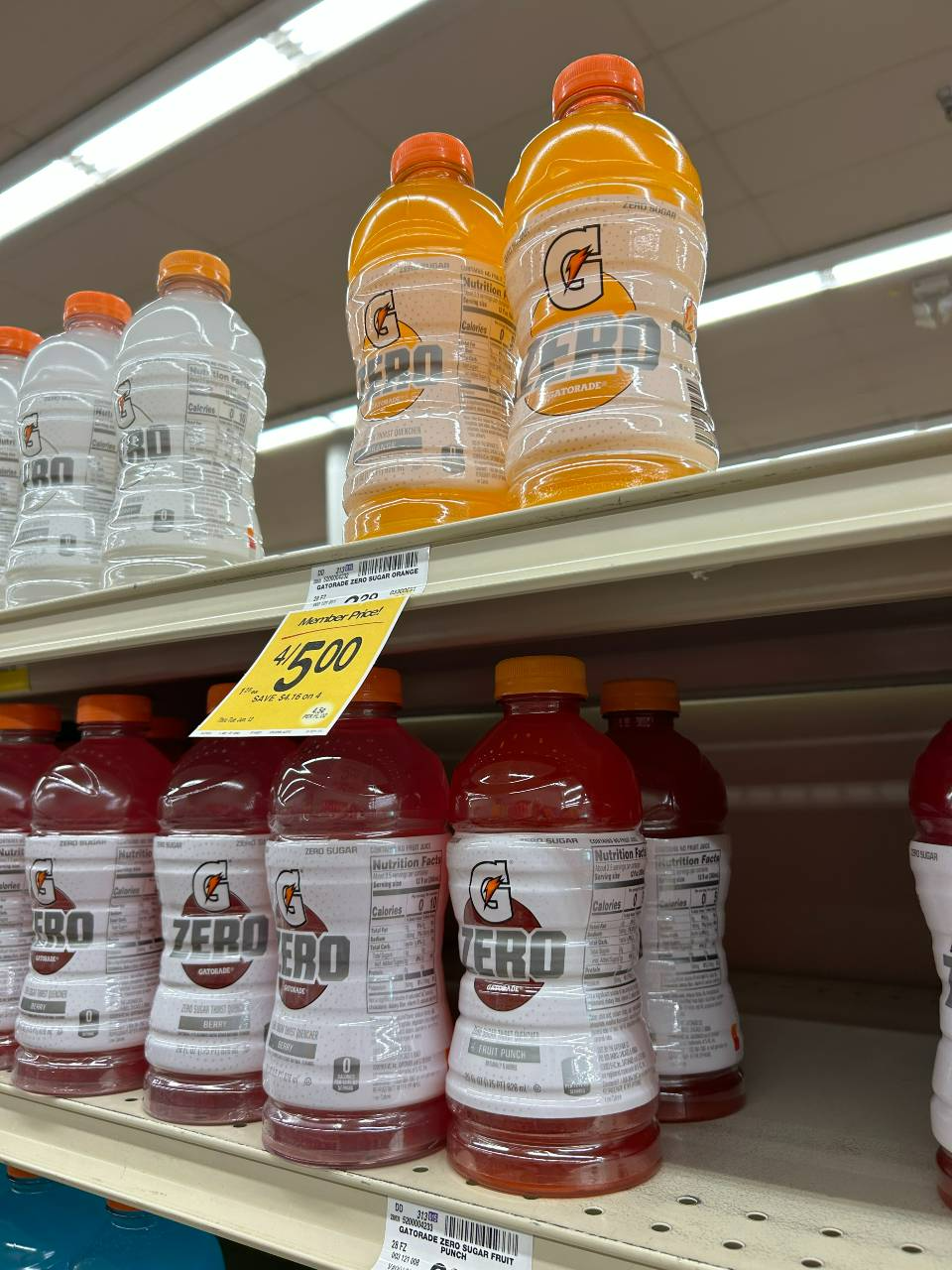
Quick answer: Gatorade Zero is not going to hurt you as an occasional post-workout drink, and it beats regular Gatorade's 34 grams of sugar. But "zero sugar" does not mean "nothing to think about": it is sweetened with sucralose and acesulfame potassium, colored with synthetic dyes in most flavors, and for typical workouts under an hour, sports medicine guidance says plain water covers you. If you are drinking it every day as a water substitute, that is where the case for it falls apart.
What is actually in Gatorade Zero?

The short label: water, citric acid, electrolyte salts (sodium citrate, monopotassium phosphate), natural flavors, sucralose, acesulfame potassium, and in most flavors, synthetic color. Here is what each piece means in practice.
Sucralose and acesulfame potassium
These two artificial sweeteners replace sugar entirely. Both are FDA-approved, and the doses in a bottle are well below regulatory limits. That said, the research picture is genuinely unsettled: a JAMA Network Open study found sucralose increased appetite and food-reward signaling in some groups, and reviews of nonnutritive sweeteners have raised questions about gut bacteria and long-term cardiometabolic effects. The honest summary is that occasional intake appears fine, while the effects of heavy daily intake are still being studied.
Synthetic food dyes (Yellow 5, Yellow 6, Red 40, Blue 1)
Most Gatorade Zero flavors get their color from synthetic dyes that serve no nutritional purpose. A review in Environmental Health found evidence associating synthetic food dyes with hyperactivity and attention effects in some children, which is why several countries require warning labels on dyed foods. For adults the evidence of harm at normal intakes is weaker, but you are still consuming a cosmetic chemical with zero benefit.
Monopotassium phosphate
An electrolyte and acidity regulator. It is safe for healthy people at these amounts, but phosphate additives are something people with reduced kidney function are specifically advised to limit, so if that applies to you, this is worth knowing about.
Citric acid and "natural flavors"
The citric acid in soft drinks is manufactured (typically via fermentation), and it is safe for most people, though it is acidic enough that heavy daily intake is hard on tooth enamel. "Natural flavors" is a legally vague term: it tells you the starting material came from a plant or animal source, but nothing about the processing. It is not a red flag, just a transparency gap.
Is it OK to drink Gatorade Zero every day?

Context is everything. If you are sweating hard for over an hour, an electrolyte drink earns its place. For a normal gym session, a walk, or sitting at a desk, you are consuming artificial sweeteners and dyes to replace fluids that plain water replaces perfectly well. Sports nutrition guidance is consistent on this point: for most exercise under 60 minutes, water is all you need.
There is also a subtler issue: intensely sweet flavors maintain a preference for sweetness. If the goal of choosing a zero-sugar drink is building healthier habits, training your palate to expect sweet with every sip works against you.
Is Gatorade Zero bad for your kidneys?
For healthy kidneys, no evidence says moderate Gatorade Zero causes harm. The phosphate additive caution above applies to people with chronic kidney disease, who are advised to limit phosphate additives generally. If you have kidney concerns, that is a conversation for your doctor, not a beverage label.
Does Gatorade Zero actually hydrate you?
Yes, it hydrates; it is mostly water with electrolytes. The marketing question is whether you needed the electrolytes at all. Most people eating a normal diet get ample sodium and potassium from food, and for everyday hydration, water does the job without the additive package.
The bottle problem

Gatorade Zero comes in #1 PET plastic, the same material that independent testing has shown sheds microplastic particles into bottled beverages. Lab analysis of bottled water found an average of 325 microplastic particles per liter, with the packaging itself as the likely source. Add the cost of a daily bottle habit and the single-use waste, and the everyday version of this habit looks worse than the occasional one. We break down the research in our guide to microplastics from plastic bottles.
The bottom line
As a once-in-a-while electrolyte drink after heavy sweat, Gatorade Zero is fine. As a daily water replacement, it is an artificial sweetener and dye habit in a microplastic-shedding bottle, at a price that adds up fast.
For everyday hydration, filtered tap water wins on every axis: no additives, no dyes, no plastic bottle, pennies per gallon. If you want cold clean water at home, the Epic Pure XP pitcher is independently tested to reduce lead, PFAS, chlorine, and over 99.9% of microplastics. For the gym bag, a filtered water bottle gives you clean water anywhere there is a tap. Browse all pitchers and dispensers or filtered bottles.
Related reading
- Why Is Dasani Water Bad For You?
- Are Celsius Drinks Bad for You?
- Is Powerade Good for You?
- Are Plastic Water Bottles Giving You Microplastics?
Sources
- Sucralose vs Sucrose Effects on Appetite and Reward Processing — JAMA Network Open
- Nonnutritive Sweeteners and Cardiometabolic Health: Systematic Review and Meta-analysis — PubMed
- Potential Impacts of Synthetic Food Dyes on Activity and Attention in Children — Environmental Health
- Toxicology of Food Dyes — PubMed
- Phosphate Additive Avoidance in Chronic Kidney Disease — NCBI
- Manufactured Citric Acid and Inflammatory Reactions: Case Reports — NCBI
- Comparing Sports Drinks — Central Washington University Sports Nutrition
- Are 'Natural Flavors' Really Natural? — The New York Times
- Synthetic Polymer Contamination in Bottled Water — Frontiers in Chemistry
- EFSA Opinion on Gum Rosin as Food Additive — BeverageDaily
GATORADE ZERO is a trademark of Stokely-Van Camp, Inc. This article is for educational purposes and is not medical advice.
Share:
Santa Ana, California Water Quality Report
Are Celsius Drinks Bad For You