
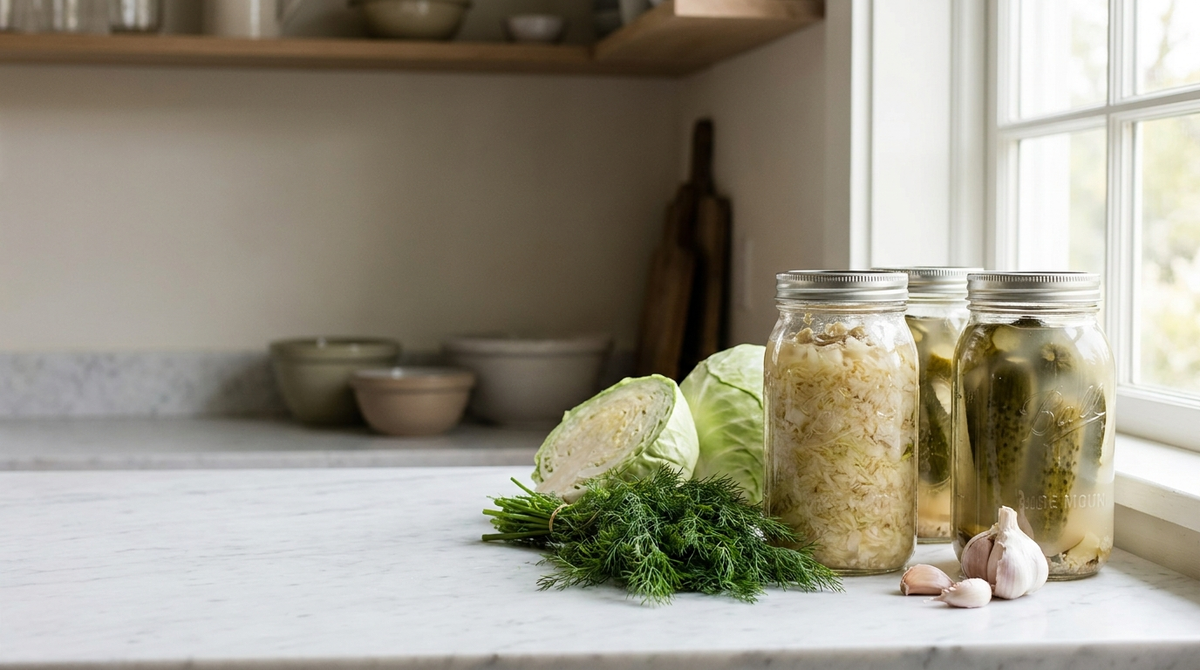
The Best Water for Fermenting and Canning: Why Chlorine Ruins a Ferment
September fills the counter with cabbage, cucumbers, and mason jars. Every recipe you make this month has one ingredient nobody reads the label on: the water. And the water coming out of a municipal tap is engineered, on purpose, to do the one thing your sauerkraut cannot tolerate.
Here is the short version. Chlorine is added to tap water to control bacteria. A lacto-ferment is a bacteria project. Keep those two facts in view and the rest of this guide is just matching water to the job.
Three numbers to know
- 0.2 mg/L. The minimum disinfectant residual a utility must keep in water entering the distribution system under EPA rules.
- 4.0 mg/L. The federal ceiling for chlorine. Summer water often runs closer to it than you would guess, because warm water burns residual faster and utilities dose harder.
- 0 mg/L. What a lacto-ferment wants. Sauerkraut, kimchi, and fermented pickles work because Lactobacillus converts vegetable sugars into lactic acid, and university extension canning guides steer fermenters toward unchlorinated water for exactly that reason.

First, find out which disinfectant your city uses
This one fact decides which fixes work. Utilities disinfect with either free chlorine or chloramine, a chlorine and ammonia compound many systems prefer because it lasts longer in the pipes. Free chlorine leaves water that stands or boils. Chloramine does neither. It is listed on the first page of your utility's annual water quality report, and some cities switch between the two seasonally.
How the four common fixes score
- Let water stand overnight. Free chlorine off-gasses from an open container. Slow, and it does nothing for chloramine.
- Boil, then cool. Works for free chlorine. Roughly an hour per batch once it cools, and little effect on chloramine.
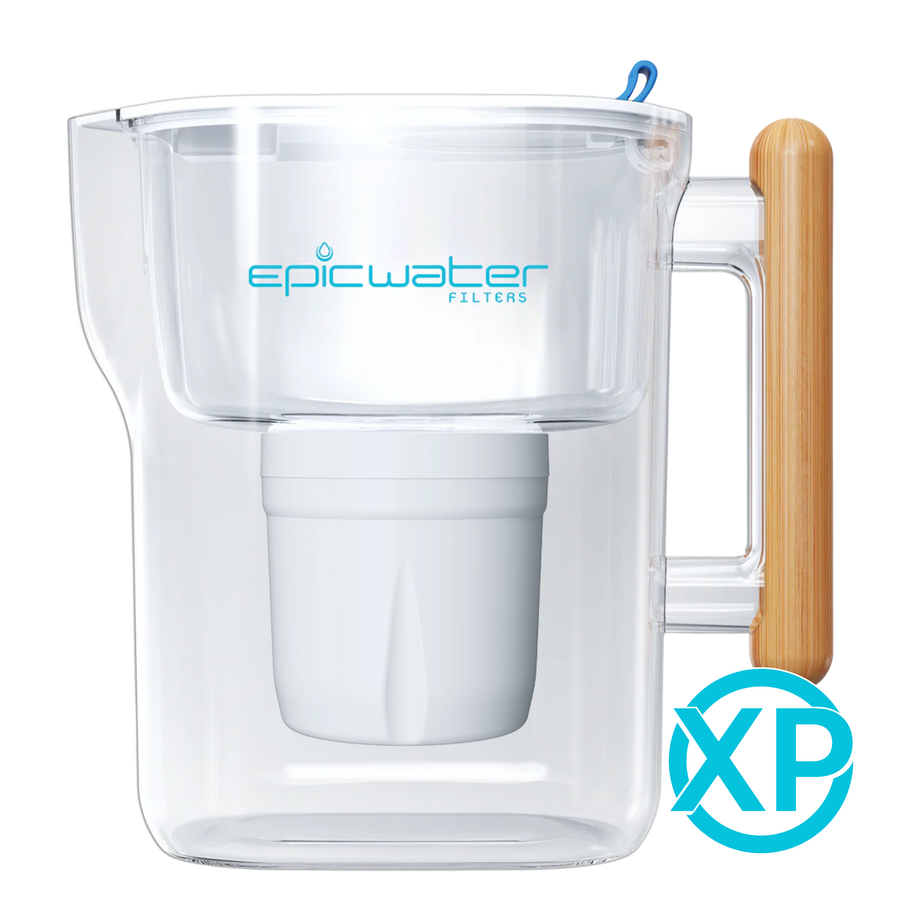
- Activated carbon filter. Reduces chlorine taste and odor as you fill. This is the rare water topic where the certified claim is exactly the job: Epic's Pure XP filters are NSF certified to NSF/ANSI 42 for chlorine taste and odor reduction and to NSF/ANSI/CAN 372 for lead-free materials. Calcium and magnesium pass through, which bakers and picklers generally want. Carbon is the usual household approach for chloraminated water too, but Epic does not publish a chloramine reduction percentage, so we will not claim one.
- Distilled water. Chlorine-free and chloramine-free, but the minerals leave with it, and it is a trip to the store every weekend.
Water, job by job
Only two of the pots on your stove care about chemistry.
- Ferments and starters (sauerkraut, kimchi, fermented pickles, sourdough): use unchlorinated water. Live cultures do the work here.
- Vinegar pickle brines: hardness is the enemy, not chlorine. The National Center for Home Food Preservation notes hard water can interfere with pickling by reducing acid formation and can darken or soften pickles. Use soft, distilled, or boiled-and-settled water.
- The boiling-water canner itself: ordinary tap is fine. The water in the canner never touches the food inside a sealed jar.
The hard water rule
A carbon filter will not soften your water. Dissolved calcium and magnesium go straight through a carbon block by design, which is right for drinking water and sourdough and wrong for a crisp pickle brine in genuinely hard water. For that, NCHFP's method still applies:
- Boil the water for 15 minutes to precipitate carbonate hardness.
- Let it stand covered for 24 hours so the sediment settles.
- Pour off the top and leave the sediment behind.
Distilled water is the faster substitute when hardness, not chlorine, is the problem.
Where a filter fits
For most fermenting routines, a Pure XP pitcher in the fridge covers brine water and drinking water in one habit: fill it, and the same water that goes in your glass goes in your jar. If you are filling stockpots and gallon jars at the sink all Saturday, an under-sink filter like Smart Shield Max does the same job at faucet speed.

Four things a filter will not do for your jars
- Make a jar safe. Safety comes from tested USDA and NCHFP recipes, correct acidity, headspace, and full processing time. Water is flavor and fermentation, never safety.
- Soften hard water. See the rule above.
- Carry a chloramine number. Epic does not publish one, so this article does not claim one.
- Rescue a bad batch. If a ferment has gone off or a seal failed, no water treatment brings it back. Compost it and start clean.
The bottom line
Check your water quality report to learn your disinfectant, use unchlorinated water where live cultures do the work, respect the hard-water rule for pickle brines, and keep the USDA recipe rails exactly where they are. If you want to know what else is riding along in your tap beyond chlorine, look up your zip code in our What's in Your Water tool.
Share:
Your Boil Water Advisory Just Lifted. Now What?
The Best Water for Coffee: The 98% of the Cup Most People Skip