
Does Boiling Water Remove Contaminants? What It Kills and What It Does Not
Boiling water is one of the oldest safety steps we have, and it genuinely works, for one specific job. A rolling boil kills the bacteria, viruses, and parasites that can make you sick quickly. That is exactly why utilities issue boil-water advisories after a water-main break or a loss of pressure, and this summer has produced a steady run of them across the country. The confusion starts when people assume boiling also cleans up everything else in the water. It does not, and in some cases it can make certain problems slightly worse.

The short answer
Boiling removes living things, not dissolved chemicals. Heat destroys microorganisms, so boiled water that was microbially unsafe becomes safe to drink. But lead, PFAS, nitrate, pesticides, and disinfection byproducts are chemicals, not organisms, so heat leaves most of them untouched. Because a little water escapes as steam while the chemical stays behind, boiling can even raise the concentration of something like lead in what is left in the pot. Boiling and filtering solve two different problems.
What boiling does remove
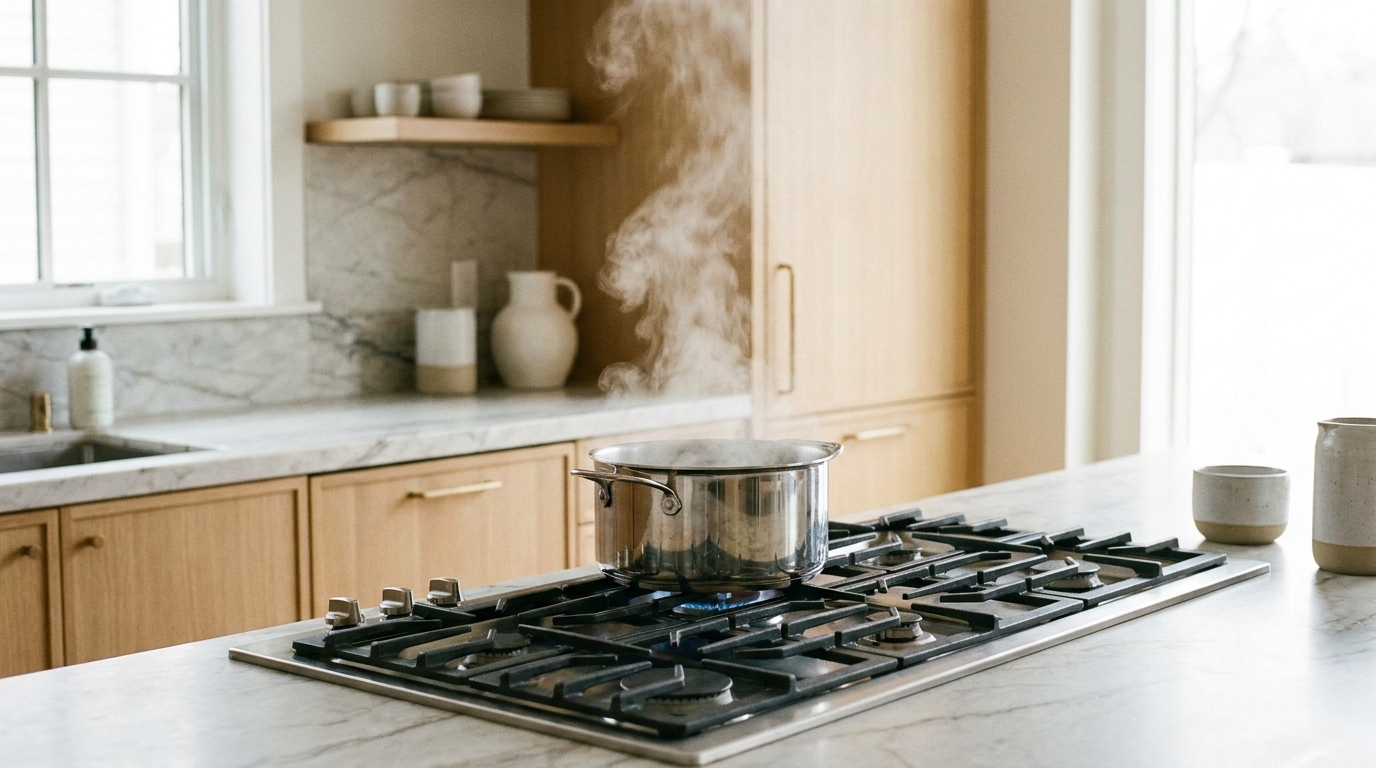
For microbiological threats, boiling is reliable and well proven. The U.S. Centers for Disease Control and Prevention advises bringing water to a rolling boil for one full minute, or three minutes at elevations above 6,500 feet, to kill bacteria, viruses, and parasites such as Giardia and Cryptosporidium. This is the entire point of a boil-water notice: a main break or pressure drop can let microbes into the distribution system, and boiling neutralizes them until the utility confirms the water is clear again. If you are under an advisory, boiling or using bottled water is the correct response.
What boiling does not remove
Here is where the myth falls apart. Boiling does nothing to remove the chemical contaminants many people are actually worried about, and evaporation can concentrate them.
- Lead: Lead is a dissolved metal. Boiling does not remove it, and because steam leaves the pot, boiling can slightly increase the lead concentration in the remaining water.
- PFAS, the forever chemicals: PFAS were engineered to resist heat and breakdown, so a pot on the stove does nothing to them. Concentrating the water can make levels higher, not lower.
- Nitrate: A common concern in agricultural areas and private wells, nitrate is unaffected by boiling and can also be concentrated by it.
- Disinfection byproducts and other chemicals: Many industrial chemicals, pesticides, and byproducts are not reliably removed by heat.

Boiling also does nothing for hard water, dissolved minerals, or the chlorine chemistry that affects taste over the long term. Free chlorine is volatile and will off-gas with heat or if you let water sit uncovered, so boiling can reduce a chlorine smell, but that is the only chemical it meaningfully touches, and it uses energy every time.
Then why do utilities tell you to boil?
Because boil-water notices are about bacteria, not chemicals. When a system loses pressure or a main breaks, the risk is microbial contamination, and boiling is a fast, universally available fix for exactly that. In early July 2026 alone, advisories went out in places like Anson County, North Carolina and southern Prince George's County, Maryland after infrastructure events. None of those notices were about lead or PFAS; they were about keeping microbes out of your glass until repairs and testing were complete. It is worth knowing that a standard drinking-water pitcher is not a substitute for boiling during a bacterial advisory. Follow your utility's instructions until the notice is lifted. If you want to understand what is actually in your local supply on a normal day, Epic's What's in Your Water tool is a useful starting point.
Boil, filter, or both? A simple rule
- Under a boil-water advisory? Boil for one minute (three above 6,500 feet) or use bottled water, and follow the notice. That is a microbiological problem.
- Worried about lead or PFAS? Do not boil. Run cold water and use a filter tested for those contaminants, because boiling is the wrong tool and can concentrate them.
- Just want cleaner, better-tasting everyday water? Filter. Chlorine taste, byproducts, and lead are everyday chemical concerns that activated carbon is built to reduce.
How a carbon filter fits in
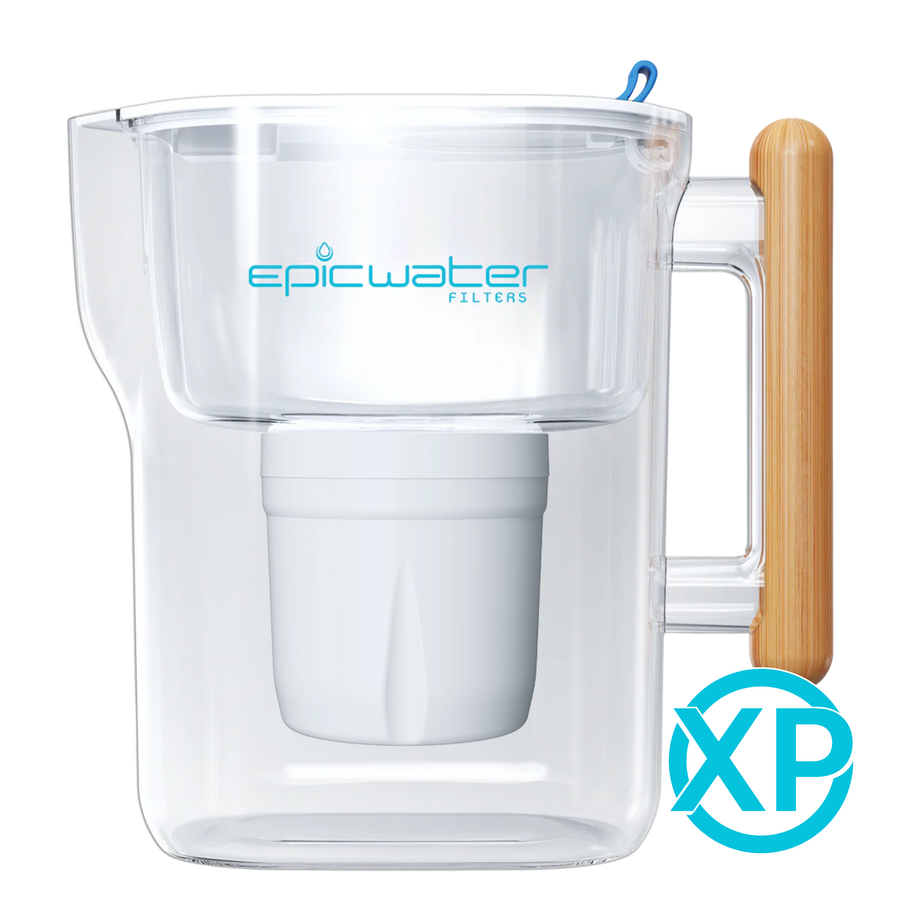
Boiling handles the living things; an activated carbon block handles the chemistry it leaves behind. Carbon reduces chlorine taste and odor by adsorption, the aesthetic effect covered by NSF/ANSI Standard 42. Epic's Pure XP is NSF certified to Standard 42 for chlorine taste and odor, along with NSF/ANSI/CAN 372 for lead-free materials. Beyond taste, the same carbon fiber block is independently lab-tested to reduce 99.9% of lead, evaluated against NSF/ANSI 53, and tested against the NSF/ANSI P473 protocol for PFOA and PFOS, the two most-studied PFAS. Those performance results are independently tested, not NSF certified, and that distinction matters. One honest boundary is worth repeating: a carbon drinking-water pitcher is not a microbiological purifier, so during a bacterial boil-water advisory you should still boil or use bottled water. A filter reduces chemicals and taste; it supplements, but does not replace, your utility's disinfection.
The bottom line
Boiling is excellent at killing what is alive in water and useless against most of what is dissolved in it. If your worry is a bacterial advisory, boil. If your worry is the everyday chemistry of your tap, boiling is the wrong tool, and a good carbon filter is the right one. Knowing which problem you have is most of the battle.
Share:
Why Your Tap Water Smells Like a Pool: The Summer Chlorine Switch
Pesticides in Tap Water: Why Summer Is Peak Season