
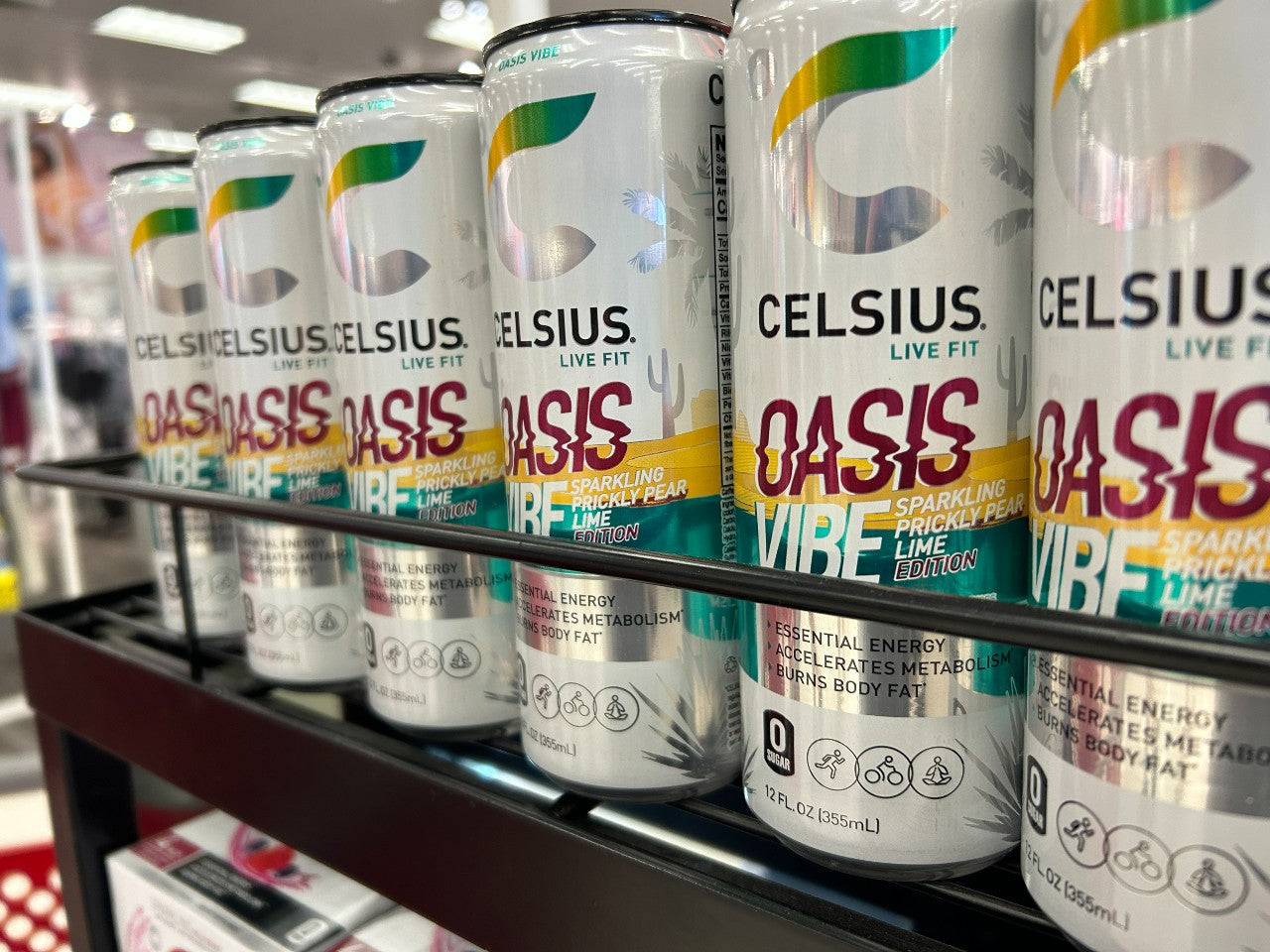
Quick answer: An occasional Celsius is unlikely to harm a healthy adult. The honest caveats: each can contains 200 mg of caffeine (about two cups of coffee), the "thermogenic" fat-burning marketing outruns the evidence, it is sweetened with sucralose, and the label itself says it is not for children under 18, people sensitive to caffeine, or women who are pregnant or nursing.
What is Celsius?

Celsius (sold as Celsius Live Fit) is a sugar-free energy drink marketed as a fitness beverage. It has real selling points: zero sugar, added vitamins, and caffeine, which is one of the most studied performance and alertness aids there is. If you drink a Celsius before a workout, you will likely feel more alert and train a little harder. That part is not hype.
The questions worth asking are about dose, the weight loss marketing, and who is drinking it, because Celsius has become especially popular with teenagers, a group the label itself excludes.
Celsius Energy Drink ingredients: Carbonated Filtered Water, Taurine, Citric Acid, Guarana Seed Extract, Green Tea Extract, Malic Acid, Caffeine, Calcium Carbonate, Ascorbic Acid, Glucuronolactone, Sucralose, Natural Flavor, Ginger Root Extract, Calcium Pantothenate, Niacinamide, Pyridoxine Hydrochloride, Riboflavin, Beta-Carotene (Color), Chromium Chelate, Biotin, Cyanocobalamin.
How much caffeine is in Celsius?

A standard can of Celsius contains 200 mg of caffeine. That is roughly double a cup of coffee and four to six times a cup of green tea. The high-caffeine lines of the brand have contained 300 mg per can.
| Drink | Caffeine per serving |
|---|---|
| Cup of coffee (for reference) | about 95 mg |
| Cup of green tea (for reference) | 30 to 50 mg |
| Celsius, standard flavors | 200 mg per can |
| Celsius high-caffeine flavors | 300 mg per can |
The FDA's general guidance is that up to about 400 mg of caffeine per day is not associated with harm in healthy adults. One can fits. Two cans is essentially your entire day's budget, before counting coffee, tea, soda, or pre-workout. Note that some of the caffeine in Celsius also arrives through guarana seed extract and green tea extract, which are caffeine-containing ingredients on top of the caffeine listed by itself.
Caffeine stacking
Most caffeine problems are stacking problems. A morning coffee plus a lunchtime Celsius plus an afternoon soda quietly clears 400 mg. Count the can against your daily total, and keep it out of the late afternoon if you value your sleep, since caffeine lingers in the body for hours.
Who should not drink Celsius
The can's own advisory is the clearest guide: Celsius is not recommended for people sensitive to caffeine, children under 18, or women who are pregnant or nursing. Anyone with a heart condition, high blood pressure, an anxiety disorder, or on stimulant medication should talk to a doctor first. Researchers have documented cardiovascular strain from heavy energy drink use, including elevated blood pressure and heart rhythm disturbances in susceptible people.
Does Celsius help you lose weight?
This is the core of the brand's marketing, and it deserves skepticism. Celsius is positioned as a "thermogenic" drink that accelerates metabolism and burns body fat. The kernel of truth is that caffeine does modestly increase energy expenditure for a short period. That is true of any caffeine, including a plain black coffee that costs a fraction of the price.
The leap from "caffeine slightly raises metabolism" to "this drink will make you leaner" is where the evidence gets thin. Small short-term studies do not show that any canned beverage produces meaningful fat loss in real life, and public health reviews of new beverages have repeatedly found that marketing claims outrun the science. If Celsius helps you train harder and replaces a sugary drink, that is a genuine plus. As a fat-burning product, treat the claims as advertising.
Sucralose and other additives in Celsius

Sucralose
Celsius is sweetened with sucralose, an FDA-approved artificial sweetener. The research picture is genuinely mixed: some studies suggest effects on gut bacteria, and a JAMA Network Open study found differences in appetite and brain reward responses after sucralose versus sugar in some groups, while a large meta-analysis of trials found little clear cardiometabolic harm. That is a case for moderation, not panic. One sucralose-sweetened can is not a health event; making artificially sweetened drinks your all-day beverage is worth rethinking.
Citric acid
The citric acid in Celsius is manufactured (typically by fermentation) rather than squeezed from fruit. It is a standard, FDA-accepted acidulant. A small published case series has speculated about inflammatory reactions to manufactured citric acid in sensitive individuals, but that is weak evidence, and for most people the more practical issue is that acidic drinks sipped frequently are hard on tooth enamel.
Taurine, guarana, and ginseng-family botanicals
Taurine, guarana seed extract, and similar botanical stimulant blends are standard energy drink fare. At the amounts in a can they are not known to be dangerous for healthy adults, but they do add stimulant load on top of the listed caffeine, and they are part of why energy drinks as a category draw more caution from health bodies than plain coffee does.
Natural flavors
"Natural flavors" is a legally loose label term. The flavor compounds must start from a natural source, but they can be heavily processed, and the label does not say what they are. Regulators consider them safe. The fair criticism is transparency, not toxicity.
Added vitamins
Celsius includes B vitamins, vitamin C, chromium, and biotin. They are bioavailable and harmless at these levels, but water-soluble vitamins beyond your needs are simply excreted. Vitamins in an energy drink are a marketing garnish, not a reason to drink one.
Is it bad to drink Celsius every day?

For a healthy adult who keeps total caffeine under about 400 mg, a daily Celsius is unlikely to cause harm. Daily use still has predictable downsides:
- Sleep: 200 mg of caffeine, especially after noon, degrades sleep quality, and poor sleep cancels out much of the energy the drink provides.
- Tolerance and dependence: regular users need more caffeine for the same effect and get withdrawal headaches and fatigue on skip days.
- Cardiovascular load: caffeine temporarily raises heart rate and blood pressure, which matters more with pre-existing conditions or when cans stack up.
- Teeth: acidic carbonated drinks erode enamel with daily exposure.
If you notice you cannot face a day without it, that is a good moment to take a break and let your tolerance reset.
Can teens drink Celsius?

No, and this is not a gray area. The label states Celsius is not recommended for anyone under 18, and the American Academy of Pediatrics says caffeinated energy drinks have no place in the diets of children and adolescents. Caffeine affects smaller, still-developing bodies more strongly: faster heart rate, higher blood pressure, more anxiety, and disrupted sleep during the years when sleep matters most. Celsius's fitness image has made it popular in high schools anyway, which is exactly why parents should know that a single can carries double a coffee's caffeine.
Healthier alternatives to Celsius

If what you want is energy and focus without the full formula:
- Black coffee: the same active ingredient, decades of safety data, no sweeteners.
- Green tea: a gentler caffeine dose plus antioxidants, and it is literally one of the ingredients Celsius is built around.
- Coconut water: natural electrolytes for rehydration after training.
- Lemon or lime water: flavor with zero sweeteners or calories.
- Plain filtered water: the unglamorous fix. Even mild dehydration shows up as fatigue, headaches, and poor concentration, which are the exact symptoms people buy energy drinks to solve.
The bottom line
Celsius is not the villain its harshest critics claim, and it is not the metabolism-transforming health drink its cans suggest. It is a strong, sugar-free caffeine delivery vehicle: fine occasionally for healthy adults, inappropriate for teens, and worth counting honestly against your daily caffeine.
Before reaching for a second can, try fixing hydration first, since it is the cheapest energy upgrade there is. Our filtered water bottle fills at any tap and filters as you drink, which makes plain water an easy default at the gym or school. At home, the Epic Pure XP pitcher is independently tested to reduce lead, PFAS, chlorine, and over 99.9% of microplastics, and the Pure dispenser does the same for bigger households. The full lineup is in our home filtration collection.
Related reading
- Is C4 bad for you?
- Monster energy drink side effects
- Is Gatorade Zero bad for you?
- Why is Dasani water bad for you?
Sources
- MUSC Health: Energy Drinks May Do More Harm Than Good, Researchers Say
- Frontiers in Public Health: Health Effects and Public Health Concerns of Energy Drink Consumption in the United States
- Pediatrics (American Academy of Pediatrics): Sports Drinks and Energy Drinks for Children and Adolescents: Are They Appropriate?
- JAMA Network Open: Obesity and Sex-Related Associations With Differential Effects of Sucralose vs Sucrose on Appetite and Reward Processing
- PubMed: Nonnutritive sweeteners and cardiometabolic health: a systematic review and meta-analysis
- NCBI (PMC): Manufactured citric acid and inflammatory reactions: a series of four case reports
- IssueLab (public health report): Looking Beyond the Marketing Claims of New Beverages
- NPR: Is 'Natural Flavor' Healthier Than 'Artificial Flavor'?
- The New York Times: Are 'Natural Flavors' Really Natural?
CELSIUS and CELSIUS LIVE FIT are trademarks of Celsius Holdings, Inc. This article is for educational purposes and is not medical advice.
Share:
Is Gatorade Zero Bad For You?
Irvine, California Water Quality Report