

College Tap Water: A Move-In Guide for Dorms and First Apartments
Move-in week has a long checklist: keys, Wi-Fi, a mattress topper that actually fits. Tap water rarely makes the list, but it should sit near the top, because moving into a dorm or a first apartment means inheriting a building's plumbing. On many campuses, that plumbing is decades older than the students using it.
This guide walks through why older buildings deserve a closer look, what summer vacancy does to the water sitting in the pipes, how to check your new water in about ten minutes, and what a filter can honestly do in a room you are not allowed to renovate.
Why the building matters more than the city
Public water systems in the United States have to meet EPA standards before water ever leaves the treatment plant. City reports measure water quality at that plant. The wild card is the last stretch of the journey: the service line under the street, the risers inside the building, the solder holding the joints together, and the faucet itself. Lead and copper, when they show up in a glass, usually enter along that final stretch, not at the source.

Campus testing keeps proving the point. When UNC Chapel Hill tested fixtures across its campus in 2022 and 2023, 148 of 265 buildings, about 56 percent, had at least one fixture with detectable lead. In one residence hall, 57 of 84 in-room sinks tested positive. At the University of Utah, sampling since 2020 has found lead or copper above the federal action level in several campus buildings, on a water system that includes lines dating to 1874. These are well-resourced universities that test and fix problems. Many college-town rental houses have never been tested at all.
Three dates that explain old plumbing
You do not need a plumbing degree to size up a building. Three dates do most of the work:
- 1986: Congress banned lead solder and lead pipe in new plumbing. Buildings finished before then often carry lead solder at every joint.
- 2014: The definition of lead free tightened. Before 2014, faucets and fittings sold as lead free could legally contain up to 8 percent lead in their brass. After, the limit dropped to 0.25 percent.
- Today: Utilities are replacing lead service lines under federal rules, but that work stops at the building. Everything inside, risers, solder, fixtures, belongs to the owner, and landlords replace plumbing on their own schedule.
A dorm built in 1968 or a rental cottage from 1975 follows the rules of its era unless someone has renovated everything since. Older is not automatically dangerous, but it is worth a look.
The summer stagnation problem
Here is the part that makes August specific. Dorms and student rentals sit mostly empty from May to August. Water that stands still in building plumbing for weeks has extra contact time with metal pipes, solder, and fixtures, which is why the first draws after a long vacancy are the ones to treat with care.

The fix is simple and free: flush before you drink. Run the cold tap for a minute or two, or until the water turns noticeably colder, before filling a glass, especially first thing in the morning during your first days back. Drink and cook from the cold side only, since hot water sitting in a tank and hot lines picks up more from the plumbing. Then set a reminder to repeat the routine after winter break, because the building will sit quiet again.
How to check your new water in ten minutes
Every college town's utility publishes an annual water quality report, called a Consumer Confidence Report, and the 2026 editions are out now. It tells you what the utility found at the plant, which disinfectant it uses, and whether it had violations. You can also enter your new zip code in our free What's in Your Water tool to see contaminants reported in your area.
Two more checks are worth the minutes. If you live on campus, search the school's environmental health and safety page for water testing updates; schools that test usually publish results and fixture fixes. If you rent, ask the landlord two questions: what year was the building built, and have the fixtures or supply lines been replaced. The answers tell you which era of plumbing rules you are living with.
What a filter can and cannot do in a rental
Honesty first: no pitcher can fix a building. A filter cannot reach the fountain down the hall, the pipes in the wall, or the water heater in the basement. What it can do is treat the last stop, the tap you actually drink from, and at college that tap is finally yours.
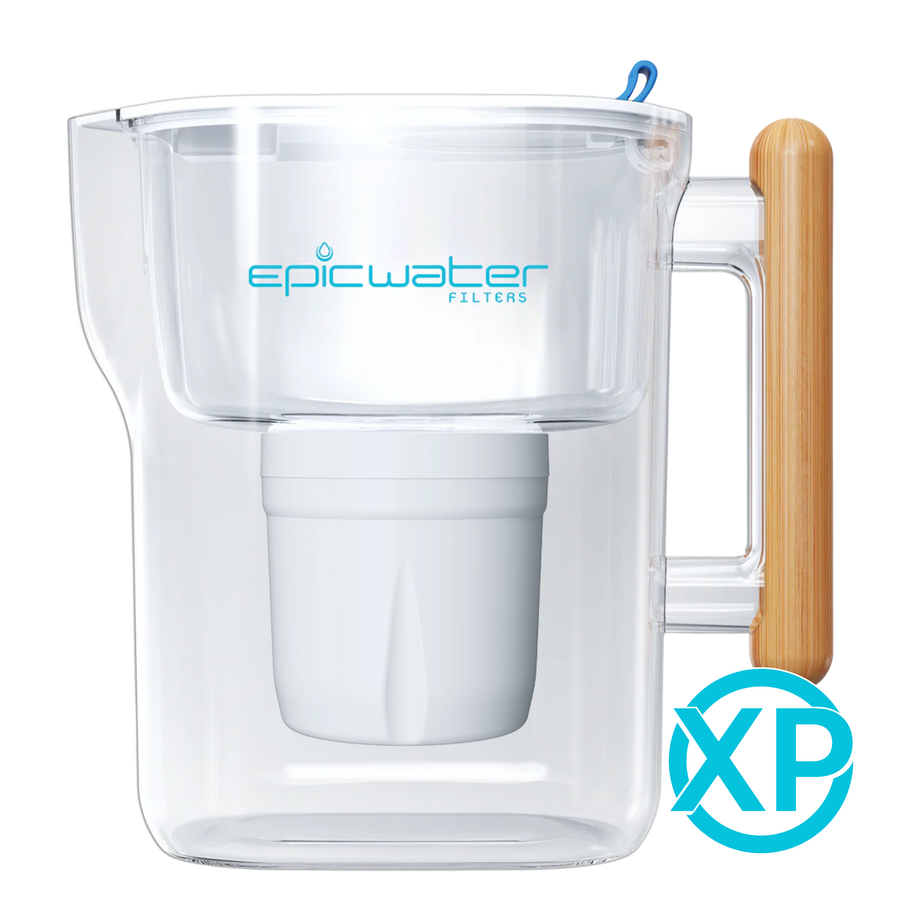
That is the honest case for a Pure XP pitcher or dispenser in a dorm or apartment. Pure XP's carbon fiber block is NSF certified to Standard 42 for chlorine taste and odor and material safety, and to NSF/ANSI/CAN 372 for lead-free materials. Its lead reduction, 99.9 percent, is independently lab tested against NSF/ANSI 53, and its PFOA and PFOS reduction is independently tested against NSF P473. Certification and independent testing are different things, and we label them plainly so you can judge for yourself.
Fit matters as much as performance in a small room. A pitcher slides into a dorm mini fridge and needs zero tools. A dispenser suits a shared apartment fridge where four roommates keep refilling. An under-sink system like Smart Shield Max is the upgrade for an off-campus house, but ask the landlord in writing first; the install is reversible, and written permission protects your deposit.
A one-week move-in water routine
- Day one: flush the cold tap for a couple of minutes before the first glass.
- Look up the local Consumer Confidence Report and your zip code results.
- Set up your filter and put the replacement date on your calendar.
- Drink and cook from the cold side only.
- Repeat the flush after every long break, then relax. The routine takes care of itself.
College hands you enough unknowns in one week. Your water does not need to be one of them: check the report, flush the pipes the building left sitting all summer, and filter the tap you now own.
Share:
Lead in School Drinking Water: A Back-to-School Guide for Parents
Hurricane Season Water Prep: How Much Water to Store and What a Filter Can Do