
Is Hot Tap Water Safe to Drink? Why Cold Is the Only Tap for the Kettle
It is the little shortcut almost everyone has taken: the pasta pot goes under the hot tap because hot water boils faster, or the tea mug gets filled from the hot side because the kettle feels slow. As the weather cools and kettles, soups, and stovetop dinners come back into rotation, it is worth saying plainly: the hot tap is not the tap to drink or cook from. The Environmental Protection Agency's guidance is to use only cold tap water for drinking, cooking, and making baby formula.
The good news is that this is one of the cheapest fixes in home water safety. It costs nothing, takes seconds, and the reasoning behind it is easy to understand once you see where hot tap water has been.
Hot water is better at dissolving your plumbing
Water chemistry does not change just because the water warmed up, but its behavior does. Hot water dissolves metals such as lead and copper out of pipes, solder joints, and brass fixtures faster than cold water does. That matters most in homes with older plumbing: lead solder was not banned in the United States until 1986, and the definition of "lead free" brass was not tightened to its current level until 2014. If any part of your home's plumbing predates those rules, the hot line gives it more of a chance to end up in your glass.
This is the core reason both the EPA and the Centers for Disease Control and Prevention tell households to drink and cook from the cold tap. It is also why the formula rule is the strictest of all: both agencies agree there is no known safe level of lead in a child's blood, so bottles should always start with cold water that you warm yourself.

The hot tap takes a detour through your water heater
Cold water travels from the water main to your faucet. Hot water makes an extra stop, often for hours: the water heater tank. Inside that tank, a few things accumulate by design.
- Sediment and scale. Minerals settle out of heated water and collect at the bottom of the tank. Manufacturers such as A. O. Smith recommend draining and flushing the tank roughly once a year, and more often in hard water areas, specifically to manage this buildup.
- A corroding anode rod. Every storage tank contains a sacrificial anode rod that corrodes on purpose so the tank itself does not. That is normal and useful, but it is one more reason tank water is not drinking water. If you ever notice a rotten egg smell only on the hot side, the anode rod is the usual suspect.
- Long, warm storage. Water that has been sitting in a warm tank overnight has had plenty of contact time with all of the above. It is made for washing, not for the soup pot.
None of this means your water heater is broken. It means the hot line is doing a different job than the cold line, and the two should not be used interchangeably in the kitchen.
Boiling does not undo any of it
A common assumption is that the stove fixes whatever the hot tap picked up. It does not. Boiling is a microbiological tool: it kills bacteria, viruses, and parasites. It does not remove lead or other metals, and because some water leaves the pot as steam, boiling can actually concentrate what remains. If hot tap water carried extra lead into the pot, boiling it just makes the pot slightly more concentrated.
So the order of operations matters. Start with cold water, filter it if you want an additional layer of protection, and then apply heat. Heat last, not first.

Three habits that cost nothing
- Start cold, always. Fill the kettle, the pasta pot, the coffee maker, and the formula bottle from the cold tap only. If a tap has sat unused for six hours or more, run the cold water briefly until it feels noticeably cooler before filling. That first-draw window is the same one regulators use when they sample for lead, because water that sat in plumbing overnight picks up the most from it.
- Give the tank one checkup a year. Follow your manufacturer's guidance on draining and flushing sediment. If you want to adjust the temperature setting, talk to a plumber first: the Consumer Product Safety Commission recommends 120 F to reduce scald risk, while the CDC's building water guidance points to hotter storage to limit Legionella growth, and the right answer for your home balances both.
- Know what is in your cold water. The cold-only rule reduces what your plumbing adds, but it says nothing about what arrives from the utility. Read your annual water quality report, and look up your zip code with our free What's in Your Water tool to see what has been reported in your area.
Where a filter honestly fits
A drinking water filter cannot fix your hot line, and you should never run hot water through a pitcher, dispenser, or a standard under-sink filter; they are designed for cold water. What a filter can do is make the cold tap, the one you should be drinking and cooking from anyway, meaningfully better.
Our Pure XP pitcher and dispenser filters are NSF certified to Standard 42 for chlorine taste and odor and to NSF/ANSI/CAN 372 for lead-free materials, and they are independently tested to reduce 99.9% of lead under the NSF/ANSI 53 protocol and PFOA/PFOS under the P473 protocol. Fill the pitcher from the cold tap, keep it in the fridge, and pour from it into the kettle or pot. For households that want this built into the sink, Smart Shield Max installs on the cold line so the drinking tap is always the right tap.
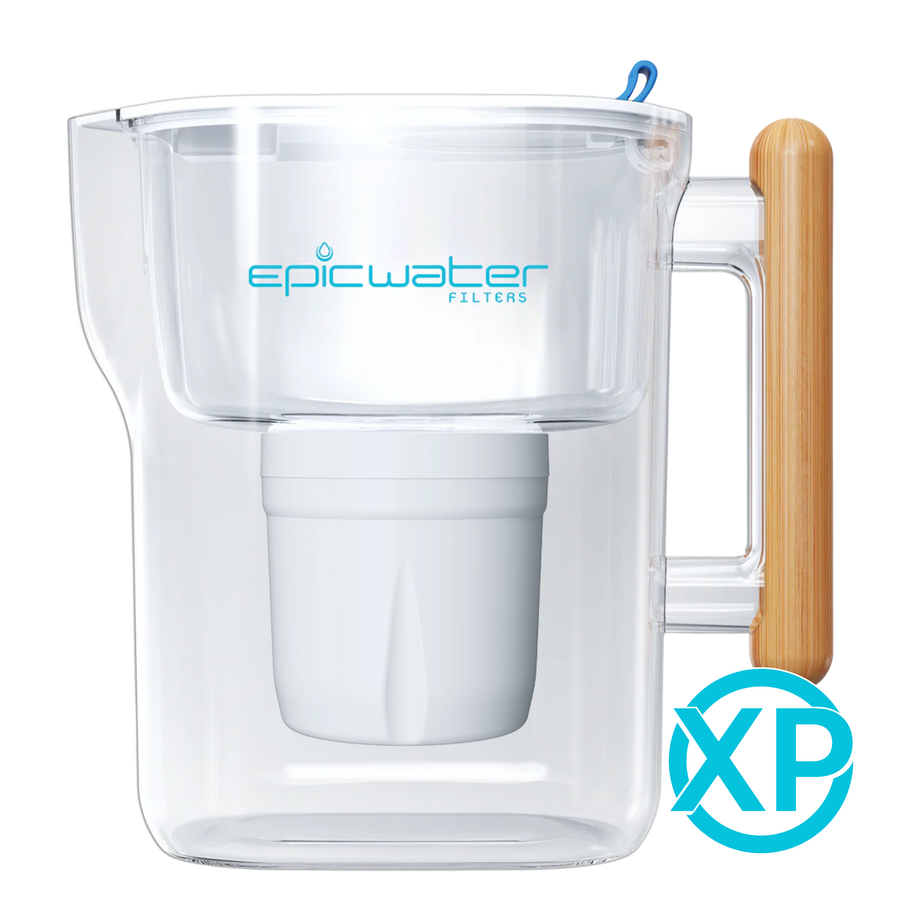
To be clear about the boundaries: a filter is not a substitute for water heater maintenance, it will not fix a sediment-filled tank or a spent anode rod, and boiling filtered water is still for germs, not metals. The cold-first habit does the heavy lifting. The filter is the upgrade on top of it.
The bottom line
Hot tap water is for washing dishes, washing hands, and showering; the CDC notes that lead in water is not absorbed through the skin, so those uses are fine. For anything you swallow, the rule is short enough to remember at the stove: fill it cold, heat it yourself.
Share:
Your Boil Water Advisory Just Lifted. Now What?
The Best Water for Coffee: The 98% of the Cup Most People Skip