
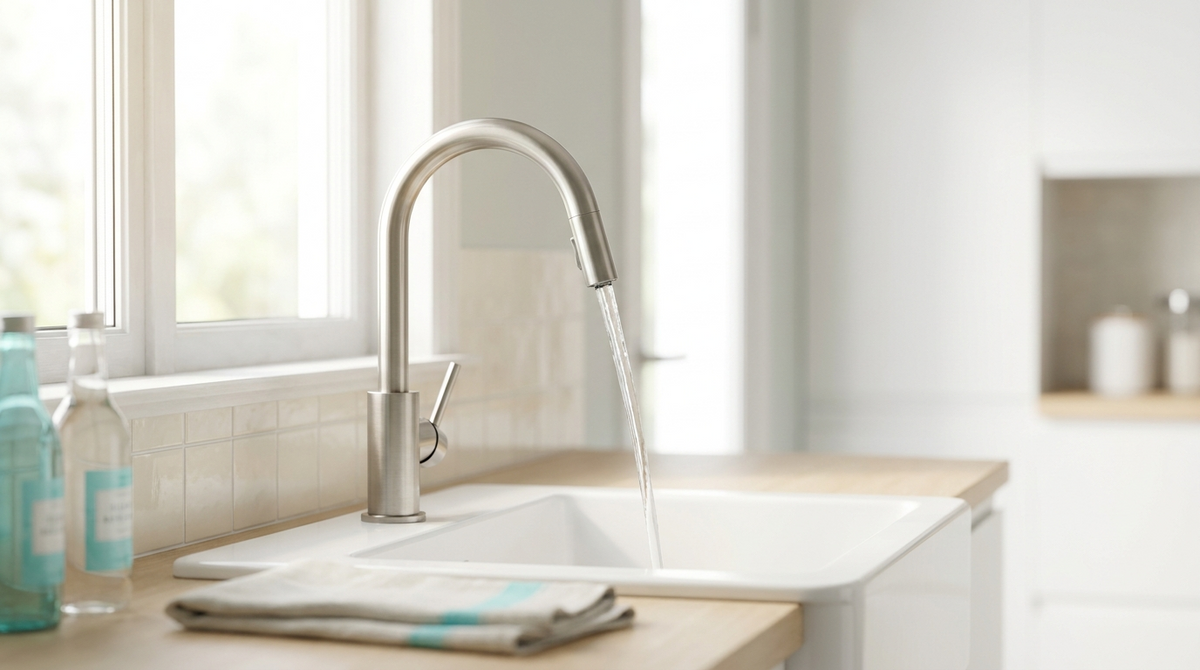
Stagnant Water After Vacation: How Long to Run Your Taps
Labor Day weekend closes out the 2026 travel season. Over the next week, millions of people will drop their bags in the hallway, walk to the kitchen, and pour a glass of water from a tap that has not moved in days. Most of them will be fine. But water is designed to keep moving, and when a house sits empty, the water inside its pipes just sits too. The good news: the fix is free, takes a few minutes, and is exactly what water utilities recommend. Here is what actually happens in idle plumbing, and the calm, step-by-step way to handle it.
What happens to water while you are away
Three quiet changes take place in still plumbing, and none of them requires panic.
The protective chlorine fades. Utilities maintain a small chlorine residual in the water mains to keep water safe as it travels to your home. Cleveland Water, in its own guidance for returning vacationers, notes that when water sits unused for long stretches, that residual dissipates, and without it bacteria have an opportunity to grow. Out in the street, water keeps circulating and stays fresh. Inside your empty house, it does not.

Contact time moves metals. Lead, copper, and other metals enter water from home plumbing, not from the treatment plant, and the longer water rests against pipes, solder, and brass fixtures, the more accumulates. This is not a fringe concern. It is the entire logic behind the EPA's Lead and Copper Rule, which requires that official first-draw lead samples come from water that has sat in the plumbing for at least six hours. Regulators wait for stagnation on purpose, because stagnation is when lead levels peak. A week away is a long first draw.
Lukewarm and still is what Legionella likes. The CDC notes that Legionella bacteria grow best in water between 80 and 120 degrees F, and that stagnant water, low-use fixtures, and rarely flushed water heaters all help it along. The risk to most healthy people at home is low, and the bacteria spreads through inhaled droplets rather than drinking. But stagnation management is real work, as Toronto was reminded in August 2026 when public health officials traced a Legionnaires' disease outbreak to a transit agency cooling tower. Your home is not a cooling tower. The lesson still applies: water that sits warm and still deserves attention.
The flush: what to do when you walk in
Researchers who studied buildings reopening after extended closures found that water quality inside recovers once fresh water is pulled through in an orderly way. A home version takes about ten minutes.
- Start with cold taps, at the lowest level of the home, and work upward.
- Let each tap run for a few minutes, until the water turns noticeably colder and steady. That temperature drop tells you fresh water from the main has arrived.
- Flush toilets, run the shower briefly, or start a load of laundry. It all pulls stale water out of the lines.
- Then run the hot taps until the temperature stabilizes, so the water heater turns over.
- Dump the first batch of ice from the icemaker, since it was made from water that sat in the supply line.
- If your home has a lead service line or older plumbing, flush longer. If you are unsure what your service line is, your utility can tell you.

The water heater is its own little ecosystem
The tank in your utility closet holds dozens of gallons that sat warm the whole time you were gone. The CDC recommends storing hot water at 140 degrees F, which keeps most of the plumbing above the temperature range Legionella prefers, and flushing water heaters about twice a year, because sediment builds cool zones at the bottom of the tank where microbes are comfortable. If the hot side smells faintly of rotten eggs after a trip, that is usually the heater's anode rod reacting with sulfates in the sitting water, not a problem with your cold drinking water supply. And one long-standing rule holds year round: cook and drink from the cold tap, never the hot.
Do not forget the filter pitcher
If a filter pitcher sat full on the counter or in the fridge for a week, do not just top it up. Empty it, wash the reservoir with warm soapy water, and let it air dry. The better habit starts before you leave: empty and dry the pitcher as part of locking up. Either way, refill it only after you have flushed the tap, so the cartridge spends its capacity on fresh water instead of stale water. And remember that a cartridge's life is measured in gallons and time once the media has been wet. A vacation does not pause the clock.
Where a filter honestly fits
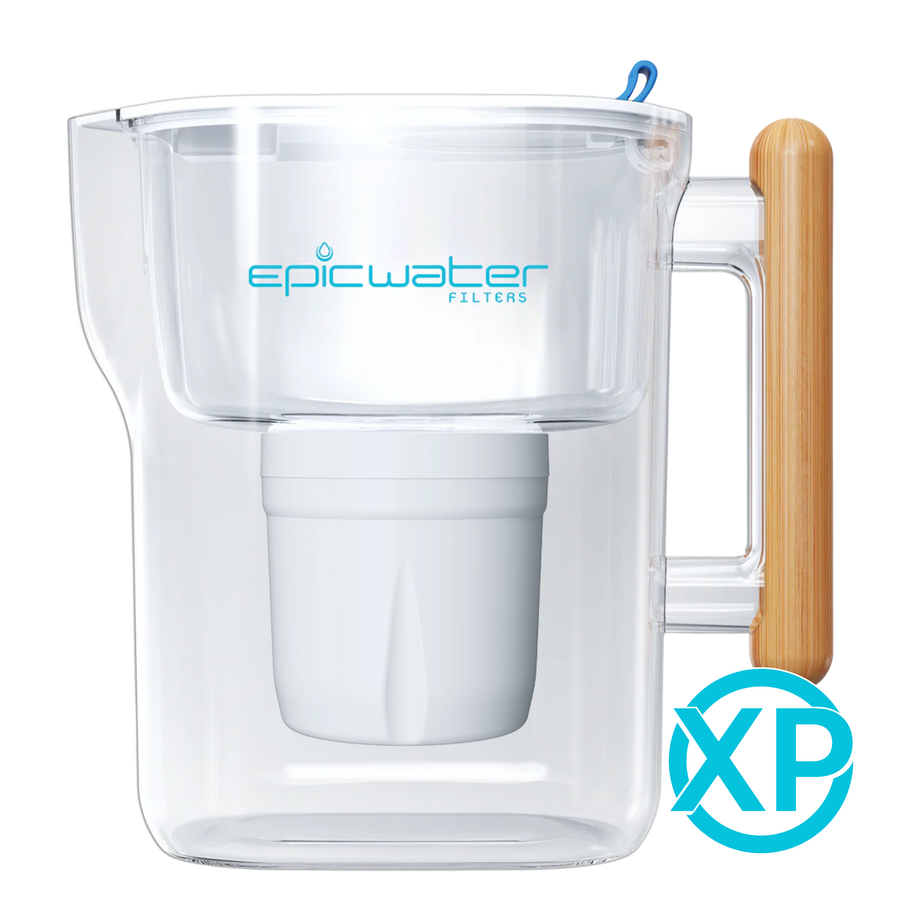
A filter is not the fix for stagnation. Flushing is, and it costs nothing. A filter earns its place on the list that was in your water before you left and will be there after: chlorine taste and odor, lead from home plumbing, PFAS, and VOCs. That is the everyday job the Epic Pure XP pitcher is built for. Pure XP is NSF certified to NSF/ANSI 42 for chlorine taste and odor reduction and to NSF/ANSI/CAN 372 for lead-free materials. Beyond those certifications, independent laboratory testing measured 99.9% lead reduction under the NSF/ANSI 53 protocol and PFOA/PFOS reduction under the NSF/ANSI P473 protocol. Testing and certification are not the same thing, and we state which is which on purpose.
Two honest boundaries. A carbon block filter is not designed to make microbiologically unsafe water safe, so it is not a Legionella control and not a substitute for flushing or for any utility advisory. And no filter can tell you what is in your water in the first place. For that, start with your utility's annual water quality report and the free What's in Your Water lookup, which shows what has been detected in your zip code.
The bottom line
Coming home should not involve a water science project. Run the cold taps until they turn cold, give the hot side a minute to turn over, toss the first ice, wash the pitcher, and then get on with your unpacking. Flushing handles what changed while you were gone. A good filter, replaced on schedule, handles what was there all along.
Share:
Your Boil Water Advisory Just Lifted. Now What?
The Best Water for Coffee: The 98% of the Cup Most People Skip