
AAA expects 81.5 million Americans to travel at least 50 miles from home over the Thanksgiving period, November 24 through 30.1 For most of them the house sits quiet for four to seven days, and so does every inch of water in its pipes.
Water that stops moving does not stay the same water. The disinfectant residual fades and the water sits against the copper, brass and solder it touches.2 That is ordinary plumbing chemistry, not an emergency, and it is why agencies tell building managers to flush before anyone drinks again. The same happens in a house, and the fix takes about ten minutes.
The house is empty. The pipes are full.
Your home holds a few gallons at rest, in contact with metal. EPA’s guidance for buildings with low or no use lists what changes while it stands: disinfectant residuals fall, hot water temperatures drop into a range that favors bacterial growth, and shifts in water chemistry can increase corrosion and the leaching of metals including lead.2
Chlorine goes first: with nothing flowing, the residual that protected the water on its way to your tap is used up and not replaced.2 We covered what it does in why your tap water is chlorinated. Temperature goes second. EPA puts the range where Legionella grows best at 80 to 120 degrees Fahrenheit and recommends keeping indoor plumbing water above 124 or below 80.5 A closed up house with the thermostat down can drift into the middle of that range and stay there.
Metals go third. Standing water pulls small amounts of lead and copper out of solder joints, brass fittings and older service lines. CDC is blunt about the timescale: for Legionella a prolonged shutdown means weeks or months; for lead and copper it counts in hours.6
Six hours is enough to change the number
For a sense of how quickly still water picks up metal, look at the federal rules. Under the Lead and Copper Rule, a first draw tap sample must be one liter of water that has stood motionless in the plumbing and service line for at least six hours.4
That period is in the rule because six hours of contact produces a measurably different result than water from a tap that has just been running. The test was built around stagnation because stagnation is where the lead shows up. A holiday trip is twenty of those periods back to back, so the first liter out of your kitchen tap is about the most concentrated sample your plumbing will produce all year, and it is the one people pour into a kettle.
With a known lead service line, or one just replaced, this matters more: see lead pipe replacement aftercare and copper in your tap water.

The ten minutes that reset your plumbing
No plumber needed. Walk the house in the order the water travels: start with the cold tap nearest where water enters, open it wide, and work outward to the farthest tap, leaving earlier ones running.3 A couple of minutes per fixture is usually enough. You can feel it when the temperature drops and then holds steady.
Then the hot side. CDC and EPA both say to flush hot taps until the water reaches its maximum temperature, keep the heater at 140 degrees Fahrenheit or above, and aim for 120 at the tap where anti scald devices allow.62 If you turned the heater down, turn it up and let it recover fully first. Hot water is still not the tap to cook from: here is why.
Then the appliances nobody thinks about: run the refrigerator dispenser for several minutes, throw out the first batch of ice, and run the dishwasher empty once.3
Milky water after a flush is usually dissolved air and clears from the bottom of the glass upward: see why is my tap water cloudy. Water that stays discolored is a call to your utility, not a job for a filter.
And the pitcher that sat on the counter
A gravity pitcher left half full for a week is its own small standing water system: wet carbon, room temperature, no disinfectant residual, lid on top. Nothing alarming, and no reason to drink what is in it. Empty both chambers, wash them in warm soapy water, air dry, refit the cartridge, run two pitchers through and pour those away, then refill from a flushed tap. If the cartridge was close to due, change it now.

Be clear about what a filter is and is not doing here. A carbon pitcher filter improves taste and reduces chlorine, and Epic publishes independent testing for contaminant reduction, including lead at 99.9 percent under the NSF/ANSI 53 protocol.7 It is not a disinfection device, it does not replace flushing a stagnant line, and it is no substitute for a boil water advisory: does a water filter remove bacteria.
Keep the certification distinction straight. Pure XP is listed by NSF under Standard 42 for material safety and NSF/ANSI/CAN 372 for lead content. Contaminant reduction is documented separately, in independent testing.7
Epic’s What’s in Your Water lookup shows what has been reported near you. It is background, not a test of your own tap.
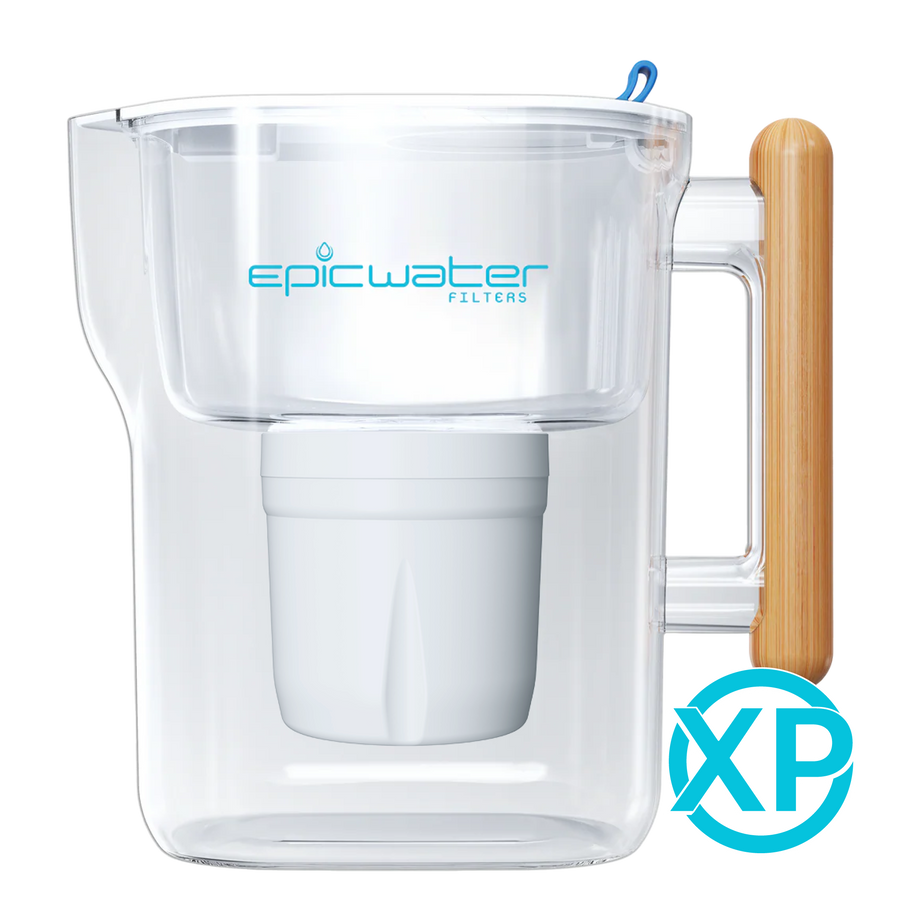
If a pitcher or dispenser suits your household, explore Epic’s pitchers, dispensers and bundles, and check the documentation for the exact filter.
Questions about coming home to still water
Do I really need to flush my pipes after a week away?
It takes a few minutes and costs nothing. Standing water loses its disinfectant residual and picks up small amounts of metal. Federal lead sampling is built around a six hour standing period for exactly that reason.
How long should I run the tap after a vacation?
A couple of minutes per fixture is usually enough, starting with the cold tap nearest where water enters and working outward. Guidance for larger buildings uses ten minutes per cold outlet.
Is the water dangerous, or is this just good practice?
After a normal holiday trip this is good practice, not an emergency. It matters more with lead solder, brass fittings or a lead service line.
Can I just drink through my filter instead of flushing?
No. A pitcher filter treats the water you pour into it. It does not move standing water out of your plumbing and it is not a disinfection device.
What about the filter pitcher that sat on the counter?
Pour away what is in it, wash the reservoir and lower chamber, air dry, run two pitchers through and discard those, then refill from a flushed tap.
Does a boil water advisory change any of this?
Yes. If your utility issued an advisory while you were away, follow that first. Flushing and filtering do not replace it.
Sources & references
Reviewed November 16, 2026
- AAA Newsroom / Thanksgiving 2026 holiday travel forecast ↗81.5 million travelers and the November 24 to 30 holiday travel period.
- EPA / Maintaining or Restoring Water Quality in Buildings With Low or No Use (PDF) ↗Disinfectant decay, temperature drift, metal leaching and scale disruption during stagnation.
- Rhode Island Department of Health / Guidance for Building Flushing After Periods of Low or No Use (PDF) ↗The three day threshold, flushing order, and durations for cold taps, hot water and appliances.
- 40 CFR 141.86 / Monitoring requirements for lead and copper in tap water ↗The one liter first draw sample and the requirement that water stand motionless for at least six hours.
- EPA / Legionella in the Indoor Environment ↗The 80 to 120 degree growth range and the role of stagnation and low disinfectant residual.
- CDC / Guidance for Reopening Buildings After Prolonged Shutdown or Reduced Operation (PDF) ↗Hazard timescales, flushing steps, and water heater temperature advice.
- Epic Water Filters / Testing and certification documents ↗Independent performance reports and the NSF listings that apply to Pure XP.
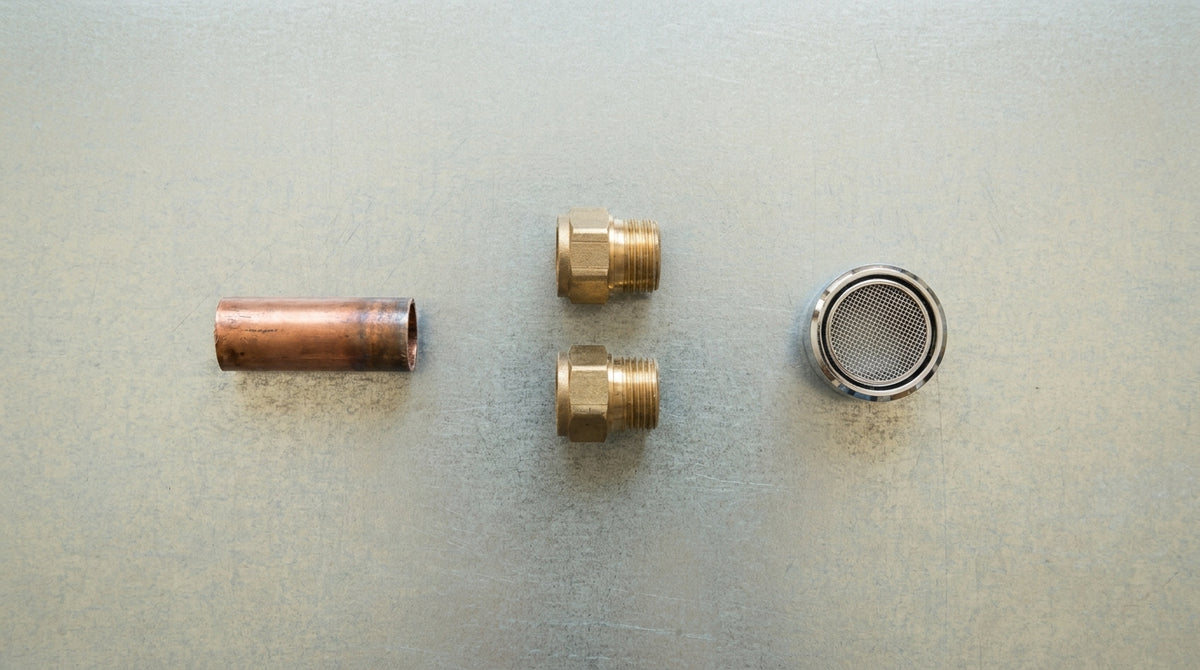
Flushing durations in official guidance are written for facilities; a house turns over faster. If the home has been empty for weeks, or has a known lead service line, follow your utility’s or state health department’s instructions. The flat lay, laboratory bench and carbon photographs are generated editorial illustrations. The Pure XP image is an official product photograph.
Share:
Copper in your tap water: where it comes from and what to do
Your Water Filter Slowed Down This Week. Cold Water Is Why.