
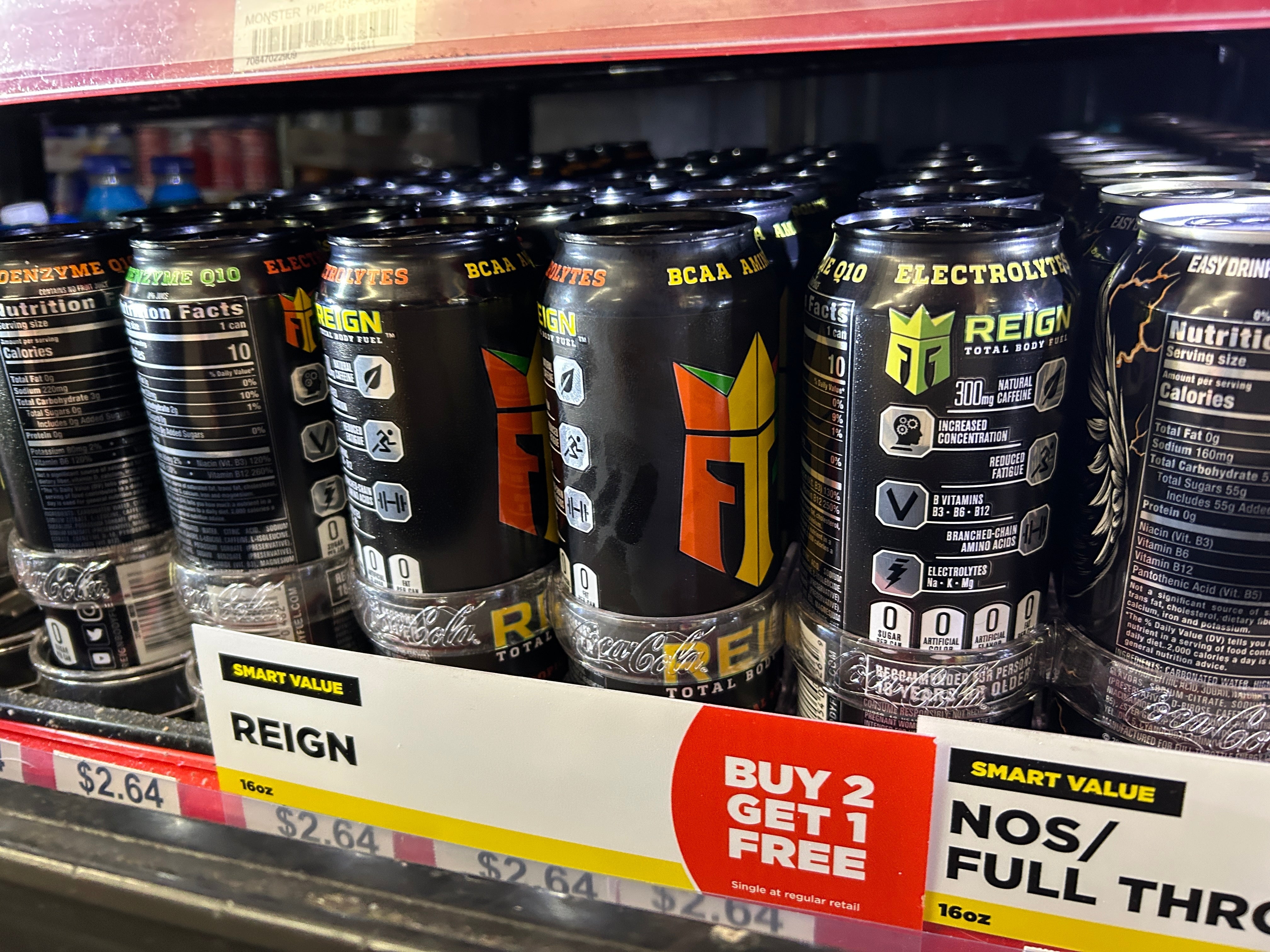
Quick answer: For a healthy adult, an occasional can of Reign Total Body Fuel is not dangerous. But it is a heavy dose of stimulant: 300 mg of caffeine per can, which is three-quarters of the 400 mg per day the FDA cites as a level generally not associated with negative effects in healthy adults. Drink one on top of your morning coffee or a pre-workout and you are past that line. It is sugar-free but artificially sweetened, it is not a hydration drink, and it is not appropriate for children or teens.
How much caffeine is in Reign?

Every standard flavor of Reign Total Body Fuel contains 300 mg of caffeine per can. For context:
| Drink | Caffeine per serving |
|---|---|
| Cup of coffee | About 95 mg |
| Cup of green tea | 30 to 50 mg |
| Reign Total Body Fuel (any flavor: Tropical Storm, Reignbow Sherbet, Orange Dreamsicle, Melon Mania, White Gummy Bear, Razzle Berry) | 300 mg per can |
One can is roughly three cups of coffee, consumed as fast as you can drink a cold beverage. That is the single most important fact about this product. High acute doses of caffeine can cause elevated heart rate, palpitations, raised blood pressure, jitters, anxiety, and disrupted sleep, and researchers studying energy drinks have flagged cardiovascular effects with heavy or long-term use.
Caffeine stacking is the real risk
Most caffeine problems in practice come from stacking. A morning coffee (95 mg), a Reign before the gym (300 mg), and an afternoon soda or tea puts you well over 400 mg without ever feeling like you did anything extreme. If Reign is in your rotation, count it against your whole day, and keep it out of the late afternoon if you value your sleep.
What is in Reign besides caffeine?

Reign markets itself as a fitness drink: sugar-free, zero calories, with BCAAs and B vitamins. A fair reading of the label:
- Sucralose (artificial sweetener). This is how Reign gets its sweetness without sugar. Skipping 50-plus grams of sugar is a real upside versus old-school energy drinks. The research on sucralose and other nonnutritive sweeteners is mixed: some studies suggest effects on appetite, reward response, and gut bacteria, while regulators continue to consider it safe at normal intakes. Fine occasionally; not something to drink all day.
- Citric acid. A standard flavoring and acidity agent, safe in normal amounts. The relevant downside is dental: acidic drinks sipped frequently erode tooth enamel over time.
- B vitamins (niacinamide, B6, B12). These support normal energy metabolism, but if you eat a reasonable diet you are probably not deficient, and extra B vitamins in a drink do not create extra energy. The buzz comes from the caffeine.
- Sodium benzoate. A common preservative, considered safe at approved levels. Under specific conditions it can react with vitamin C to form small amounts of benzene, which is why regulators monitor that combination, but it is not a reason to expect harm from a properly made product.
- Natural flavors. A regulatory catch-all that tells you the flavor source category, not the actual ingredients. Generally recognized as safe; the fair criticism is lack of transparency, not toxicity.
What happens if you drink Reign every day?
Daily use is where a fine-in-moderation product becomes a problem. With 300 mg of caffeine a day from one can, plus whatever else you drink, the predictable outcomes are:
- Sleep erosion. Caffeine has a half-life of several hours; an afternoon can is still in your system at bedtime, and poor sleep then drives more caffeine use the next day.
- Tolerance and dependence. Regular high intake builds tolerance, and skipping a day commonly triggers withdrawal headaches and fatigue.
- Cardiovascular strain. Repeated high doses raise heart rate and blood pressure, and studies of habitual energy drink consumption have raised concerns about effects on the heart with long-term heavy use.
- Dental wear. Daily exposure to an acidic drink erodes enamel regardless of sugar content.
None of this requires the scarier claims sometimes attached to energy drinks. The honest case against daily Reign is simply that it is a very large daily stimulant dose with an acidic delivery vehicle.
Are Reign energy drinks safe for kids?

No. This is the clearest answer in the article. The American Academy of Pediatrics says energy drinks have no place in the diets of children and adolescents, period. Developing bodies are more sensitive to caffeine: it raises heart rate and blood pressure, drives anxiety, and disrupts the sleep that kids' cognitive and emotional development depends on. A single can of Reign contains triple the caffeine many experts consider a reasonable ceiling for teens. Reign's own label states it is not recommended for children. If your teen is using energy drinks around sports, that is worth an actual conversation, not just a shrug.
Healthier alternatives to Reign

If what you actually want is alertness, there are cheaper and gentler ways to get it:
- Black coffee: about 95 mg of caffeine, no sweeteners, and you can control the dose cup by cup.
- Green or black tea: a lighter lift (30 to 50 mg for green tea) with a long safety track record.
- Water first: mild dehydration reads as fatigue. A tall glass of cold water fixes more afternoon slumps than people expect.
- Coconut water or lemon water: flavor and electrolytes without stimulants, useful around lighter workouts.
The bottom line on Reign
Reign Total Body Fuel is an occasional tool for healthy adults who want a big caffeine hit and know exactly how big it is: 300 mg per can. Treat it like three coffees, keep it away from kids, do not stack it on other caffeine, and do not let it become a daily habit.
And if the underlying problem is dragging through the day, start with the unglamorous fixes: sleep and hydration. Cold, clean-tasting water makes the second one easy. Our Pure XP pitcher is independently tested to reduce lead, PFAS, chlorine, and over 99.9% of microplastics, and a filtered water bottle keeps filtered water in reach at the gym, where Reign does most of its marketing. Browse the full lineup in our home filtration collection.
Related reading
- Monster energy drink side effects
- Is C4 bad for you?
- Are Celsius drinks bad for you?
- Is Gatorade Zero bad for you?
Sources
- Medical University of South Carolina: Energy Drinks May Do More Harm Than Good, Researchers Say
- Frontiers in Public Health: Health Effects and Public Health Concerns of Energy Drink Consumption in the United States
- Pediatrics (American Academy of Pediatrics): Sports Drinks and Energy Drinks for Children and Adolescents: Are They Appropriate?
- ACSM's Health & Fitness Journal: Stimulant-Containing Energy Drinks: What You Need to Know
- NCBI / PMC: Long-term consumption of energy drinks induces biochemical and ultrastructural alterations in the heart muscle
- NCBI / PMC: Age restriction warning label efficacy and high school student consumption of highly-caffeinated products
- JAMA Network Open: Obesity and Sex-Related Associations With Differential Effects of Sucralose vs Sucrose on Appetite and Reward Processing
- PubMed: Nonnutritive sweeteners and cardiometabolic health: a systematic review and meta-analysis
- NPR: Is 'Natural Flavor' Healthier Than 'Artificial Flavor'?
- The New York Times: Are 'Natural Flavors' Really Natural?
- Clarkson University: Natural Caffeine Offers Longer Lasting Improvement on Cognition and Moods
Reign Total Body Fuel is a trademark of Reign Beverage Company LLC. This article is for educational purposes and is not medical advice.
Share:
Simi Valley, California Water Quality Report
Why Is Dasani Water Bad For You