
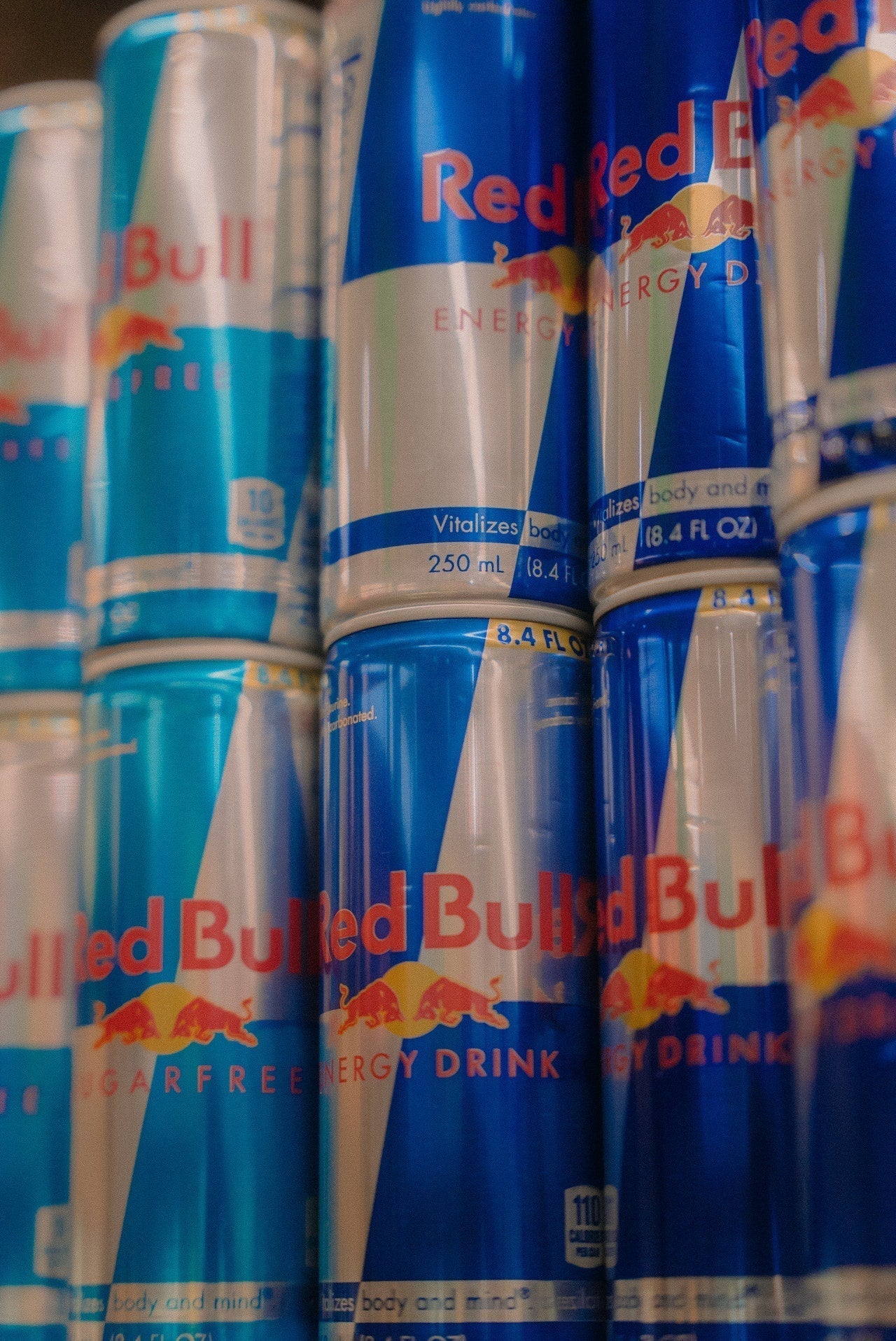
Quick answer: An 8.4 oz can of Red Bull contains 80 mg of caffeine, which is actually less than a typical cup of coffee, plus 27 grams of sugar in the regular version. One can now and then is not dangerous for a healthy adult. The real concerns are the daily sugar habit, stacking multiple cans on top of other caffeine, mixing Red Bull with alcohol, and consumption by kids and teens.
What is in Red Bull?

The core recipe is carbonated water, sugar (27 g per 8.4 oz can in the original), caffeine (80 mg), taurine, and B vitamins. Sugar Free and Zero versions swap the sugar for artificial sweeteners, sucralose and acesulfame K, and keep the same caffeine.
Caffeine is a central nervous system stimulant that raises alertness, and in excess it can raise heart rate and blood pressure and disturb sleep. The sugar is a meaningful daily load if a can is a daily habit: 27 grams gets most adults close to the recommended cap on added sugar for a whole day. The rest of the formula is less dramatic than its reputation, as covered below.
How much caffeine is in Red Bull?
Less than many people assume. Here is how a can compares:
| Drink | Caffeine per serving |
|---|---|
| Coffee (8 oz cup, for reference) | ~95 mg |
| Green tea (cup, for reference) | 30-50 mg |
| Red Bull Original (8.4 oz) | 80 mg per can |
| Red Bull Editions (all flavors) | 80 mg per can |
| Red Bull Sugar Free / Zero | 80 mg per can |
| Red Bull Simply Cola | 32 mg per can |

To be fair to Red Bull, a single 8.4 oz can delivers less caffeine than a home-brewed cup of coffee. Healthy adults are generally fine up to about 400 mg of caffeine a day from all sources. The caffeine problem is rarely one can; it is the 12 oz and 20 oz cans, multiple cans in a night, or a can layered on top of coffee and pre-workout.
Side effects of drinking Red Bull every day
Daily consumption is where the realistic downsides live:
- Sugar intake. A daily regular Red Bull is roughly 10 kg of added sugar a year, with the weight gain, insulin resistance, and type 2 diabetes risk that daily sugary drinks carry.
- Tooth enamel erosion. Energy drinks are acidic, and acid plus sugar is a rough daily combination for teeth. Sugar-free versions are still acidic.
- Sleep disruption. 80 mg is modest, but an evening can, or several cans, can push bedtime alertness and shave sleep, which feeds the next day's fatigue.
- Jitters and heart symptoms at higher doses. In caffeine-sensitive people, or with multiple cans, heart rate and blood pressure rise and some people notice palpitations or anxiety. People with heart rhythm problems or hypertension should be cautious with energy drinks generally.
- Dependence and withdrawal headaches. Daily caffeine builds tolerance, and skipping a day can bring a rebound headache and fatigue.
Note what is not on this list: there is no good evidence that an occasional can harms a healthy adult. The energy drink research that raises red flags, including the long-term heart muscle study cited below, mostly involves heavy, chronic intake.
Is the taurine in Red Bull dangerous?
Taurine has the scariest reputation of Red Bull's ingredients and probably deserves it least. It is an amino acid your own body makes and that occurs naturally in meat and fish, and the synthetic version in energy drinks does not come from bulls, despite the legend. At the doses found in energy drinks, the evidence of harm is weak; if anything, taurine is being actively studied for potential benefits. The honest criticisms of Red Bull are the sugar and the total caffeine load, not the taurine.
Mixing Red Bull with alcohol
This is the best-documented real danger. Caffeine masks how drunk you feel without lowering your blood alcohol at all, a state sometimes called being wide-awake drunk. Public health research on energy drinks, including the Frontiers review cited below, links mixing them with alcohol to drinking more, staying out longer, and taking more risks, because the usual sleepy signal to stop never arrives. If you drink, keep the Red Bull and the alcohol in separate evenings.
What happens if kids drink Red Bull?

The American Academy of Pediatrics position cited below is blunt: caffeinated energy drinks are not appropriate for children or adolescents, period. The same 80 mg that barely registers for an adult is a large dose relative to a child's body weight, and caffeine interferes with the sleep that developing brains rely on. Add the sugar and the acidity, and there is no version of this product that makes sense for kids, even though the marketing often reaches them. This is one for parents to hold the line on.
Healthier ways to get energy

If you lean on Red Bull most days, the fatigue usually has a boring cause: not enough sleep, or not enough water. Mild dehydration shows up as tiredness and poor focus. Better daily tools:
- Cold filtered water first. Free, zero sugar, and often all the afternoon slump actually needed.
- Black coffee. More caffeine than a Red Bull (about 95 mg), no sugar, and decades of safety data.
- Green tea. A gentler 30-50 mg of caffeine with antioxidants.
- Coconut water. Natural electrolytes for rehydration after sweating.
- Herbal tea. No caffeine, useful when the goal is winding down so tomorrow needs less caffeine.
Bottom line
Red Bull is not the health catastrophe the internet sometimes suggests, and it is not harmless either. One can contains less caffeine than a cup of coffee, and an occasional can is fine for most healthy adults. The habits worth avoiding are the daily 27 grams of sugar, multiple cans stacked on other caffeine, mixing it with alcohol, and letting kids drink it.
If the daily can is really about fatigue, start with hydration, the cheapest fix available. The Pure XP pitcher is independently tested to reduce lead, PFAS, chlorine, and over 99.9% of microplastics, which makes tap water an easy default. A filtered water bottle covers the gym, the car, and the desk, and the Pure XP Dispenser handles thirsty households.
Related reading
- Monster energy drink side effects
- Are Celsius drinks bad for you?
- Is C4 bad for you?
- Why is Dasani water bad for you?
Sources
- Medical University of South Carolina: Energy Drinks May Do More Harm Than Good Says Researchers
- Frontiers in Public Health: Health Effects and Public Health Concerns of Energy Drink Consumption in the United States
- Pediatrics (American Academy of Pediatrics): Sports Drinks and Energy Drinks for Children and Adolescents: Are They Appropriate?
- ACSM's Health & Fitness Journal: Stimulant-Containing Energy Drinks: What You Need to Know
- NCBI PubMed Central: Long-term consumption of energy drinks induces biochemical and ultrastructural alterations in the heart muscle
RED BULL is a trademark of Red Bull GmbH. This article is for educational purposes and is not medical advice.
Share:
Does Diet Pepsi Make You Gain Weight?
Which Diet Sodas Do Not Contain Aspartame?