
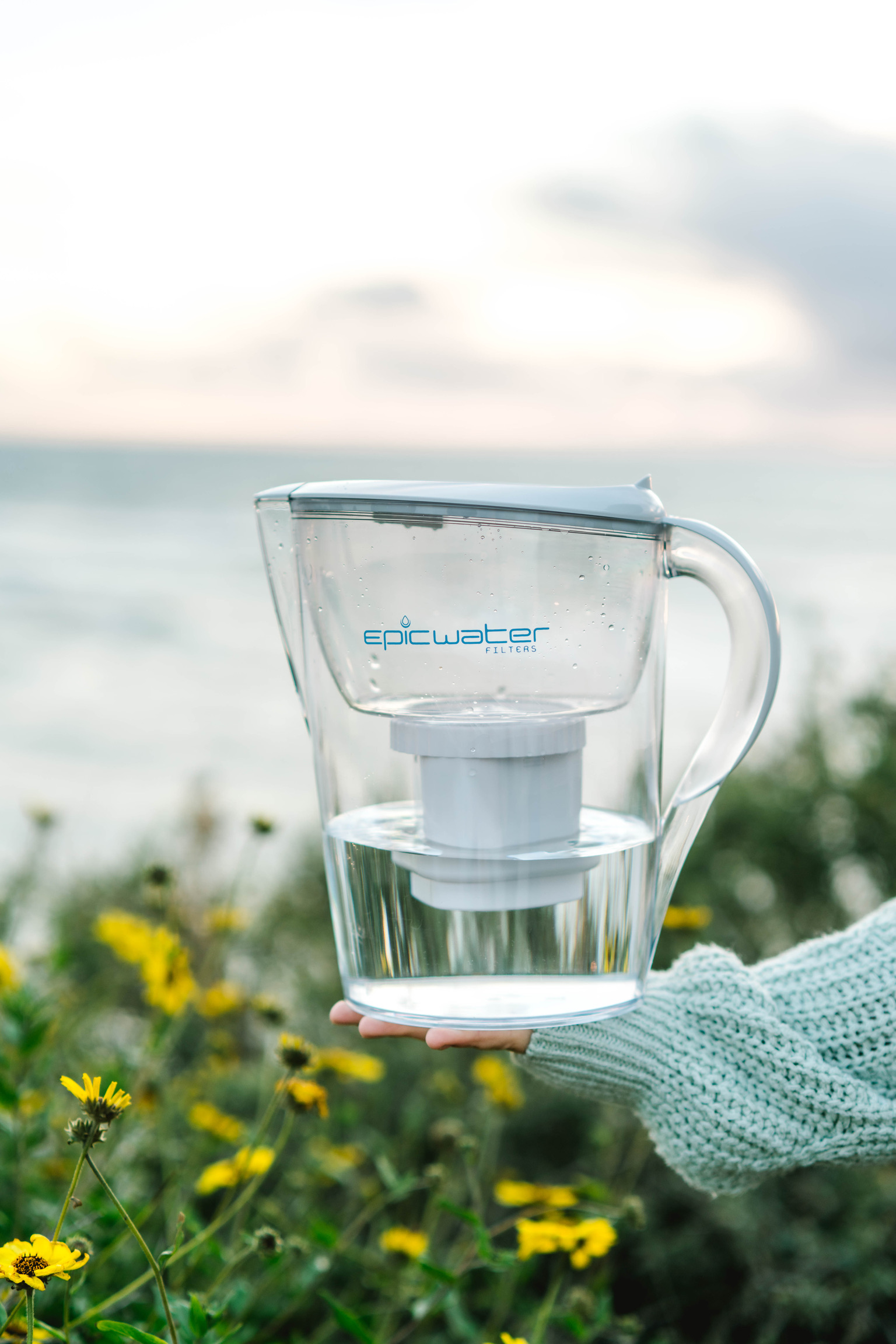
Quick answer: PFAS can be removed from drinking water, but only by filtration technologies designed for the job: activated carbon (especially solid carbon block), reverse osmosis, and ion exchange. Boiling water does nothing to PFAS. Because performance varies widely between products that all say "carbon filter" on the box, the one rule that matters is this: buy a filter with published third-party test data or a certification listing that specifically names PFOA and PFOS reduction.
What are PFAS and why remove them?

Per- and polyfluoroalkyl substances (PFAS) are a class of man-made chemicals used for decades in non-stick cookware, food packaging, waterproof clothing, and firefighting foam, prized for their non-stick, water-repellent, heat-resistant properties. Those same properties make them extremely persistent: they do not readily break down, which is why they are called forever chemicals, and they build up in the environment and in people. Health research reviewed by the CDC's Agency for Toxic Substances and Disease Registry has linked PFAS exposure through drinking water to potential effects on the immune system, thyroid, and liver, and to developmental issues in fetuses and infants. You cannot see, smell, or taste PFAS in water, so if they are in your tap water, filtration is the practical way to deal with them. If you want the regulatory background, we cover it separately in what the EPA's 2024 PFAS rule means for your tap water and what the 2026 EPA decision means.
Which methods actually remove PFAS from water?

Granular activated carbon (GAC)
Loose carbon granules adsorb PFAS as water passes through. GAC works, but results depend heavily on contact time and filter design, which is why cheap GAC pitchers deliver partial reduction rather than near-complete removal. GAC is the technology in most budget pitcher filters.
Solid carbon block and carbon fiber block
Compressing activated carbon into a dense solid block forces water through far more carbon surface area at a slower pace. That density is why carbon block filters can capture PFAS molecules that pass through loose granular carbon. Gravity-fed carbon block systems have a practical advantage too: no plumbing, no electricity, no wasted water, and easy setup and maintenance.
Reverse osmosis
RO membranes reject PFAS effectively and RO remains a legitimate option, particularly if your water has other problems that only a membrane can solve. The tradeoffs are practical rather than performance-based: under-sink systems typically cost more to buy and maintain than carbon block systems, conventional units send several gallons of reject water down the drain per filtered gallon, and RO also strips the naturally occurring trace minerals from water, which some households then add back with a remineralization cartridge. We compare the approaches fully in our reverse osmosis guide.
Ion exchange
Anion exchange resins, covered alongside carbon and RO in EWG's guide to PFAS filters, swap charged PFAS molecules for harmless ions on the resin. The technology appears mostly in whole-house and specialty systems rather than pitchers.
What does not work
Boiling water does not remove PFAS. Neither does letting water stand, freezing it, or using a filter designed only for chlorine taste and odor. If a filter's packaging does not mention PFAS testing, assume it has not been tested for PFAS.
How popular pitcher filters performed in EWG's PFAS testing

The Environmental Working Group, a third-party non-profit, lab tested popular home water filters specifically for PFAS reduction. The results show how much design matters within the same broad category:
- Standard Brita filter (GAC): about 66 percent PFAS reduction. Affordable and genuinely useful for taste and odor, but partial on PFAS.
- Brita Elite: about 22 percent reduction, the lowest overall among filters tested. EWG's tester also flagged a sealing issue that could let water bypass the media.
- PUR pitcher: about 79 percent reduction, with slower filtering and a smaller reservoir noted by the tester.
- Epic Pure (solid carbon fiber block): 98 percent PFAS reduction, which EWG named its favorite among water filter pitchers for PFAS.

The point is not that budget filters are useless. A 66 percent reduction is better than nothing. The point is that partial reduction and near-complete removal are different promises, and only test data tells you which one you are buying. We look at the Brita results in more depth in Does Brita Filter PFAS?
How to check any filter's PFAS claims
Whatever brand you are considering, including ours, apply the same standard:
- Look for the specific compounds. The certification or test report should name PFOA and PFOS reduction, not just "reduces chemicals" or "advanced filtration."
- Know the certification scope. NSF/ANSI 53 covers health-related contaminant reduction claims for carbon filters and NSF/ANSI 58 covers reverse osmosis systems. A filter certified only to NSF/ANSI 42 has been certified for taste and odor, not PFAS. Check what the certification actually covers rather than treating any NSF logo as blanket approval.
- Ask for published data. If a manufacturer cannot show third-party lab results, assume the filter has not been tested.
- Replace filters on schedule. Carbon adsorption is finite. An exhausted filter stops capturing PFAS long before it stops pouring water.
The bottom line

Removing PFAS from water is a solved problem if you choose deliberately: solid carbon block, reverse osmosis, and ion exchange all work, and published test data separates the filters that perform from the ones that merely claim. Our guide to choosing a water filter for PFAS walks through the decision. If you want our answer: the Pure XP pitcher is made in the USA and independently tested to NSF/ANSI Standards 42, 53, 401, and P231, with additional PFAS reduction testing in accordance with the latest NSF/ANSI/CAN 53 criteria, and it leaves the beneficial trace minerals in your water. The Pure XP Dispenser brings the same filtration to a larger fridge format, and a filtered water bottle covers you away from home.
Related reading
- Does Brita Filter PFAS?
- Is Reverse Osmosis Water Good For You
- Are Plastic Water Bottles Giving You Microplastics?
Sources
- Environmental Working Group: EWG's Guide to PFAS Water Filters
- NCBI (PubMed Central): Per- and Polyfluoroalkyl Substance Toxicity and Human Health Review: Current State of Knowledge
- ATSDR (CDC): What are the health effects of PFAS?
Brita and PUR are registered trademarks of their respective owners. Epic Water Filters is not affiliated with either brand. This article is for educational purposes and is not medical advice.
Share:
Synthetic Caffeine vs. Natural Caffeine
10 Best Times To Drink Water