
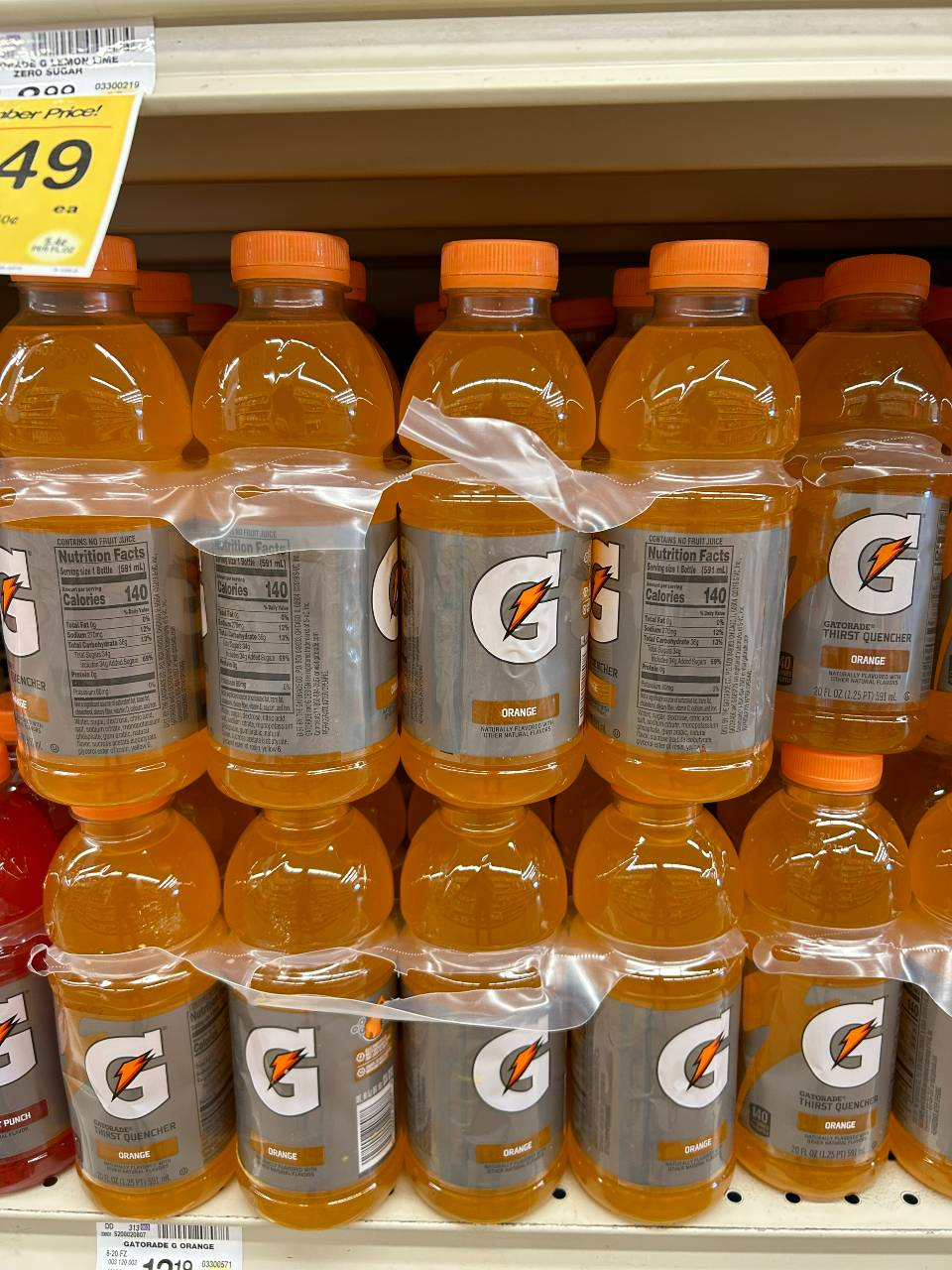
Quick answer: It depends on what you are doing. During long, sweaty exercise, an hour or more of hard effort, regular Gatorade does exactly what it was designed to do: replace fluid, electrolytes, and quick carbohydrate. As an everyday beverage, it is a different story. A 20 ounce bottle carries about 34 grams of sugar, in the same territory as soda, plus synthetic dyes in most flavors. Sports medicine guidance is consistent that for typical workouts under an hour, plain water covers you.
What is actually in Gatorade?

The label on a regular Gatorade Thirst Quencher is short: water, sugar and dextrose, citric acid, electrolyte salts (including sodium citrate and monopotassium phosphate), natural flavors, and in most flavors, synthetic color. Here is what each piece means in practice.
Sugar: about 34 grams per 20 ounce bottle
Sugar is the headline ingredient. A 20 ounce bottle of Gatorade Orange Thirst Quencher has about 34 grams of sugar; for comparison, a 12 ounce can of Pepsi has 41 grams. Ounce for ounce Gatorade is less sweet than soda, but a full bottle still delivers a soda-sized sugar load. That sugar is intentional: fast-absorbing carbohydrate is part of the sports formula, and it is genuinely useful to an athlete deep into a long session. Consumed at a desk, it is just added sugar, and a consistent excess of added sugar is linked to weight gain, tooth decay, and an increased risk of type 2 diabetes.
Synthetic dyes: Yellow 5, Yellow 6, Red 40, Blue 1
Most Gatorade flavors get their color from synthetic dyes, which serve no nutritional purpose. A review in Environmental Health found evidence associating synthetic food dyes with hyperactivity and attention effects in some children, which is part of why some countries require warning labels on dyed foods. For adults, the evidence of harm at normal intakes is weaker. The fair summary is not that the dyes are poison; it is that they are a cosmetic chemical you consume with zero benefit.
Monopotassium phosphate
This is an electrolyte and acidity regulator, and it is safe for healthy people at these amounts. The caveat is specific: phosphate additives are something people with reduced kidney function are advised to limit, so if that applies to you, it is worth knowing this ingredient is in the bottle.
Citric acid and "natural flavors"
The citric acid in beverages is manufactured rather than squeezed from fruit, typically via fermentation. It is safe for most people, though case reports have linked it to digestive upset in a small number of individuals, and acidic drinks in general are hard on tooth enamel with heavy daily use. "Natural flavors" is a legally vague term: it tells you the starting material came from a plant or animal source, but nothing about the processing behind it. That is a transparency gap rather than a proven danger.
Is Gatorade good for hydration and dehydration?

Yes, Gatorade hydrates; it is mostly water with electrolytes and carbohydrate. The real question is whether you needed the extras. Sports nutrition guidance is consistent: for most exercise lasting under 60 minutes, water is all you need, and most people eating a normal diet already get plenty of sodium and potassium from food. The electrolyte-and-carb package earns its place during long endurance efforts, tournament days, or heavy sweating in the heat.
There is also a subtler issue. Sweet, flavored drinks are easy to keep sipping past the point of thirst, which means extra calories that plain water never brings. If hydration is the goal, the flavor is doing more work for the habit than for your body.
Is it bad to drink Gatorade every day?

A bottle after a genuinely hard session is not a health problem. A bottle every day as a default beverage is where the math turns against you: 34 grams of sugar daily is most of a day's recommended added sugar limit in a single drink, before you count anything you eat. Research on sugar-sweetened beverages consistently ties regular consumption to weight gain, type 2 diabetes risk, and fatty liver disease driven by fructose. Daily sugar and acid are also a rough combination for teeth.
None of that makes Gatorade uniquely bad. It makes it a sugar-sweetened beverage, and the everyday-use case for any sugar-sweetened beverage is weak.
The bottle problem

Gatorade comes in #1 PET plastic, the same material independent testing has flagged as a source of microplastic particles in bottled beverages. A study in Frontiers in Chemistry found synthetic polymer contamination in the large majority of bottled waters tested, with the packaging itself as the likely source. The long-term health effects of ingesting microplastics are still being studied, but a daily single-use bottle habit also has a clear cost in money and plastic waste. We break down the research in our guide to microplastics from plastic bottles.
The bottom line
Gatorade was built for athletes in the middle of long, sweaty efforts, and used that way it works as designed. Used as an everyday drink, it is sugar, dye, and acid in a microplastic-shedding bottle, and the honest alternative is not a different sports drink. It is water.
For everyday hydration, filtered tap water wins on every axis: no sugar, no dyes, no plastic bottle, pennies per gallon. The Epic Pure XP Pitcher is made in the USA and independently tested to reduce lead, PFAS, chlorine, microplastics, and many other common tap water contaminants. For the gym bag, a filtered water bottle gives you clean water anywhere there is a tap. Browse all pitchers and dispensers or filtered bottles.
Related reading
- Is Gatorade Zero Bad For You?
- Is Powerade Good for You?
- Is Body Armor Good For You?
- Are Plastic Water Bottles Giving You Microplastics?
Sources
- Comparing Sports Drinks — Central Washington University Sports Nutrition
- Potential Health Risks From Beverages Containing Fructose Found in Sugar or High-Fructose Corn Syrup — NCBI
- Fructose Consumption, Lipogenesis, and Non-Alcoholic Fatty Liver Disease — PubMed
- Potential Impacts of Synthetic Food Dyes on Activity and Attention in Children — Environmental Health
- Toxicology of Food Dyes — PubMed
- Phosphate Additive Avoidance in Chronic Kidney Disease — NCBI
- Manufactured Citric Acid and Inflammatory Reactions: Case Reports — NCBI
- Are 'Natural Flavors' Really Natural? — The New York Times
- Is 'Natural Flavor' Healthier Than 'Artificial Flavor'? — NPR
- Synthetic Polymer Contamination in Bottled Water — Frontiers in Chemistry
GATORADE is a trademark of Stokely-Van Camp, Inc. Epic Water Filters is not affiliated with or endorsed by Gatorade. This article is for educational purposes and is not medical advice.
Share:
Is Apeel Safe?
Boil Water Notice