
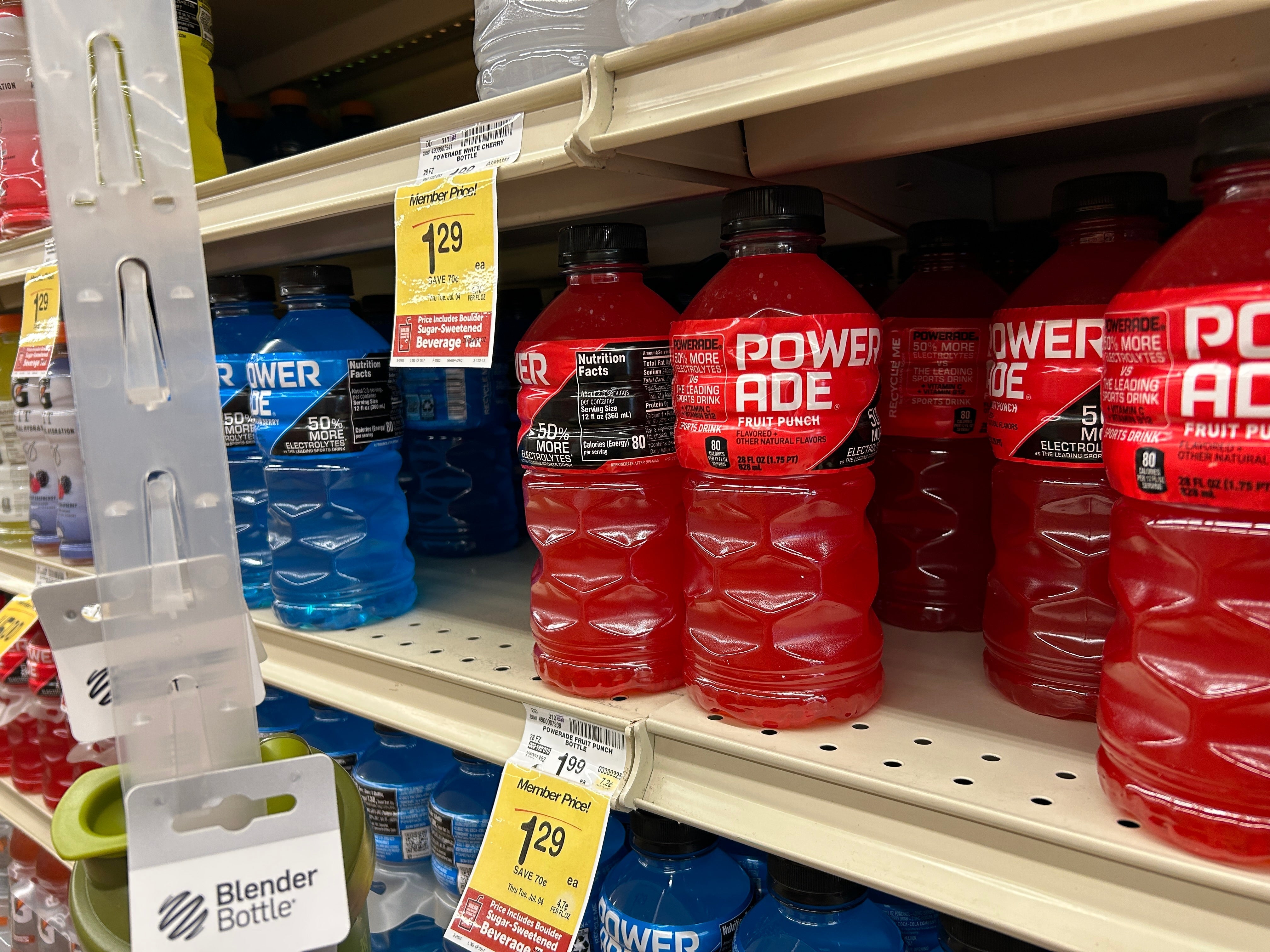
Quick answer: Powerade does what a sports drink is designed to do: replace fluid, carbohydrates, and electrolytes during long or intense exercise. The catch is how it is usually consumed. A 28 oz bottle of regular Powerade contains about 85 g of added sugar, and most people drinking it are sitting at a desk, not finishing a long run. If you exercise hard for over an hour, Powerade can earn its place. For everyday hydration, water is the better choice.
What is Powerade?

Powerade is a sports drink owned by The Coca-Cola Company. The basic formula is water, a sweetener (high fructose corn syrup in the regular versions), electrolyte salts, citric acid, flavors, and food dyes. That combination is genuinely useful in one specific situation: prolonged, sweaty exercise, when your body is losing both fluid and sodium and burning through carbohydrates. Sports dietitians generally put that threshold at around 60 to 75 minutes of continuous, vigorous activity.
Outside that situation, you are mostly drinking sugar water with salt and coloring. That is the honest frame for everything below.
How much sugar is in Powerade?
This is the biggest legitimate criticism of regular Powerade. The label math hides it a little:
- A 28 oz bottle of Powerade Mountain Berry Blast lists 35 g of added sugar per serving.
- There are 2.5 servings per bottle.
- 2.5 servings x 35 g = about 85 g of added sugar if you drink the whole bottle, which most people do.
For comparison, a 12 oz can of Coke has about 35 g of added sugar. Drinking a full bottle of Powerade delivers more sugar than two cans of Coke. Regularly consuming that much added sugar is linked to weight gain, tooth decay, elevated triglycerides, and an increased risk of type 2 diabetes, and research on fructose-sweetened beverages specifically has connected heavy intake to non-alcoholic fatty liver disease. None of that depends on Powerade being uniquely bad. It is simply a large dose of liquid sugar.
Is Powerade good for dehydration?

Sometimes, yes. Electrolyte drinks are warranted when you are losing significant fluid and sodium: long endurance sessions, hard training in heat, physically demanding outdoor work, or fluid loss from illness. In those cases the sodium and carbohydrates help you absorb and retain fluid, which is the entire point of the product.
For ordinary daily life, including a typical 30 to 45 minute gym session, water covers your needs. You are not sweating out enough sodium to need replacement, and the sugar becomes a cost with no offsetting benefit. The sweet taste can also encourage you to drink more calories than you ever would from plain water.
What about Powerade Zero?
Powerade Zero removes the sugar and replaces it with artificial sweeteners, sucralose and acesulfame potassium. That solves the calorie problem, and for someone choosing between regular Powerade and Zero for everyday drinking, Zero is the lesser concern. The research on artificial sweeteners is mixed rather than damning: some studies suggest effects on appetite and gut bacteria, while regulators continue to consider them safe at normal intakes. Our take is the same one we gave in our Gatorade Zero article: an occasional bottle is fine, but it should not become your default way to hydrate.
Is Powerade bad for your kidneys?
Powerade contains monopotassium phosphate, an electrolyte salt that helps regulate acidity. For people with healthy kidneys, the amount in a sports drink is not a meaningful concern. The caution applies to people with chronic kidney disease, who are often advised to limit phosphate additives because impaired kidneys struggle to clear excess phosphorus. If that is you, check labels and ask your doctor; if it is not, this ingredient is low on the list of reasons to skip Powerade.
Yellow 5, Yellow 6, Blue 1, Red 40
The colors in Powerade come from synthetic dyes that serve no nutritional purpose. The strongest evidence against them is not cancer; it is a body of research linking synthetic food dyes to hyperactivity and attention effects in a subset of sensitive children, which is why some regulators require warning labels on dyed products. The FDA continues to permit these dyes. A reasonable position: they add nothing, some kids react to them, and a drink marketed around athletic performance does not need to be neon.
What does "natural flavors" actually mean?

"Natural flavors" is a regulatory category, not an ingredient list. The FDA defines it as flavoring derived from plant or animal sources, but the term allows considerable lab processing and does not tell you what is actually in the bottle. Natural flavors are generally recognized as safe, and there is no evidence the ones in Powerade are harmful. The fair criticism is transparency: you cannot know exactly what you are drinking, which matters mainly to people with specific sensitivities.
Is Powerade good for weight loss?

No. Liquid calories are the easiest calories to overconsume, and 85 g of sugar in a bottle works directly against a calorie deficit. If you want flavor while cutting calories, filtered water with a squeeze of lemon or lime, or plain carbonated water, gets you there without the sugar. Powerade Zero avoids the calories but keeps you anchored to sweet taste, which some people find makes cravings harder to manage.
Plastic bottles and microplastics

Powerade is sold in single-use PET plastic bottles, and research on bottled beverages has repeatedly found microplastic particles in the liquid itself. The long-term health effects of ingesting microplastics are still being studied, but the exposure is avoidable: drinks packaged in plastic add particles, plus cost, plus waste, compared with water from a reusable bottle. If you buy sports drinks regularly, this is part of what you are paying for.
The bottom line on Powerade
Powerade is a tool for long, sweaty exercise, and used that way it is fine. Used as an everyday beverage, it is mostly added sugar (or artificial sweeteners), dyes, and plastic. The boring answer is the right one: for daily hydration, drink water.
If your tap water tastes bad enough that sports drinks feel like the easier option, fix the water. Our Pure XP pitcher is independently tested to reduce lead, PFAS, chlorine, and over 99.9% of microplastics, so plain water actually tastes clean. For the gym bag, a filtered water bottle covers workouts without the sugar or the single-use plastic, and our home filtration lineup covers the rest of the house.
Related reading
- Is Gatorade Zero bad for you?
- Monster energy drink side effects
- Are Celsius drinks bad for you?
- Microplastics in plastic water bottles
Sources
- NCBI / PMC: Potential Health Risks From Beverages Containing Fructose Found in Sugar or High-Fructose Corn Syrup
- PubMed: Fructose Consumption, Lipogenesis, and Non-Alcoholic Fatty Liver Disease
- NCBI / PMC: Phosphate Additive Avoidance in Chronic Kidney Disease
- Environmental Health (BMC): Potential Impacts of Synthetic Food Dyes on Activity and Attention in Children
- PubMed: Toxicology of Food Dyes
- Central Washington University: Compare Sports Drinks
- The New York Times: Are 'Natural Flavors' Really Natural?
- NPR: Is 'Natural Flavor' Healthier Than 'Artificial Flavor'?
- Frontiers in Chemistry: Synthetic Polymer Contamination in Bottled Water
POWERADE is a trademark of The Coca-Cola Company. This article is for educational purposes and is not medical advice.
Share:
Atrazine In Water
How To Remove BPA From Water?