
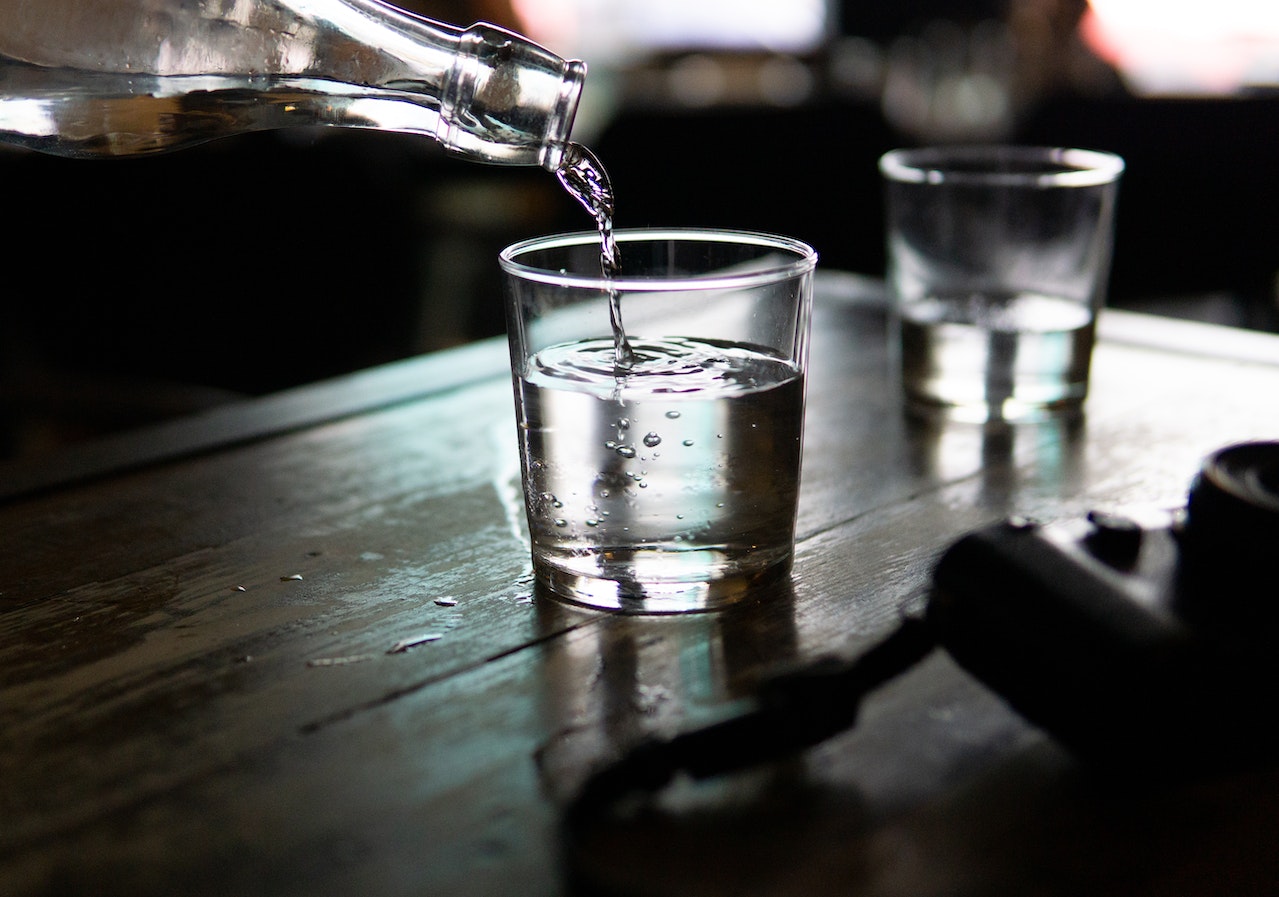
Quick answer: Drinking 64 oz (eight 8 oz glasses) of water a day is a perfectly reasonable habit, and for many people it lands close to what their body needs. But the number itself is a convention, not a scientific requirement. The National Academies puts adequate total water intake at roughly 91 oz per day for women and 125 oz for men, counting all beverages and the water in food. The real benefits come from staying adequately hydrated, however many ounces that takes for you.
Where does the 64 oz rule come from?

The "8x8" rule (eight 8 oz glasses, or 64 oz) has been repeated for decades, but nobody has ever traced it to a controlled study. It appears to have started as a rough, easy-to-remember guideline and survived because it is simple. That does not make it wrong, just imprecise. Sixty-four ounces of plain water, on top of the water you get from food, coffee, tea, and everything else you drink, will keep most people well hydrated. It is a floor worth aiming at, not a magic threshold your kidneys are checking.
What are the real benefits of drinking enough water?
The benefits of adequate hydration are genuine, they are just less exotic than internet lists suggest:
- Physical and mental performance. Even mild dehydration can cause fatigue, headaches, reduced concentration, and worse workouts. Staying hydrated prevents that, which is different from water being an energy booster.
- Digestion and regularity. Water is necessary for normal digestion, and low fluid intake is a common contributor to constipation.
- Kidney function and kidney stones. Your kidneys use water to clear waste, and higher fluid intake is one of the best-established ways to reduce the risk of recurrent kidney stones.
- Temperature regulation. Sweating only works as a cooling system if you replace the fluid you lose.
- Fewer dehydration headaches, and help with appetite. Water before meals can support a feeling of fullness, which modestly helps some people manage their weight. It is an aid, not a fat burner.
- Skin. Hydration keeps skin from looking dry and dull. Claims beyond that, like erasing wrinkles, outrun the evidence.
You may have seen older versions of this article, ours included, listing 100 benefits of drinking water, up to and including preventing cancers and Alzheimer's disease. Water does not do that, and we have removed those claims. Adequate hydration supports the systems above; it is not a cure-all.
How much water do you actually need?

The most-cited guidance comes from the National Academies of Sciences, Engineering, and Medicine. Its adequate intake levels for total water are about 3.7 liters (125 oz) per day for men and 2.7 liters (91 oz) per day for women. Two details matter:
- That is total water from everything: drinking water, coffee, tea, milk, other beverages, and food. Food alone typically supplies around 20 percent of it.
- They are averages, not prescriptions. Your needs shift with body size, activity, sweat rate, climate, altitude, illness, and pregnancy or breastfeeding. A construction worker in Arizona in July and an office worker in Maine in January do not need the same intake.
Seen against those numbers, 64 oz of plain water plus a normal diet puts most people comfortably in range, which is why the old rule has held up in practice even without a study behind it.
Signs you are drinking enough
For healthy people, the body's own signals beat any fixed number:
- You rarely feel thirsty through the day.
- Your urine is pale yellow rather than dark or strongly colored.
- Headaches, afternoon sluggishness, and dry mouth are not regular features of your day.
Drink to thirst, drink a bit ahead of exercise and heat, and check the color. It is also possible to overdo it: drinking very large volumes quickly can dilute blood sodium (hyponatremia), which is rare but serious. More is not automatically better.
Is it OK to drink soda instead of water?

Soda does count toward your fluid intake; the caffeine in it is a mild diuretic, but not enough to cancel the fluid. The problem is everything that rides along with the water: a 12 oz can of regular soda carries roughly 35 to 40 g of added sugar, and drinking sugar-sweetened beverages daily is linked to weight gain, tooth decay, and higher risk of type 2 diabetes. Diet soda trades sugar for artificial sweeteners, which is likely a lesser concern in moderation but keeps you tied to sweet taste. Water gives you the hydration with none of the baggage, which is why it should be the default and soda the occasional choice, not the reverse.
The bottom line

64 oz a day is a good, achievable target, and if it gets you drinking water instead of sweetened drinks, it is doing its job. Just treat it as a starting point: bigger, more active people in hot climates need more, and thirst plus pale urine are the real scoreboard.
In our experience, the biggest obstacle to drinking enough water is not willpower, it is water that tastes bad. Filtering fixes that. Our Pure XP pitcher is independently tested to reduce lead, PFAS, chlorine, and over 99.9% of microplastics, and the Pure XP dispenser does the same in a larger countertop format for families. For hitting your ounces away from home, a filtered water bottle keeps clean water within reach all day.
Related reading
- How much does water weigh?
- Benefits of baking soda in water
- How much weight will I lose on a 3-day water fast?
- Microplastics in plastic water bottles
Sources
- National Academies of Sciences, Engineering, and Medicine: Dietary Reference Intakes for Water, Potassium, Sodium, Chloride, and Sulfate
- Mayo Clinic: Water: How much should you drink every day?
- Harvard T.H. Chan School of Public Health: The Nutrition Source: Water
This article is for educational purposes and is not medical advice.
Share:
How Many Bottles of Water Should You Drink in a Day?
Is Calcium Chloride Dangerous?